Best For · Best for dorms
The best sewing machines for college students
Our pick is the Brother XM2701: light enough to live in a closet, cheap enough to risk, and capable enough to hem jeans and finish a costume the night before. Dorm constraints decide this, not stitch counts.
By Michael W. · Published
Disclosure: this page contains affiliate links. As an Amazon Associate, StitchStarter earns from qualifying purchases at no extra cost to you. Prices are read from Amazon daily and dated; the price you pay is the one Amazon shows at checkout. It never changes which machines we recommend. Full disclosure.
Quick picks
The short answer. Every pick is explained in full below, including who should skip it.
| # | Product | Best for | Score | Price |
|---|---|---|---|---|
| 1 | 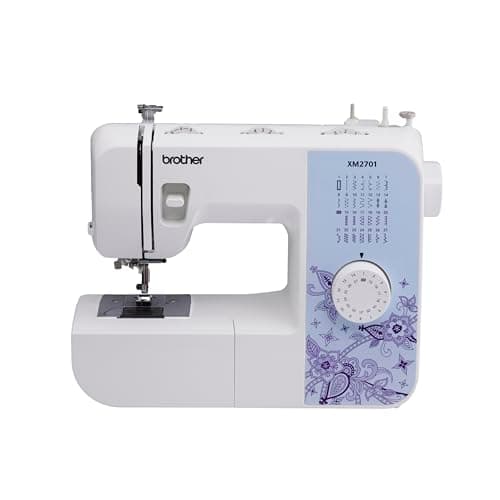 Brother XM2701Light, cheap, genuinely capable. Lives in a closet and survives the move. | Best for a dorm overall | 7.3 | |
| 2 | 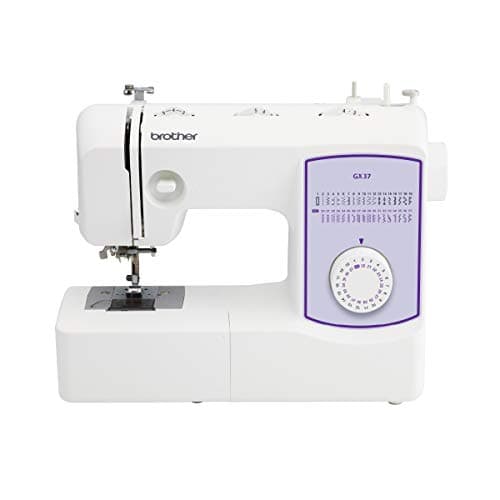 Brother GX37The same machine with more decorative stitches. Buy whichever is less. | Best if it is the cheaper one today | 7.2 | |
| 3 | 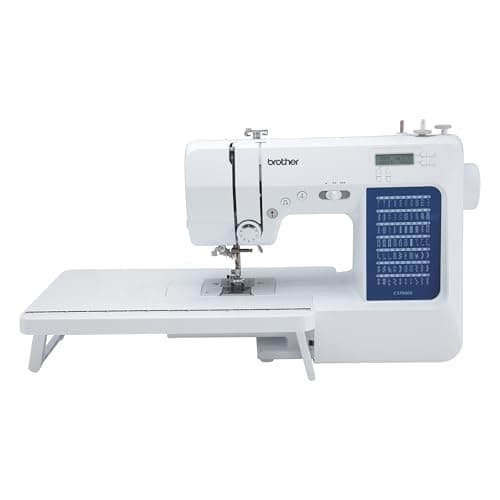 Brother CS7000XThe speed slider is also a volume control. Quietest of the five. | Best if you have a roommate | 8.2 | |
| 4 | 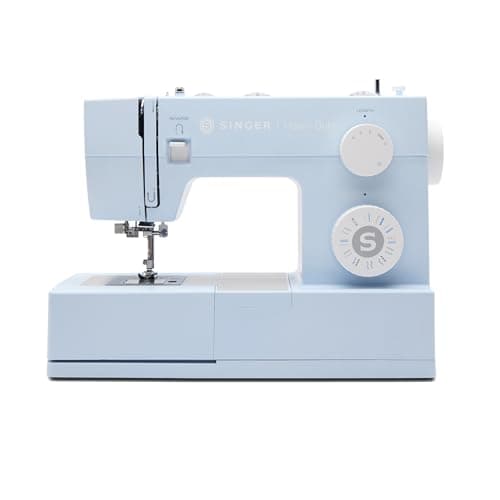 Singer Heavy Duty 4423Metal frame and a fast motor for canvas, denim and structured builds. | Best for costumes and jeans | 7.8 | |
| 5 | 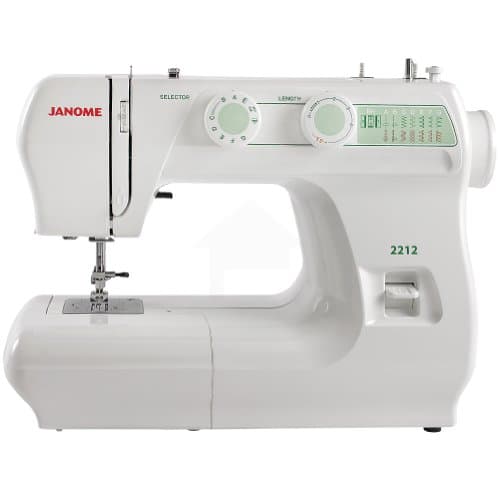 Janome 2212Mechanical, dealer-backed, and still working after graduation. | Best buy-once for a design student | 7.6 |
Prices shown are Amazon prices as of November 1, 2026 and can change.Scores are our editorial judgment on six axes, explained on the methodology page. We do not run a test lab and never claim to.
For a college student, buy the Brother XM2701. It is light enough to live on a closet shelf and come out on a desk, it threads its own needle, it has a one-step buttonhole and a free arm for hemming jeans, and it costs little enough that a semester of neglect is not a financial disaster. Everything else on this page is a specific exception to that answer.
The reason this is not simply a shorter version of our easiest machines roundup is that a dorm changes the criteria completely. You are not choosing a machine for a sewing room; you are choosing one for a room you share, a closet you store it in, a desk you also eat at, and two moves a year. Nobody has an ironing board. Half the sewing is a repair at 11pm. That list of constraints decides this better than any stitch count does.
The criteria, in the order a dorm imposes them
1. Where will it live when you are not using it? This is the first question and most roundups never ask it. A machine that has to come off a shelf every time needs to be liftable with one hand and have a footprint that fits beside the suitcase. A heavier machine is not worse at sewing — it is worse at being put away, which is what decides whether you use it.
2. How loud is it, and who is in the room? A fast mechanical machine at full pedal is genuinely loud. If you sew in the evening with a roommate asleep or studying, the ability to run slowly is a noise feature, not just a safety one. This is the single most underrated specification for shared living, and it moves the Brother CS7000X up this list and the Singer Heavy Duty machines down it.
3. Will it survive two moves a year? Boxed in a car, up three flights, into a closet. Lighter plastic machines are easier to carry and more exposed to a knock; metal-framed machines are the reverse. Keep the box and the foam, whichever you buy — that is the real answer to this one.
4. Can it hem jeans? Because that is the job. A free arm and enough motor to cross a folded denim seam covers most of what a student machine is actually asked to do, along with taking in a thrifted shirt and rescuing a formal dress two hours before an event.
5. Does it do the fiddly parts for you? An automatic needle threader and a drop-in bobbin you can see through a clear cover. On a tight schedule, between classes, the machine that threads itself is the machine that gets used. A one-step buttonhole matters if you are altering clothes rather than making cushions.
6. What is it worth losing? Communal living, shared storage, end-of-year chaos. A cheaper machine you are relaxed about beats an expensive one you worry about — our guide to how much to spend makes the general case and it applies double here.
Notice what is not on the list: stitch count, embroidery, a wide quilting table. Those are sewing-room features. Our stitches guide explains why the number on the box is the least useful figure in any specification.
The five picks against the criteria a dorm actually imposes. Specifications are the manufacturers' published figures; the storage and noise columns are our read of them, not a lab measurement.
Best for a dorm overall: Brother XM2701
27 built-in stitches, a one-step buttonhole, an automatic needle threader, a drop-in top bobbin under a clear cover, six presser feet in the box and a free arm. That list is the whole beginner checklist minus speed control, on the lightest body of the five machines here.
Why it wins for this buyer specifically: it is the machine you will actually get out. Nothing about it is precious, it lifts one-handed, and it will hem jeans, take in a shirt, fix a strap and sew a costume seam without complaint. Our full Brother XM2701 review is the longer version.
Honest cons. There is no speed limiter, so the foot pedal is your only control — on a hard floor at 11pm your roommate will know you are sewing. There is no wide table, so anything large drags. The body is light enough that it shifts when a thick folded seam goes under the needle, and you will outgrow it sooner than the CS7000X if sewing turns into a real hobby rather than a repair kit.
Best if it is the cheaper one today: Brother GX37
The GX37 is the XM2701 with 37 stitches instead of 27, the same automatic threader, the same drop-in bobbin, the same one-step buttonhole, the same six feet and the same light body with a free arm. Treat the two as interchangeable and buy whichever is less money on the day you order — our GX37 vs XM2701 comparison exists because people assume there must be more to it, and there is not.
Honest cons. The extra stitches are decorative and you will use about six of them, so paying a premium for the GX37 is paying for nothing. Same absence of speed control, same plastic body that moves on thick seams, same lack of a table. See the Brother GX37 review for the full picture.
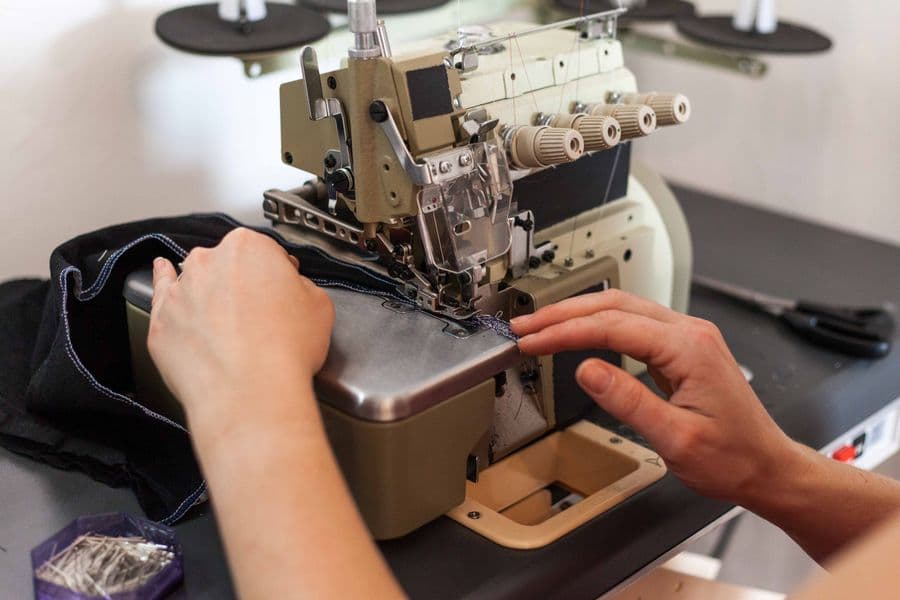
Best if you have a roommate: Brother CS7000X
The CS7000X is the machine we recommend most often on this site, and in a shared room it earns its place for an unexpected reason: the speed-control slider is also a volume control. Set it low and the machine is quiet, steady and far easier to steer on a tiny repair. You also get 70 stitches, seven one-step buttonholes, the automatic threader, the drop-in bobbin, ten presser feet and a wide table in the box.
If your sewing is more than repairs — a fashion or costume course, a genuine hobby, a side income taking in clothes for friends — this is the one to buy, and the full review explains why it suits nervous and busy people equally.
Honest cons. It is more machine than a pure repair kit needs, and the money could be fabric instead. The wide table is extra bulk to store in a closet that is already full. The body is light plastic over a metal internal frame, so it shifts on heavy denim like the other Brothers do. And if you prefer physical dials, its menu will annoy you every time — our mechanical vs computerized guide is the page to read before you commit either way.
Best for costumes and jeans: Singer Heavy Duty 4423
If your honest answer to “what will I sew?” is cosplay armor bases, theater costumes, canvas bags, tote straps, upholstered dorm furniture or a lot of denim, the 4423 is the machine here that will not struggle. Singer gives the Heavy Duty line a metal interior frame, a stainless steel bed plate, a motor running to 1,100 stitches per minute and an extra-high presser foot lifter — that last one being the unglamorous specification that decides whether four layers can get under the needle at all. It also has a one-step buttonhole and an automatic threader.
Honest cons. It is loud, and that is a real problem in a shared room: there is no speed limiter anywhere in the Heavy Duty line, so the pedal is your only control and the slowest usable speed is still brisk. It is the heaviest of the five to lift onto a shelf. And it is the wrong machine for fine fabric — a fast machine with fixed foot pressure is not what chiffon or a lining wants. Our Heavy Duty line comparison covers the four models, and the 4423 review is the detail.
Best buy-once for a design student: Janome 2212
Twelve stitches, two dials, a free arm, drop feed for free-motion work, and a reputation for running for decades. This is the machine sewing classes keep buying, and if you are on a fashion, costume or textiles course it is the one that will still be yours in ten years — there is no circuit board in it to fail. It also sews a cleaner stitch on everyday fabric than anything else on this page.
Honest cons. It has no automatic needle threader, no drop-in bobbin and no one-step buttonhole — three conveniences that a busy student feels the absence of more than a hobbyist does. The four-step buttonhole takes practice, and the front-loading bobbin means you cannot see the thread running out. It is also the most expensive honest recommendation here. Our Janome 2212 review and are Janome machines good for beginners both take that trade apart.
You will not have a sewing table, and that is fine
Three practical fixes that matter more in a dorm than any machine feature.
Support the fabric to the left of the machine. Unsupported weight hanging off a desk pulls the seam crooked and makes the feed dogs lose grip — this is the biggest single cause of wobbly seams on a small surface. A stack of books, a second chair or a drawer unit level with the machine bed fixes it. Our guide to do you need a sewing table covers what the furniture actually has to provide and what you can improvise.
Get the surface height right with the chair, not the desk. A desk chair you can raise is the cheapest ergonomic fix there is, and a desk is usually too high for sewing from a standard seat.
Solve pressing before you solve the machine. You need somewhere to press seams or the work looks homemade regardless of the machine. A small travel iron and a folded towel on the desk is a complete solution, and it takes up almost no space. Our space guide has the measurements for the whole setup.
What a student machine actually gets used for
Worth naming, because it changes what you should buy. In rough order of frequency: hemming jeans and pants that are too long; taking in or letting out a thrifted garment; replacing a button or a strap; fixing a split seam before an interview; making a costume for an event; patching and repairing to avoid replacing; dorm decor — cushion covers, curtains for a window nobody fitted properly.
Every one of those is straight-line sewing on cotton, denim or a mid-weight fabric, and every machine on this page does it. That is why the constraints — storage, noise, weight, cost — are the real differentiators rather than capability. Our alterations and mending roundup ranks the same machines against the repair job specifically, and how to hem pants is the single most useful page on this site for a student.
If you have never sewn at all
Start with five skills in this order: threading the machine, a straight seam, backstitching to secure it, a hem, and finishing a raw edge with a zigzag. Everything else is those five recombined. Our how to learn to sew guide sets out a realistic first month, and using a sewing machine for the first time is the page for your first sit-down. And if the machine is a hand-me-down from a relative and arrived without paperwork, our guide to finding your sewing machine manual is the first ten minutes well spent — the threading diagram is model-specific and free. Also check whether your college has a maker space, costume shop or textiles studio — plenty do, and an afternoon on a good machine there tells you what you actually need before you spend anything.
The picks in full
01 - Best for a dorm overall
Brother XM2701
The find-out-if-I-actually-like-this machine.
- 27 stitches, one-step buttonhole
- Automatic needle threader, drop-in bobbin
- 6 presser feet included
- Light enough to carry to a class
- Get it if
- You are not sure sewing will stick and you want a real, capable machine without spending what a better one costs.
- Skip it if
- You already know you will sew every week, or you want speed control and a quilting table.
The trade-off
Lightweight and basic. It does everything a beginner needs - buttonholes, zippers, hems - but you will outgrow it sooner than the CS7000X.
How the Brother XM2701 scores
Our judgment on the six axes described on the methodology page. Not measurements - we do not run a test lab.
- Setup and threading
- 9/10
- Everyday stitch quality
- 7/10
- Thick fabric
- 5/10
- Beginner features
- 7/10
- Durability reputation
- 6/10
- Help for this exact model
- 9/10
Overall 7.3/10
02 - Best if it is the cheaper one today
Brother GX37
The XM2701's slightly better-equipped sibling, for about the same job.
- 37 built-in stitches, one-step buttonhole
- Automatic needle threader, drop-in bobbin
- 6 presser feet included
- Free arm and a lightweight body
- Get it if
- You are shopping at the bottom of the sensible range and the GX37 happens to be the one in stock or discounted.
- Skip it if
- You want a speed limiter, a wide table, or a machine that will still suit you in three years.
The trade-off
The extra stitches over the XM2701 are mostly decorative and you will use about six of them. Treat the two machines as interchangeable and buy whichever is cheaper on the day.
How the Brother GX37 scores
Our judgment on the six axes described on the methodology page. Not measurements - we do not run a test lab.
- Setup and threading
- 9/10
- Everyday stitch quality
- 7/10
- Thick fabric
- 5/10
- Beginner features
- 7/10
- Durability reputation
- 6/10
- Help for this exact model
- 8/10
Overall 7.2/10
03 - Best if you have a roommate
Brother CS7000X
Does the fiddly parts for you so you can spend your energy learning to sew.
- 70 built-in stitches, 7 one-step buttonholes
- Automatic needle threader, drop-in top bobbin
- Speed-control slider
- Wide table and 10 presser feet included
- Get it if
- You want threading, buttonholes and stitch settings handled by the machine, and you might try quilting later - the wide table is already in the box.
- Skip it if
- You want physical dials instead of a menu, or you will be sewing canvas, upholstery or leather regularly.
The trade-off
A metal internal frame inside a light plastic shell. That makes it easy to carry and quiet on cottons and mid-weights; it is not built for heavy layers every day the way a Heavy Duty is.
How the Brother CS7000X scores
Our judgment on the six axes described on the methodology page. Not measurements - we do not run a test lab.
- Setup and threading
- 9/10
- Everyday stitch quality
- 8/10
- Thick fabric
- 6/10
- Beginner features
- 9/10
- Durability reputation
- 7/10
- Help for this exact model
- 10/10
Overall 8.2/10
04 - Best for costumes and jeans
Singer Heavy Duty 4423
Fast, sturdy and simple - the machine for denim hems and tote bags.
- Metal interior frame, stainless steel bedplate
- 1,100 stitches per minute
- 23 stitches (97 stitch applications), one-step buttonhole, automatic threader
- Top drop-in bobbin with a clear cover
- Extra-high presser foot lift for thick layers
- Get it if
- You want physical dials, you plan to sew jeans, canvas or several layers, and you do not mind a machine that is loud and quick.
- Skip it if
- You mostly want gentle control on light fabrics, or a quiet machine for an apartment.
The trade-off
Heavy duty means a metal frame and a fast motor, not an industrial machine. It handles denim well; real leather is still a struggle.
How the Singer Heavy Duty 4423 scores
Our judgment on the six axes described on the methodology page. Not measurements - we do not run a test lab.
- Setup and threading
- 7/10
- Everyday stitch quality
- 8/10
- Thick fabric
- 9/10
- Beginner features
- 6/10
- Durability reputation
- 8/10
- Help for this exact model
- 9/10
Overall 7.8/10
05 - Best buy-once for a design student
Janome 2212
Twelve stitches, nothing to break - the classroom favorite.
- 12 stitches, dial controls, four-step buttonhole
- Drop feed for free-motion quilting
- Free arm for cuffs and sleeves
- A reputation for lasting decades
- Get it if
- You value reliability over conveniences and want a machine still working long after the computerized ones are gone.
- Skip it if
- You want an automatic threader, a one-step buttonhole or a drop-in bobbin - it has none of them.
The trade-off
Fewer conveniences, more longevity. The four-step buttonhole and front-loading bobbin are a little more work to learn.
How the Janome 2212 scores
Our judgment on the six axes described on the methodology page. Not measurements - we do not run a test lab.
- Setup and threading
- 6/10
- Everyday stitch quality
- 9/10
- Thick fabric
- 7/10
- Beginner features
- 4/10
- Durability reputation
- 10/10
- Help for this exact model
- 7/10
Overall 7.6/10
Questions beginners actually ask
What is the best sewing machine for a college student?
The Brother XM2701. It is light enough to store on a closet shelf, cheap enough not to worry about in shared living, and it has the features that matter for student sewing: an automatic needle threader, a drop-in bobbin you can see, a one-step buttonhole and a free arm for hemming jeans. The Brother GX37 is effectively the same machine - buy whichever is cheaper.
Can you use a sewing machine in a dorm room?
Yes. The constraints are storage, noise and surface rather than anything about the machine: it needs to lift one-handed onto a shelf, run quietly enough for a roommate, and work on a desk with something to the left supporting the fabric. Check your housing rules on appliances first, and note that a machine with a speed-control slider is noticeably quieter at low speed.
What is the quietest sewing machine for sharing a room?
Of our picks, the Brother CS7000X - because its speed-control slider effectively sets the noise level. The Singer Heavy Duty 4423 is the loudest: there is no speed limiter anywhere in that line and the slowest usable speed is still brisk. If evening sewing beside a sleeping roommate is the plan, that difference matters more than any other specification.
Should a student buy a mini or handheld sewing machine instead?
We would not. They are marketed hard at this buyer, but most have no adjustable stitch length, a plastic internal drive and a bobbin case that drifts out of alignment, so they skip stitches on ordinary cotton. A real entry-level machine costs more but actually sews, and if your sewing is only a few repairs a year, hand sewing is the better answer than a toy machine.
What can you actually sew in a dorm?
In order of frequency: hemming jeans and pants, taking in thrifted clothes, replacing buttons and straps, fixing split seams, making costumes for events, patching to avoid replacing, and dorm decor like cushion covers and curtains. All of it is straight-line sewing on cotton and denim, which is why storage, noise and cost matter more than machine capability.
Do I need a sewing table in a dorm room?
No. You need a surface that does not flex, a chair at the right height, and something to the left of the machine supporting the fabric so its weight does not drag the seam crooked - a stack of books or a drawer unit level with the machine bed will do. The one thing worth buying is somewhere to press: a small travel iron and a folded towel is enough.
Which sewing machine is best for a fashion or costume student?
The Janome 2212 if you want one mechanical machine that outlives the course, or the Brother CS7000X if you want conveniences and a speed slider while you learn. If the work is structured costumes, canvas and denim, the Singer Heavy Duty 4423 handles thick layers that lighter machines stall on - but it is loud, which matters in shared housing.
Sources
- Brother (manufacturer specifications)
- Singer (manufacturer specifications)
- Janome America (manufacturer specifications)
Specifications are taken from manufacturer listings. We do not run a test lab and never claim to - how each machine is assessed is set out on our methodology page.
Read next
- Best portable sewing machines for beginners
Ranked on weight and carrying, if that is the deciding factor.
- Best sewing machines for alterations and mending
- Do you need a sewing table?
What to improvise when a desk is all you have.
- How to hem pants with a sewing machine