Guides
How to hem pants with a sewing machine
Hemming trousers is the first useful thing most people do with a sewing machine. It is also the job where one measurement decides everything.
By Michael W. · Published
Disclosure: this page contains affiliate links. As an Amazon Associate, StitchStarter earns from qualifying purchases at no extra cost to you. We do not display prices - they change daily, so every button opens the live listing. It never changes which machines we recommend. Full disclosure.
Quick picks
The short answer. Every pick is explained in full below, including who should skip it.
| # | Product | Best for | Score | Price |
|---|---|---|---|---|
| 1 | 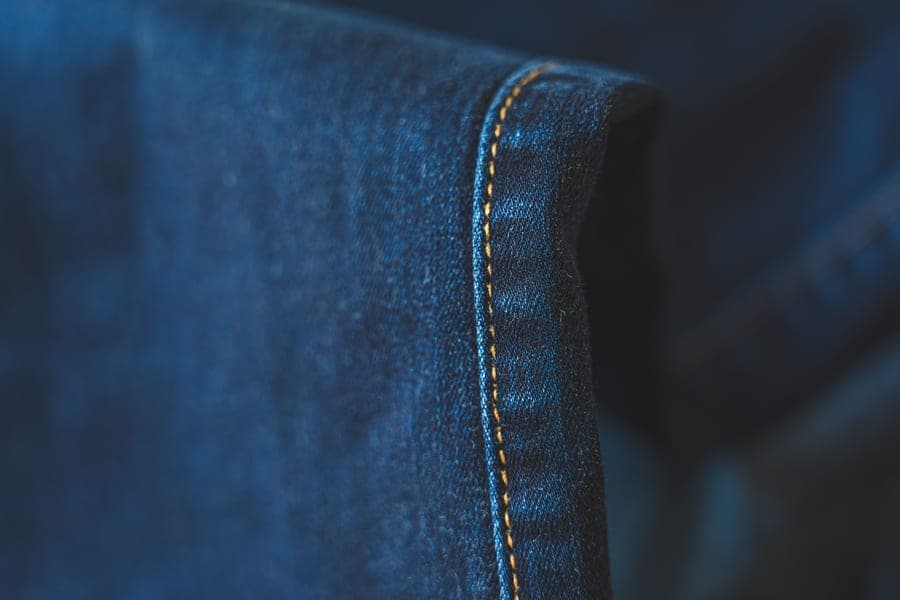 Singer Heavy Duty 4423The foot lift and the torque for a folded crossing seam. Singer Heavy Duty 4423The foot lift and the torque for a folded crossing seam. | Best for hemming jeans | 7.8 | |
| 2 |  Brother CS7000XBlind hem stitch, a speed slider and a free arm. Brother CS7000XBlind hem stitch, a speed slider and a free arm. | Best for hemming everything else | 8.2 | |
| 3 |  Brother XM2701Does trousers and skirts; light denim at its limit. Brother XM2701Does trousers and skirts; light denim at its limit. | Best cheap hemming machine | 7.3 |
Scores are our editorial judgment on six axes, explained on the methodology page. We do not run a test lab and never claim to.
To hem pants with a sewing machine: put the trousers on with the shoes you will wear, fold the excess under and pin, measure that fold and write the number down, then cut leaving about 4cm (1.5 inches) for the hem. Press a double fold, pin or clip it, and sew around the leg with a straight stitch about 3mm long, sewing from the inside of the leg over the free arm of the machine. The whole job takes twenty minutes for a pair of chinos and forty for jeans.
The step people skip is the measurement, and it is the one that matters. Trousers hemmed by eye come out uneven between legs, because almost everybody has a slight leg-length difference and because the pinned fold moves when you take them off.
1. Measure, wearing the right shoes
Put the trousers on with the shoes you actually intend to wear them with. Shoe height is the single biggest variable in a hem and nothing else recovers from getting it wrong.
Fold the excess fabric under until the bottom edge sits where you want it, and pin it on both legs separately. Then, before you take them off, measure the depth of the fold on each leg and write both numbers down. Do not trust the pins to survive.
2. Mark, trim and press
Take them off, turn them inside out, and mark a line all the way round each leg at the finished length. Then mark a second line below it for the hem allowance - about 4cm for trousers, 2.5cm for lightweight fabric, and 3cm for jeans you want to look original. Cut along that second line.
Now press. Fold the raw edge up by a centimetre, press it, then fold again to the finished line and press that. A pressed hem is the difference between sewing something that stays where you put it and fighting a fold the whole way round. If you own one tool beyond the machine, let it be an iron.
3. Choose the stitch
Hem types and what each needs from the machine.
A straight stitch is right for most trousers. The blind hem stitch - most machines have one, with a matching foot - is the one worth learning for wool trousers and anything formal, because it catches only a few threads of the outer fabric so the hem is nearly invisible. It takes one practice run to understand and then it is easy. Our stitch guide and presser feet guide cover both.
For stretch fabric, use a narrow zigzag or a twin needle instead - a straight stitch will snap. See settings for stretchy fabric.
4. Sew, using the free arm
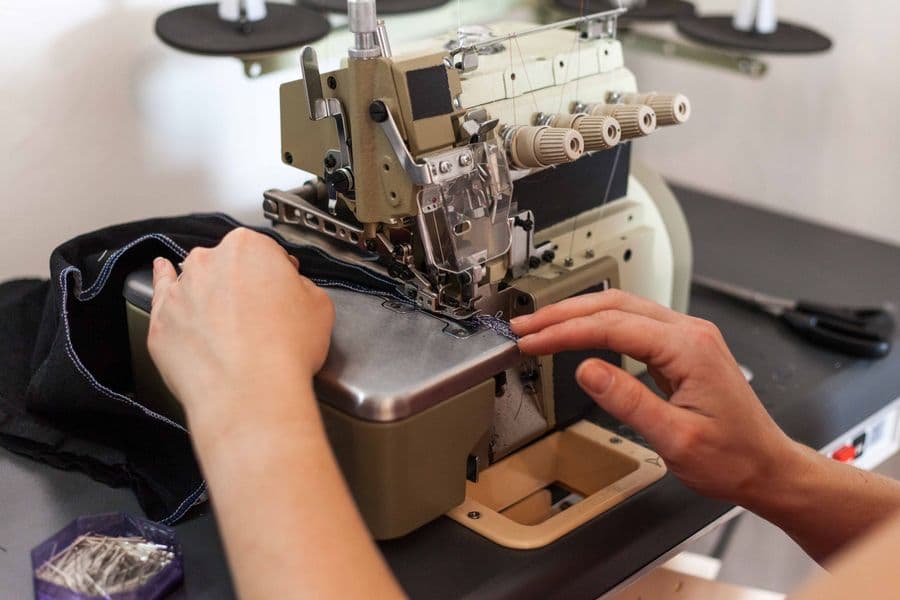
Almost every machine’s accessory tray slides off to leave a narrow arm. Slip the trouser leg over it like a sleeve and you can sew round the hem without the rest of the garment fighting you. Beginners who have not found the free arm try to sew a tube flat and end up stitching the leg shut.
Start at the inside leg seam so the overlap at the end is hidden, backstitch three stitches, sew round at an even distance from the folded edge, and backstitch again where you meet the start.
Jeans: the thick seam problem
Jeans are the same job plus one obstacle. When you reach the original side seam, the thickness jumps from two layers to about six in a centimetre, and the presser foot tilts up and loses grip. What you get is a clump of stitches, a skipped stitch or a jam.
Three fixes, in order. Fit a size 16 denim needle - most skipped stitches here are nothing more than this. Hammer the folded seam flat on a hard surface before you sew it, because the problem is thickness rather than toughness. And turn the hand wheel by hand for the three or four stitches at the thickest point, where you have far more control than the motor.
Our denim settings guide has the full setup, and if your machine keeps losing at this seam the honest answer is in our alterations roundup.
Keeping the original jeans hem
There is a well-known alternative worth knowing: instead of cutting, you fold the excess up on the outside just above the original hem, sew a line tight against that hem to hold the tuck, then press the tuck upwards so it hides inside the leg. The factory hem - the thick, slightly faded edge that reads as original - stays on the bottom of the trouser.
It works well on jeans with distinctive hems, it is faster than a real hem, and the downside is a small ridge inside the leg. For a pair you wear rather than photograph, it is often the better choice.
Machines that hem well
Chosen on free arm, blind hem stitch and whether they will survive a jeans seam.
Singer Heavy Duty 4423
The extra-high foot lift and torque that a folded jeans crossing seam needs.
Skip it if You mostly want gentle control on light fabrics, or a quiet machine for an apartment.
Brother CS7000X
Blind hem stitch, a speed slider for control, and a free arm for trouser legs.
Skip it if You want physical dials instead of a menu, or you will be sewing canvas, upholstery or leather regularly.
Brother XM2701
Hems trousers and skirts cheaply. Light denim is its honest ceiling.
Skip it if You already know you will sew every week, or you want speed control and a quilting table.
#ad - buy links go to Amazon and earn us a commission at no extra cost to you. Full disclosure.
The picks in full
01 - Best for hemming jeans
Singer Heavy Duty 4423
Fast, sturdy and simple - the machine for denim hems and tote bags.
- Metal interior frame, stainless steel bedplate
- 1,100 stitches per minute
- 23 stitches, one-step buttonhole, automatic threader
- Extra-high presser foot lift for thick layers
- Get it if
- You want physical dials, you plan to sew jeans, canvas or several layers, and you do not mind a machine that is loud and quick.
- Skip it if
- You mostly want gentle control on light fabrics, or a quiet machine for an apartment.
The trade-off
Heavy duty means a metal frame and a fast motor, not an industrial machine. It handles denim well; real leather is still a struggle.
#ad - opens Amazon in a new tab. How we earn
How the Singer Heavy Duty 4423 scores
Our judgment on the six axes described on the methodology page. Not measurements - we do not run a test lab.
- Setup and threading
- 7/10
- Everyday stitch quality
- 8/10
- Thick fabric
- 9/10
- Beginner features
- 6/10
- Durability reputation
- 8/10
- Help for this exact model
- 9/10
Overall 7.8/10
02 - Best for hemming everything else
Brother CS7000X
Does the fiddly parts for you so you can spend your energy learning to sew.
- 70 built-in stitches, 7 one-step buttonholes
- Automatic needle threader, drop-in top bobbin
- Speed-control slider
- Wide table and 10 presser feet included
- Get it if
- You want threading, buttonholes and stitch settings handled by the machine, and you might try quilting later - the wide table is already in the box.
- Skip it if
- You want physical dials instead of a menu, or you will be sewing canvas, upholstery or leather regularly.
The trade-off
Light and mostly plastic. That makes it easy to carry and quiet on cottons and mid-weights; it is not built for heavy layers every day.
#ad - opens Amazon in a new tab. How we earn
How the Brother CS7000X scores
Our judgment on the six axes described on the methodology page. Not measurements - we do not run a test lab.
- Setup and threading
- 9/10
- Everyday stitch quality
- 8/10
- Thick fabric
- 6/10
- Beginner features
- 9/10
- Durability reputation
- 7/10
- Help for this exact model
- 10/10
Overall 8.2/10
03 - Best cheap hemming machine
Brother XM2701
The find-out-if-I-actually-like-this machine.
- 27 stitches, one-step buttonhole
- Automatic needle threader, drop-in bobbin
- 6 presser feet included
- Light enough to carry to a class
- Get it if
- You are not sure sewing will stick and you want a real, capable machine without spending what a better one costs.
- Skip it if
- You already know you will sew every week, or you want speed control and a quilting table.
The trade-off
Lightweight and basic. It does everything a beginner needs - buttonholes, zippers, hems - but you will outgrow it sooner than the CS7000X.
#ad - opens Amazon in a new tab. How we earn
How the Brother XM2701 scores
Our judgment on the six axes described on the methodology page. Not measurements - we do not run a test lab.
- Setup and threading
- 9/10
- Everyday stitch quality
- 7/10
- Thick fabric
- 5/10
- Beginner features
- 7/10
- Durability reputation
- 6/10
- Help for this exact model
- 9/10
Overall 7.3/10
Questions beginners actually ask
How do you hem pants with a sewing machine?
Put the trousers on with the right shoes, pin the fold and measure its depth on each leg. Turn them inside out, mark the finished length, cut leaving about 4cm, press a double fold, then sew round the leg over the machine's free arm with a straight stitch about 3mm long.
How much do you leave for a hem on pants?
About 4cm (1.5 inches) for most trousers, 2.5cm for lightweight fabric, and around 3cm for jeans. That allowance covers a double fold - one small turn to hide the raw edge and one larger turn up to the finished line.
What stitch do you use to hem pants?
A straight stitch at about 2.5 to 3mm for most trousers. Use the blind hem stitch and its matching foot on wool or formal trousers where you want the hem nearly invisible, and a narrow zigzag or twin needle on stretch fabric, where a straight stitch would snap.
How do you sew over the thick seam when hemming jeans?
Fit a size 16 denim needle, flatten the folded seam with a hammer on a hard surface first, and turn the hand wheel by hand for the thickest three or four stitches. Placing a folded scrap of denim under the back of the presser foot also keeps the foot level as it climbs.
Can you hem jeans and keep the original hem?
Yes. Fold the excess up on the outside just above the factory hem, sew a line tight against that hem to hold the tuck, then press the tuck up so it sits inside the leg. The original faded edge stays on the bottom. The trade-off is a small ridge inside.
Why is my hem uneven on one leg?
Usually because the fold was measured by eye rather than with a ruler, or the pins shifted when you took the trousers off. Most people also have a slight leg-length difference. Measure the depth of the fold on each leg separately, write both numbers down, and work from the numbers.
Sources
Specifications are taken from manufacturer listings. We do not run a test lab and never claim to - how each machine is assessed is set out on our methodology page.