Guides
How to find your sewing machine manual
Manufacturers give manuals away as free PDFs - Brother, Singer and Janome all run their own archives. The only thing you need is the model number, and it is printed on the machine.
By Michael W. · Published

Disclosure: this page contains affiliate links. As an Amazon Associate, StitchStarter earns from qualifying purchases at no extra cost to you. Prices are read from Amazon daily and dated; the price you pay is the one Amazon shows at checkout. It never changes which machines we recommend. Full disclosure.
Quick picks
The short answer. Every pick is explained in full below, including who should skip it.
| # | Product | Best for | Score | Price |
|---|---|---|---|---|
| 1 | 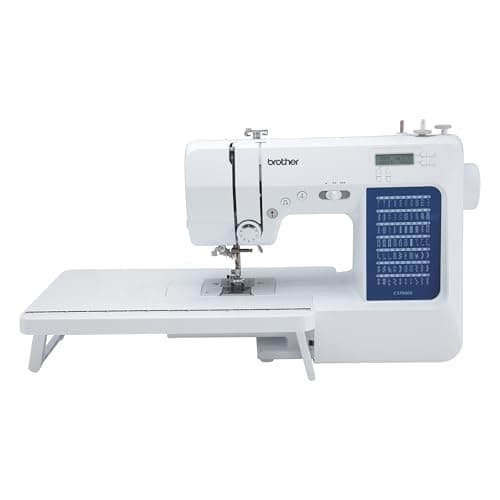 Brother CS7000XMore walkthroughs for this exact model than almost any other. | Best documented beginner machine | 8.2 | |
| 2 | 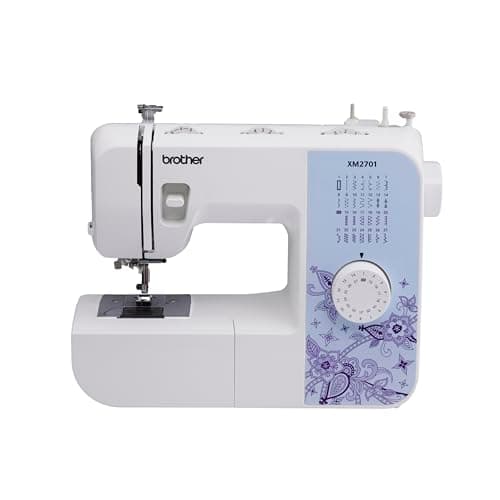 Brother XM2701Widely sold, so the threading videos all exist. | Best documented cheap machine | 7.3 | |
| 3 | 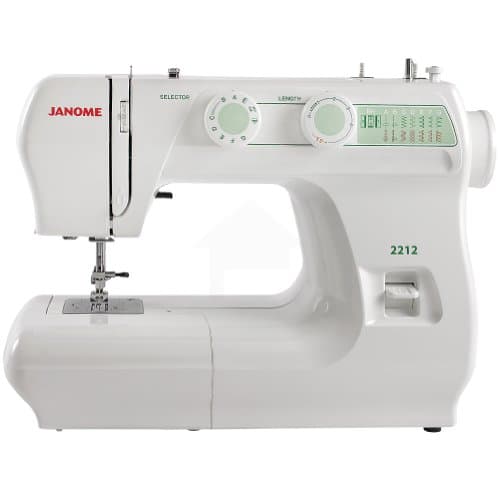 Janome 2212A dealer network that will show you the machine in person. | Best for dealer-backed help | 7.6 |
Prices shown are Amazon prices as of November 1, 2026 and can change.Scores are our editorial judgment on six axes, explained on the methodology page. We do not run a test lab and never claim to.
Go to the manufacturer’s own support site and search your model number. Brother, Singer and Janome all publish their sewing machine manuals as free PDF downloads, including for machines they stopped making years ago. You do not need a subscription site, you do not need to pay, and you should not have to give an email address.
The official archives:
Brother — the support center at brother-usa.com/support. Enter the model number, open Manuals, download the PDF. Brother’s global support site also keeps per-model manual pages, so a search for your model plus “manual” usually lands directly on one.
Singer — manuals.singer.com/manuals, which covers Singer along with Husqvarna Viking and Pfaff. Singer no longer prints paper manuals at all; download is the only official route, which is worth knowing before you go looking for a printed copy.
Janome — janome.com/support, which has a Manuals section; Janome hosts the instruction books as PDFs directly on its own site.
For any other brand, the pattern is the same and it is worth trying before anything else: search the manufacturer name plus “support manuals”, then the model number. The scraped-PDF sites that rank for manual searches are almost always serving a copy of the free file you can get from the manufacturer, sometimes behind an account wall.
Finding the model number, which is the only hard part
Every search starts here, and the number is rarely where people look first. Check, in this order:
Where machine identification is usually printed. The model number is what the archives search on; the serial number matters mainly for vintage machines.
A warning that saves real time: machines sold through big-box retailers often carry retailer-specific model numbers, so a near-match is not a match. Searching a model number one digit out gives you the wrong threading diagram, which is worse than having none. Our guide to big-box store sewing machines explains why store-exclusive model numbers are harder to research in general.
What the manual gives you that a video does not
Video is better than any manual for watching a task once. The manual is better for five specific things that are model-dependent and that nobody puts in a video:
The exact threading path and bobbin-winding sequence for your machine. This is the single most valuable page in the book, because threading is the biggest cause of what beginners read as machine faults. Our threading guide covers the general path, but your machine’s own diagram beats it every time.
Which bobbin class it takes. Bobbins are not universal, and the wrong class fits well enough to cause tension problems while never quite working. See bobbins explained.
Where to oil it, and where never to oil it. Model-specific, and getting it wrong does damage. Our maintenance guide covers the general routine.
The stitch chart with recommended settings. Which stitch number is which, and the stitch length and width each one wants — including the buttonhole sequence, which is the one procedure most people need written down. See how to sew a buttonhole.
Accessory and part identifiers. Which presser feet fit, what the shank type is, what the needle plate screw takes. This is what you need when you buy a walking foot and want it to actually fit — which is exactly the situation our guide to sewing leather on a regular machine sends people into.
Vintage, inherited and pre-1960 machines
Older machines are usually easier than people fear, because they were made in huge numbers and documented thoroughly.
Start with the serial number, not the model name. On vintage Singers the serial number is the identifier that dates the machine and tells you which model family it belongs to, and it is typically stamped on the body near the handwheel or on a plate underneath. Once you know the family, the manual search gets easy.
Try the manufacturer first anyway. Singer’s own manual archive covers a long back catalog, and it costs nothing to search.
Then a dealer or a repair shop. A shop that services old machines has usually seen yours, and will often identify it from a photo. That visit is also the moment to get it serviced, which on an inherited machine is almost always worth it — our repair-or-replace guide has the real numbers, and are vintage machines good for beginners is honest about the catch.
Expect the manual to assume knowledge. Older instruction books are brisk about oiling and tension and silent about everything a modern beginner wants explained. Pair it with our terms glossary.
Instruction book or service manual? They are different things
A search for a manual turns up two documents and they are not interchangeable, which catches people out when a machine needs attention.
The instruction book — also called the owner’s manual or user guide — is the one the manufacturers publish free. It is written for the person sewing: threading, bobbin winding, stitch selection, the accessory list, routine cleaning, and a short troubleshooting table. This is the document you want, and it is the one every archive above is serving.
The service manual is written for a technician. It covers timing, hook-to-needle clearance, feed dog height, tension assembly rebuilds and the adjustment screws you are not supposed to touch, usually with exploded parts diagrams. Manufacturers generally do not publish these free, and for most owners that is fine: the adjustments in them are the ones that need the right gauges and turn a working machine into a broken one when guessed at. If a machine genuinely needs timing work, the cost-effective route is a shop, not a PDF — our repair cost guide has the published rates and the rule for when a repair is worth paying for.
One middle case worth knowing: many instruction books list the parts you can buy — bobbin class, needle type, foot shank, light bulb — without needing the service manual at all. That parts list is usually buried near the back, and it is the second most useful page in the book after the threading diagram.
When there is no manual to find
Two cases genuinely dead-end, and it is worth naming them rather than sending you round in circles.
Own-label and unbranded machines. A supermarket or catalog machine with no named manufacturer often has no published manual anywhere, because the brand that sold it no longer exists. Your best route is to identify the platform it was built on — a repair shop can often tell at a glance — and use that manual instead.
Toy and mini machines. Frequently sold with a single folded sheet and nothing online. This is one of several reasons we steer people away from them in our cheap machines roundup: a machine nobody documents is a machine nobody can help you with.
In both cases, the generic routes still work: our threading guide, tension guide and stitches guide are written to be machine-agnostic for exactly this situation.
If the real problem is that nobody documents your machine
Help availability is one of the six axes we score every machine on, and it is the one buyers never think about until they need it. These three are the best-documented machines we recommend.
Brother CS7000X
There are more threading and setup walkthroughs for this exact model than for almost any other beginner machine, and Brother hosts the manual free on its support site.
Skip it if You want physical dials instead of a menu, or you will be sewing canvas, upholstery or leather regularly.
Brother XM2701
Sold in enormous numbers at the cheap end, which means every common question about it has already been answered somewhere.
Skip it if You already know you will sew every week, or you want speed control and a quilting table.
Janome 2212
Fewer videos than the Brothers, but a dealer network behind it - and a dealer who will show you the machine in person beats any manual.
Skip it if You want an automatic threader, a one-step buttonhole or a drop-in bobbin - it has none of them.
#ad - buy links go to Amazon and earn us a commission at no extra cost to you. Prices shown are Amazon prices as of November 1, 2026 and can change. Full disclosure.
The picks in full
01 - Best documented beginner machine
Brother CS7000X
Does the fiddly parts for you so you can spend your energy learning to sew.
- 70 built-in stitches, 7 one-step buttonholes
- Automatic needle threader, drop-in top bobbin
- Speed-control slider
- Wide table and 10 presser feet included
- Get it if
- You want threading, buttonholes and stitch settings handled by the machine, and you might try quilting later - the wide table is already in the box.
- Skip it if
- You want physical dials instead of a menu, or you will be sewing canvas, upholstery or leather regularly.
The trade-off
A metal internal frame inside a light plastic shell. That makes it easy to carry and quiet on cottons and mid-weights; it is not built for heavy layers every day the way a Heavy Duty is.
How the Brother CS7000X scores
Our judgment on the six axes described on the methodology page. Not measurements - we do not run a test lab.
- Setup and threading
- 9/10
- Everyday stitch quality
- 8/10
- Thick fabric
- 6/10
- Beginner features
- 9/10
- Durability reputation
- 7/10
- Help for this exact model
- 10/10
Overall 8.2/10
02 - Best documented cheap machine
Brother XM2701
The find-out-if-I-actually-like-this machine.
- 27 stitches, one-step buttonhole
- Automatic needle threader, drop-in bobbin
- 6 presser feet included
- Light enough to carry to a class
- Get it if
- You are not sure sewing will stick and you want a real, capable machine without spending what a better one costs.
- Skip it if
- You already know you will sew every week, or you want speed control and a quilting table.
The trade-off
Lightweight and basic. It does everything a beginner needs - buttonholes, zippers, hems - but you will outgrow it sooner than the CS7000X.
How the Brother XM2701 scores
Our judgment on the six axes described on the methodology page. Not measurements - we do not run a test lab.
- Setup and threading
- 9/10
- Everyday stitch quality
- 7/10
- Thick fabric
- 5/10
- Beginner features
- 7/10
- Durability reputation
- 6/10
- Help for this exact model
- 9/10
Overall 7.3/10
03 - Best for dealer-backed help
Janome 2212
Twelve stitches, nothing to break - the classroom favorite.
- 12 stitches, dial controls, four-step buttonhole
- Drop feed for free-motion quilting
- Free arm for cuffs and sleeves
- A reputation for lasting decades
- Get it if
- You value reliability over conveniences and want a machine still working long after the computerized ones are gone.
- Skip it if
- You want an automatic threader, a one-step buttonhole or a drop-in bobbin - it has none of them.
The trade-off
Fewer conveniences, more longevity. The four-step buttonhole and front-loading bobbin are a little more work to learn.
How the Janome 2212 scores
Our judgment on the six axes described on the methodology page. Not measurements - we do not run a test lab.
- Setup and threading
- 6/10
- Everyday stitch quality
- 9/10
- Thick fabric
- 7/10
- Beginner features
- 4/10
- Durability reputation
- 10/10
- Help for this exact model
- 7/10
Overall 7.6/10
Questions beginners actually ask
Where can I find my sewing machine manual for free?
On the manufacturer's own support site. Brother publishes manuals at brother-usa.com/support, Singer at manuals.singer.com/manuals (which also covers Husqvarna Viking and Pfaff), and Janome in the Manuals section of janome.com/support. All three are free PDF downloads and all three cover discontinued models. The paid and account-walled manual sites are usually serving a copy of the same free file.
Where is the model number on a sewing machine?
Check the front or right-hand side of the body first, then the silver or white label on the back or underside - that one carries the full model number plus the serial number and is the authoritative one. Also look inside the accessory compartment, on the foot pedal or lead, and in your original order email.
Does Singer still send printed manuals?
No. Singer no longer produces printed manuals; the official route is a free PDF download from its manuals site. That is worth knowing before you go hunting for a paper copy or pay a third party to post you one.
How do I find a manual for an old or vintage sewing machine?
Start with the serial number rather than the model name - on vintage Singers it is usually stamped on the body near the handwheel or on a plate underneath, and it identifies the model family. Search the manufacturer's own archive first, since the back catalogs are long, then ask a repair shop: a shop that services old machines can often identify yours from a photo.
What if my sewing machine has no brand or model number?
Own-label, catalog and unbranded machines often have no published manual anywhere because the selling brand no longer exists. The workable route is to identify the platform the machine was built on - a repair shop can usually tell at a glance - and use that manual. Failing that, machine-agnostic threading, tension and stitch guides will get you sewing.
Do I really need the manual if I can watch videos?
Video is better for watching a task once; the manual is better for the five things that are specific to your machine - the exact threading path and bobbin-winding sequence, which bobbin class it takes, where to oil it and where never to, the stitch chart with recommended settings, and which presser feet and parts actually fit.
Sources
- Brother USA - support center and manuals
- Singer - manuals for Singer, Husqvarna Viking and Pfaff
- Singer help - where can I find a printed manual?
- Janome - support and manuals
Specifications are taken from manufacturer listings. We do not run a test lab and never claim to - how each machine is assessed is set out on our methodology page.
Read next
- How to thread a sewing machine
The generic path, for when the model-specific diagram is missing.
- Sewing machine bobbins explained
- Sewing machine maintenance
- Are vintage sewing machines good for beginners?