Best For · Heavy Duty line compared
Which Singer Heavy Duty sewing machine is best?
The Singer Heavy Duty 4423, for almost everyone. All four machines in the line share the same frame, the same motor and the same stitch quality - what you are really choosing between is a buttonhole and a box of feet.
By Michael W. · Published
Disclosure: this page contains affiliate links. As an Amazon Associate, StitchStarter earns from qualifying purchases at no extra cost to you. Prices are read from Amazon daily and dated; the price you pay is the one Amazon shows at checkout. It never changes which machines we recommend. Full disclosure.
Quick picks
The short answer. Every pick is explained in full below, including who should skip it.
| # | Product | Best for | Score | Price |
|---|---|---|---|---|
| 1 | 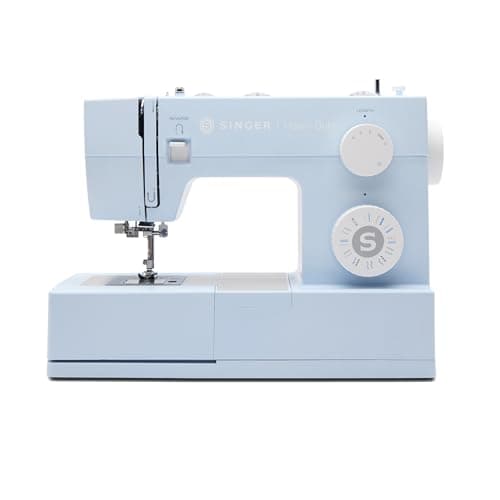 Singer Heavy Duty 4423One-step buttonhole, automatic threader, the sensible middle of the line. | Best Heavy Duty overall | 7.8 | |
| 2 | 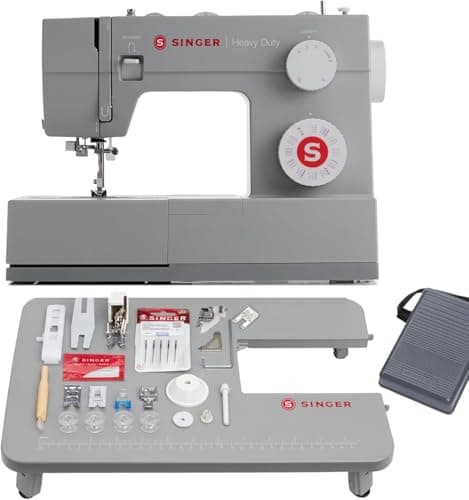 Singer Heavy Duty 4452Same machine plus a walking foot and an extension table. | Best if you want the accessories | 7.7 | |
| 3 | 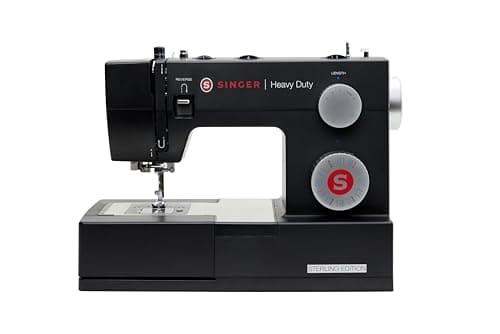 Singer Heavy Duty 443232 stitches instead of 23. Sews identically. | Best if you want more stitches | 7.6 | |
| 4 | 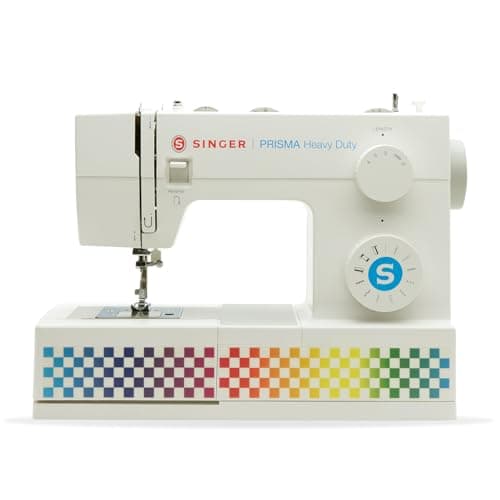 Singer Heavy Duty 4411Same frame and motor, but a four-step buttonhole and 11 stitches. | Cheapest way into the line | 7.2 |
Prices shown are Amazon prices as of November 1, 2026 and can change.Scores are our editorial judgment on six axes, explained on the methodology page. We do not run a test lab and never claim to.
Buy the Singer Heavy Duty 4423. It is the model in the line where the two features beginners actually miss — a one-step buttonhole and an automatic needle threader — are both present, and everything above it in the range is paying for stitches or accessories rather than a better machine.
That is worth stating bluntly, because the Heavy Duty line is one of the most confusing product families a first-time buyer runs into. The 4411, 4423, 4432 and 4452 look almost identical, are sold side by side, and carry four different prices. Here is the thing nobody in the listings says clearly: all four share the same metal interior frame, the same stainless steel bedplate, the same 1,100 stitches per minute motor and the same extra-high presser foot lift. They sew the same seam. What separates them is the buttonhole mechanism, the stitch count, the threader and what comes in the box.
The whole line, in one table
Built from the manufacturer specifications on each model. Where a row reads the same across the line, that is not an error - it is the point of this page.
The 4411 question: is a four-step buttonhole a dealbreaker?
The 4411 is the cheapest way into the line and shares every structural part with the others. Its two real compromises are a four-step buttonhole and eleven stitches.
A four-step buttonhole means you turn a dial through four positions, pivoting the fabric, to sew each side and each bar tack of every buttonhole. It is not difficult, but it is the feature beginners most often wish they had paid for, because the first time you need six matching buttonholes down a shirt front you discover that “not difficult” and “consistent” are different words. Our buttonhole guide walks through both methods if you want to judge for yourself.
Buy the 4411 if you know your sewing is hems, seams, curtains and repairs. Buy the 4423 if clothes are anywhere in the plan. One more practical note: Amazon currently stocks the 4411 mainly as a decorated special edition, so the machine that arrives is a standard 4411 in a non-standard color. Our 4423 vs 4411 comparison covers that pairing in full.
The 4432: paying for stitches
The 4432 adds nine stitches over the 4423 — 32 instead of 23 — plus a wider set of stretch and decorative options. It sews identically. The honest position is that most owners settle on four or five stitches within a month: straight, zigzag, a stretch stitch, a blind hem and the buttonhole. If you know you will use stretch stitches on knits regularly, the 4432 is a reasonable buy. If you are buying it because 32 sounds better than 23, it is not. 4452 vs 4432 and 4423 vs 4432 go through the pairings directly.
The 4452: paying for the box
The 4452 is the 4423 with a larger accessory set, and the item that matters in that set is an even-feed walking foot. There is also a slide-on extension table. Both are genuinely useful — the walking foot is the single best accessory for thick fabric, quilting and anything that refuses to slide, and the table supports bulk that would otherwise drag your seam crooked.
So the 4452 is a good buy on exactly one condition: that you would otherwise have bought those two accessories separately. If you would not, you are paying extra for a box. Our upholstery roundup is the case where we do recommend it outright, because there the walking foot is not optional.
Who should skip the Heavy Duty line entirely
This is the part the line’s popularity tends to drown out. The Heavy Duty machines are fast, loud mechanical machines with no speed limiter, which means the foot pedal is your only control and the slowest speed is still fairly brisk. Three buyers should look elsewhere:
Nervous first-timers. If you want to sew at a crawl while your hands learn, you want a speed slider, and the Brother CS7000X has one.
Anyone sewing light or delicate fabric. Chiffon, fine knits and lining fabric want gentleness, not 1,100 stitches a minute. See settings for thin and delicate fabric.
Anyone sewing in a shared or quiet space. These machines are loud. Our quiet machines roundup exists because that complaint is real and common.
What all four get right, and what none of them does
The reason this line sells as well as it does is that the shared platform is genuinely good at one thing: pushing a straight seam through material that stalls lighter machines. The metal frame keeps the machine planted instead of walking across the table, the steel bedplate lets fabric slide rather than grab, and the extra-high presser foot lift gets four layers of denim under the needle in the first place. For hemming jeans, making tote bags, running up curtains or repairing canvas, any of the four does the job and does it for years.
What none of them does is gentle. There is no speed limiter anywhere in the range, the machines are loud, and the stitch they produce on everyday cotton is good rather than exceptional. They also share a front-panel layout with dials rather than a screen, which most owners come to prefer and some find dated. Knowing both halves of that is the difference between buying the right machine and buying the popular one.
The cross-brand question
Plenty of people arrive at the Heavy Duty line because it is the most visible “sturdy” option, not because they compared it to anything. Two pages are worth reading before you commit: Janome 2212 vs Singer 4423, which is the build-versus-speed question, and Brother XM2701 vs Singer 4423, which is the convenience-versus-muscle question. Our Singer machines for beginners roundup also covers the lighter Singer models, which suit a different buyer entirely.
The picks in full
01 - Best Heavy Duty overall
Singer Heavy Duty 4423
Fast, sturdy and simple - the machine for denim hems and tote bags.
- Metal interior frame, stainless steel bedplate
- 1,100 stitches per minute
- 23 stitches (97 stitch applications), one-step buttonhole, automatic threader
- Top drop-in bobbin with a clear cover
- Extra-high presser foot lift for thick layers
- Get it if
- You want physical dials, you plan to sew jeans, canvas or several layers, and you do not mind a machine that is loud and quick.
- Skip it if
- You mostly want gentle control on light fabrics, or a quiet machine for an apartment.
The trade-off
Heavy duty means a metal frame and a fast motor, not an industrial machine. It handles denim well; real leather is still a struggle.
How the Singer Heavy Duty 4423 scores
Our judgment on the six axes described on the methodology page. Not measurements - we do not run a test lab.
- Setup and threading
- 7/10
- Everyday stitch quality
- 8/10
- Thick fabric
- 9/10
- Beginner features
- 6/10
- Durability reputation
- 8/10
- Help for this exact model
- 9/10
Overall 7.8/10
02 - Best if you want the accessories
Singer Heavy Duty 4452
The 4423 with a bigger accessory kit, including a walking foot.
- 32 built-in stitches (110 stitch applications), one-step buttonhole
- 1,100 stitches per minute
- Full metal interior frame, top drop-in bobbin
- Larger accessory set, including an even-feed walking foot
- Slide-on extension table for larger projects
- Get it if
- You already know you want the Heavy Duty platform and you would otherwise buy a walking foot and an extension table separately.
- Skip it if
- You are only guessing that you might sew heavy fabric - start with the 4423.
The trade-off
Mechanically it is the same machine as the 4423. You are buying accessories, so the only question is whether you will use them.
How the Singer Heavy Duty 4452 scores
Our judgment on the six axes described on the methodology page. Not measurements - we do not run a test lab.
- Setup and threading
- 7/10
- Everyday stitch quality
- 8/10
- Thick fabric
- 9/10
- Beginner features
- 6/10
- Durability reputation
- 8/10
- Help for this exact model
- 8/10
Overall 7.7/10
03 - Best if you want more stitches
Singer Heavy Duty 4432
The middle Heavy Duty - more stitches than the 4423, same bones.
- 32 built-in stitches (110 stitch applications), one-step buttonhole
- 1,100 stitches per minute
- Full metal interior frame, top drop-in bobbin
- Automatic needle threader, drop feed
- Get it if
- You want the Heavy Duty platform and will genuinely use stretch and decorative stitches.
- Skip it if
- You would only ever use straight and zigzag - the 4423 covers that for less.
The trade-off
It sews identically to the 4423. The stitch library is the whole difference, and most owners settle on four or five stitches within a month.
How the Singer Heavy Duty 4432 scores
Our judgment on the six axes described on the methodology page. Not measurements - we do not run a test lab.
- Setup and threading
- 7/10
- Everyday stitch quality
- 8/10
- Thick fabric
- 9/10
- Beginner features
- 6/10
- Durability reputation
- 8/10
- Help for this exact model
- 8/10
Overall 7.6/10
04 - Cheapest way into the line
Singer Heavy Duty 4411
The entry point to the Heavy Duty line - same frame, fewer stitches.
- 11 built-in stitches (69 stitch applications), four-step buttonhole
- 1,100 stitches per minute
- Metal interior frame, stainless steel bedplate
- Adjustable stitch length and width, drop feed
- Extra-high presser foot lift
- Get it if
- You want the Heavy Duty frame and motor for straight seams and hems, and you will rarely make a buttonhole.
- Skip it if
- You want a one-step buttonhole - the 4423 adds one for a small step up.
The trade-off
The four-step buttonhole is the real difference, and it is the feature beginners most often wish they had paid for. Amazon currently stocks the 4411 only as a decorated special edition, so the machine you receive is the standard 4411 in a non-standard color.
$219.99 · 5% off · price as of November 1, 2026
#ad - opens Amazon in a new tab. How we earn
How the Singer Heavy Duty 4411 scores
Our judgment on the six axes described on the methodology page. Not measurements - we do not run a test lab.
- Setup and threading
- 7/10
- Everyday stitch quality
- 8/10
- Thick fabric
- 9/10
- Beginner features
- 4/10
- Durability reputation
- 8/10
- Help for this exact model
- 8/10
Overall 7.2/10
Questions beginners actually ask
Which Singer Heavy Duty sewing machine is the best?
The Singer Heavy Duty 4423 for most buyers. All four machines in the line share the same metal interior frame, stainless steel bedplate, 1,100 stitches per minute motor and extra-high presser foot lift, so they sew the same seam. The 4423 is the cheapest model that has both a one-step buttonhole and an automatic needle threader.
What is the difference between the Singer 4411, 4423, 4432 and 4452?
Not the sewing. The 4411 has 11 stitches, a four-step buttonhole and no automatic threader. The 4423 has 23 stitches, a one-step buttonhole and a threader. The 4432 adds nine more stitches and sews identically to the 4423. The 4452 is the same machine again plus a walking foot and a slide-on extension table.
Is the Singer 4452 worth the extra over the 4423?
Only if you will use the accessories. Mechanically it is the same machine. You are buying an even-feed walking foot and an extension table, which are genuinely valuable for thick fabric, upholstery and quilting - and completely wasted money if they stay in the box.
Is the Singer 4411 good enough for a beginner?
Yes for hems, seams, curtains and repairs - it has the same frame and motor as the rest of the line. The catch is the four-step buttonhole, which is the feature beginners most often wish they had paid for once they try to sew six matching buttonholes down a shirt. If clothes are in the plan, step up to the 4423.
Are Singer Heavy Duty machines actually heavy duty?
They have a metal internal frame, a stainless steel bedplate and a fast motor, which is what the phrase means on a domestic machine. It does not mean industrial. They handle denim, canvas and several layers well; real leather and continuous upholstery work are beyond them.
Do any of the Singer Heavy Duty machines have a speed limiter?
No. None of the four has one, and the slowest pedal speed is still fairly brisk. If sewing slowly while you learn matters to you, that is the strongest single argument for a computerized machine with a speed slider instead.
Sources
Specifications are taken from manufacturer listings. We do not run a test lab and never claim to - how each machine is assessed is set out on our methodology page.
Read next
- Singer 4423 vs 4411
The buttonhole question in full.
- Singer 4452 vs 4432
- Brother CS7000X vs Singer Heavy Duty 4452
The cross-brand check before you commit to the line at all.
- Best sewing machines for denim and heavy fabric
- Do you need a heavy duty sewing machine?