Guides
How much space does a sewing machine need?
The machine is the small part. What actually decides whether you sew is the table it sits on and the floor you cut on.
By Michael W. · Published
Disclosure: this page contains affiliate links. As an Amazon Associate, StitchStarter earns from qualifying purchases at no extra cost to you. Prices are read from Amazon daily and dated; the price you pay is the one Amazon shows at checkout. It never changes which machines we recommend. Full disclosure.
Quick picks
The short answer. Every pick is explained in full below, including who should skip it.
| # | Product | Best for | Score | Price |
|---|---|---|---|---|
| 1 | 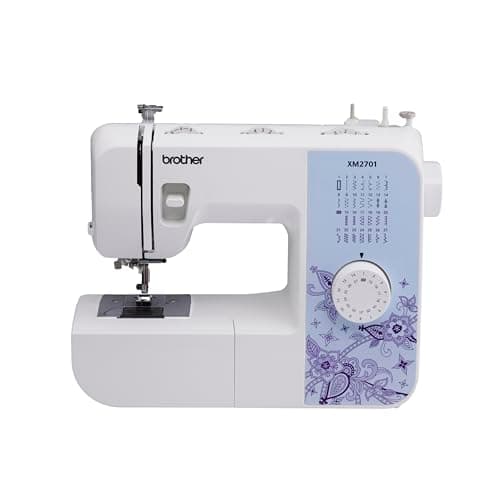 Brother XM2701Light enough to lift onto a shelf and store between sessions. Brother XM2701Light enough to lift onto a shelf and store between sessions. | Best for a small space | 7.3 | |
| 2 | 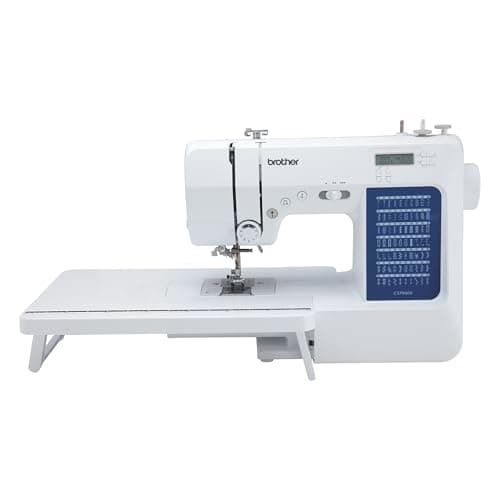 Brother CS7000XComes with a wide table - plan for the footprint, not the machine. Brother CS7000XComes with a wide table - plan for the footprint, not the machine. | Best if the table is big enough | 8.2 | |
| 3 |  Singer Start 1304The least machine to find room for, with the fewest settings. Singer Start 1304The least machine to find room for, with the fewest settings. | Smallest and lightest | 6.1 |
Prices shown are Amazon prices as of October 10, 2026 and can change.Scores are our editorial judgment on six axes, explained on the methodology page. We do not run a test lab and never claim to.
A full-size beginner sewing machine occupies roughly the footprint of a desktop printer: about 16 inches wide, 7 inches deep and 12 inches tall, and typically somewhere between 12 and 20 pounds. What it actually needs, though, is a table around 30 inches wide and at least 20 inches deep, at a height of about 28 to 30 inches, with clear space behind and to the left for fabric to lie flat.
The gap between those two numbers is the whole answer. People who abandon sewing in a small home almost never ran out of room for the machine. They ran out of room for the fabric, or for a surface big enough to cut on.
How big and heavy a beginner machine really is
Across the machines on this site the numbers cluster tightly. Manufacturers publish dimensions and weights per model, and the beginner bracket varies much less than the marketing suggests.
Approximate space to plan for. Published dimensions and weights vary by model - check the listing for the exact machine.
Two things to notice. A heavier machine is better to sew on and worse to store - weight is what stops a machine walking across the table on a thick seam, which is why our denim roundup favors metal frames. And an embroidery machine needs more room than its footprint suggests, because the hoop arm sweeps side to side while it works.
The table is the real requirement
Depth matters more than width. You want at least 20 inches front to back, because the machine takes about 7 and the fabric behind the needle has to go somewhere. A shallow table pushes the finished part of the seam off the back edge, where it hangs and drags your stitch line crooked.
Height should be lower than a dining table. Around 28 to 30 inches works for most people - a standard dining table at 30 inches is usable, a kitchen counter is far too high. The test is whether your forearms sit roughly level when your hands are at the needle. Too high and your shoulders ache within an hour.
It must not wobble. A machine at speed on a folding table shakes the whole surface, and the vibration shows up in the seam. Rigidity is worth more than size.
Allow room to the left. This is where the body of the project lives while you sew, and it is the space quilters need most - see our throat space guide.
Machines for a space-limited setup
Picked on what a small room actually needs: something you can lift onto a shelf, and something that does not demand a large permanent surface.
Brother XM2701
Genuinely light to carry and store, with every stitch a beginner needs - the best machine for a setup that has to be packed away.
Skip it if You already know you will sew every week, or you want speed control and a quilting table.
Brother CS7000X
Worth the space if you have it, but plan for the wide extension table as well as the machine.
Skip it if You want physical dials instead of a menu, or you will be sewing canvas, upholstery or leather regularly.
Singer Start 1304
The smallest and lightest here. Fewest settings too, so read what preset stitches cost you before choosing on size alone.
Skip it if You expect to sew garments regularly, or you want an automatic threader and a one-step buttonhole.
#ad - buy links go to Amazon and earn us a commission at no extra cost to you. Prices shown are Amazon prices as of October 10, 2026 and can change. Full disclosure.
The space nobody plans for: cutting
Cutting fabric needs more room than sewing it, and it is where small-space sewing actually breaks down. A garment pattern laid out on folded fabric wants a surface roughly 3 feet by 5 feet - larger than most tables in a home.
Three workable answers. Cut on the floor, which is free and hard on the knees. Cut on a bed, which works for light fabric and is awkward for anything that slides. Or cut in sections on a smaller table, moving the fabric carefully and keeping the grainline aligned - our pattern guide explains why the grainline is the thing you must not compromise while doing this.
A rotary cutter and a self-healing mat makes small-surface cutting much more practical than scissors do, because you do not need to lift the fabric to cut it.
Sewing in a small apartment or shared room
Buy a machine you can lift. A setup that has to be packed away between sessions only survives if packing it away is easy. This is the single strongest argument for a light machine, and it is the argument our portable roundup is built on.
Think about noise as well as space. A shared wall changes the shortlist completely - a Heavy Duty machine is loud and has no slow setting, and in a flat at night that is the thing that stops a machine being used. Our quiet machine roundup is the right starting point if that is your situation.
Keep the machine threaded and ready. The practical difference between people who sew often and people who do not is usually how many minutes it takes to start. A machine stored in a cupboard with the pedal in a drawer costs ten minutes of setup; a machine on a shelf with a cover on costs one.
Light the needle, not the room. Every machine has a work light and most of them are inadequate. A small clip-on lamp aimed at the needle plate is the cheapest real improvement to a cramped sewing space.
The chair, and why it matters more than you think
You will sit still for an hour at a time with both hands forward and one foot on a pedal. A dining chair at a 30-inch table is workable; an armchair or a stool is not.
What to aim for: feet flat on the floor with the pedal within easy reach, thighs level, and the needle roughly at the level where your eyes look down comfortably without leaning. If you find yourself craning forward, the table is too low or the light is too poor - and our roundup for older sewers goes further into lighting, reach and comfort.
The picks in full
01 - Best for a small space
Brother XM2701
The find-out-if-I-actually-like-this machine.
- 27 stitches, one-step buttonhole
- Automatic needle threader, drop-in bobbin
- 6 presser feet included
- Light enough to carry to a class
- Get it if
- You are not sure sewing will stick and you want a real, capable machine without spending what a better one costs.
- Skip it if
- You already know you will sew every week, or you want speed control and a quilting table.
The trade-off
Lightweight and basic. It does everything a beginner needs - buttonholes, zippers, hems - but you will outgrow it sooner than the CS7000X.
How the Brother XM2701 scores
Our judgment on the six axes described on the methodology page. Not measurements - we do not run a test lab.
- Setup and threading
- 9/10
- Everyday stitch quality
- 7/10
- Thick fabric
- 5/10
- Beginner features
- 7/10
- Durability reputation
- 6/10
- Help for this exact model
- 9/10
Overall 7.3/10
02 - Best if the table is big enough
Brother CS7000X
Does the fiddly parts for you so you can spend your energy learning to sew.
- 70 built-in stitches, 7 one-step buttonholes
- Automatic needle threader, drop-in top bobbin
- Speed-control slider
- Wide table and 10 presser feet included
- Get it if
- You want threading, buttonholes and stitch settings handled by the machine, and you might try quilting later - the wide table is already in the box.
- Skip it if
- You want physical dials instead of a menu, or you will be sewing canvas, upholstery or leather regularly.
The trade-off
A metal internal frame inside a light plastic shell. That makes it easy to carry and quiet on cottons and mid-weights; it is not built for heavy layers every day the way a Heavy Duty is.
$279.99 · 11% off · price as of October 10, 2026
#ad - opens Amazon in a new tab. How we earn
How the Brother CS7000X scores
Our judgment on the six axes described on the methodology page. Not measurements - we do not run a test lab.
- Setup and threading
- 9/10
- Everyday stitch quality
- 8/10
- Thick fabric
- 6/10
- Beginner features
- 9/10
- Durability reputation
- 7/10
- Help for this exact model
- 10/10
Overall 8.2/10
03 - Smallest and lightest
Singer Start 1304
Six stitches, preset widths, almost nothing to get wrong.
- 6 built-in stitches with preset width and length
- Four-step buttonhole
- Very light - easy for a child or a small workspace
- Free arm for cuffs and sleeves
- Get it if
- You are buying for a child or a teenager, or you want the smallest possible number of decisions between you and a straight seam.
- Skip it if
- You expect to sew garments regularly, or you want an automatic threader and a one-step buttonhole.
The trade-off
Preset stitches remove the settings that confuse beginners - and also remove the settings you need as soon as you sew anything unusual. This is a machine you will outgrow, on purpose. Worth knowing before you set your heart on it: Amazon no longer lists the 1304 itself, so the button here opens a search rather than a product page. If nothing comes up, the Singer M1500 is the nearest machine still stocked - six stitches, preset widths, the same deliberately small set of decisions.
#ad - opens Amazon in a new tab. How we earn
How the Singer Start 1304 scores
Our judgment on the six axes described on the methodology page. Not measurements - we do not run a test lab.
- Setup and threading
- 8/10
- Everyday stitch quality
- 6/10
- Thick fabric
- 3/10
- Beginner features
- 5/10
- Durability reputation
- 5/10
- Help for this exact model
- 7/10
Overall 6.1/10
Questions beginners actually ask
How much space does a sewing machine need?
The machine itself occupies about the footprint of a desktop printer - roughly 16 inches wide and 7 deep. What it needs is a stable table around 30 inches wide and at least 20 inches deep, at about 28 to 30 inches high, with clear space behind and to the left for fabric.
How big is a beginner sewing machine?
Most full-size beginner machines are around 16 inches wide, 7 inches deep and 12 inches tall. Published dimensions vary by model, so check the listing if it has to fit a particular shelf - and remember a machine with a wide extension table needs considerably more surface.
How heavy is a sewing machine?
Beginner machines typically fall between about 12 and 20 pounds. Lighter plastic-bodied machines are easier to carry and store; heavier metal-framed machines are better to sew on, because weight is what stops a machine shifting when the needle hits a thick seam.
What height should a sewing table be?
Around 28 to 30 inches, which is dining-table height or slightly lower. A kitchen counter is far too high. The test is whether your forearms sit roughly level when your hands are at the needle - if you are reaching up, your shoulders will ache within an hour.
Can I sew on a dining table?
Yes, as long as it is stable. A standard dining table is about the right height and usually deep enough. The thing to avoid is a flimsy folding table, because a machine at speed shakes the whole surface and the vibration shows up in the seam.
How do I sew in a small apartment?
Buy a machine light enough to lift and store, keep it threaded and ready so starting takes a minute rather than ten, add a clip-on lamp aimed at the needle, and plan where you will cut - the floor with a rotary cutter and mat is the usual answer. Also weigh noise, which matters more than space in a shared building.
Sources
Specifications are taken from manufacturer listings. We do not run a test lab and never claim to - how each machine is assessed is set out on our methodology page.
Read next
- Best portable sewing machines for beginners
The lightest machines, for a setup that packs away.
- Best quiet sewing machines for beginners
- Sewing machine throat space explained
- Is a sewing machine worth it?