Best For · Best for baby sewing
The best sewing machines for baby clothes and blankets
Our pick is the Brother CS7000X: a free arm for tiny sleeves, stretch stitches for jersey, a speed slider for control, and the wide table a baby quilt needs already in the box. Baby sewing asks for a lot from one machine, and this is the one that covers it.
By Michael W. · Published
Disclosure: this page contains affiliate links. As an Amazon Associate, StitchStarter earns from qualifying purchases at no extra cost to you. Prices are read from Amazon daily and dated; the price you pay is the one Amazon shows at checkout. It never changes which machines we recommend. Full disclosure.
Quick picks
The short answer. Every pick is explained in full below, including who should skip it.
| # | Product | Best for | Score | Price |
|---|---|---|---|---|
| 1 | 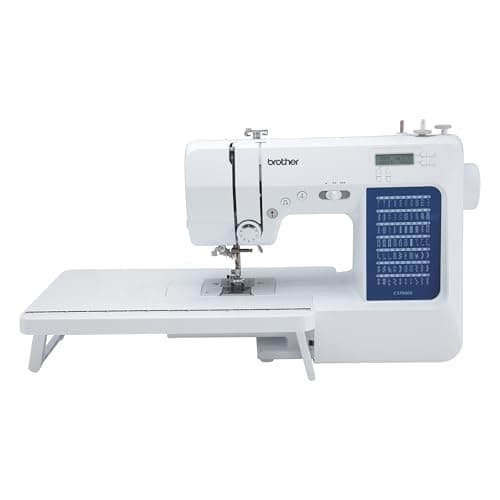 Brother CS7000XFree arm, stretch stitches, speed slider and the wide table for blankets. | Best for baby sewing overall | 8.2 | |
| 2 | 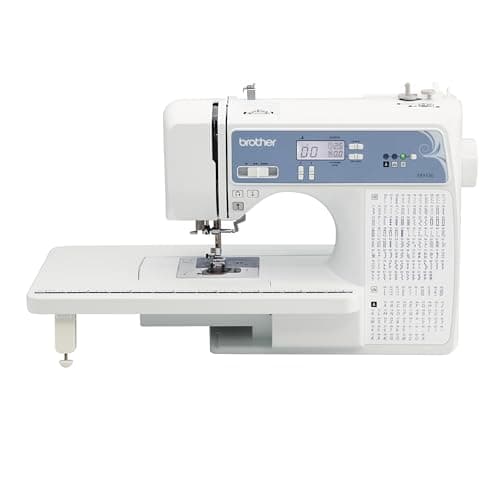 Brother XR9550Same platform, bigger stitch library, wide table, clearer display. | Best if blankets and quilts are the point | 7.7 | |
| 3 | 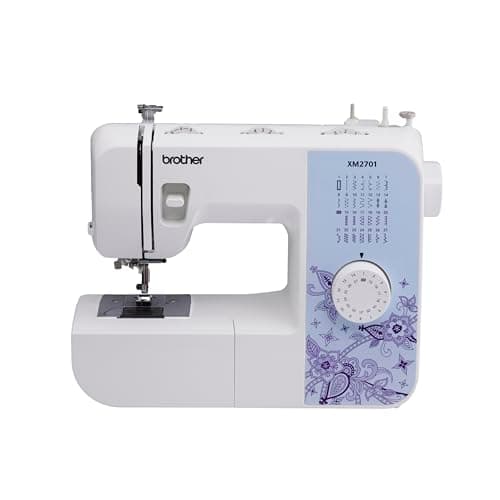 Brother XM2701Free arm, threader, one-step buttonhole. Cheap enough to be a maybe. | Best for one baby's worth of sewing | 7.3 | |
| 4 | 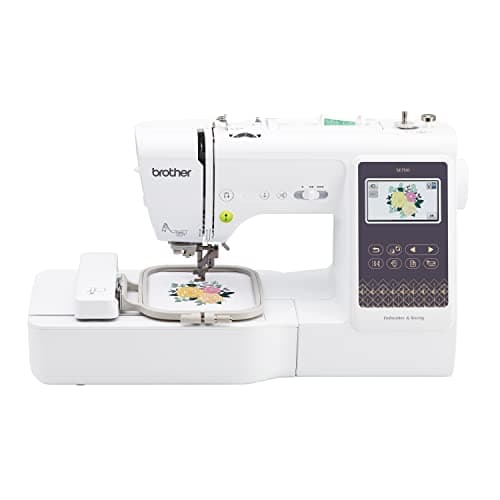 Brother SE700Stitches the name on the blanket. Genuine embroidery, not a gimmick. | Best for personalized baby gifts | 7.4 | |
| 5 | 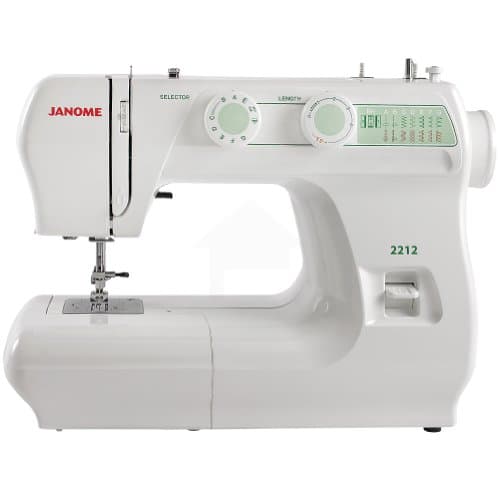 Janome 2212The cleanest stitch here on flannel and cotton, and nothing to break. | Best buy-once mechanical | 7.6 |
Prices shown are Amazon prices as of November 1, 2026 and can change.Scores are our editorial judgment on six axes, explained on the methodology page. We do not run a test lab and never claim to.
For sewing for a baby, buy the Brother CS7000X. Baby sewing is the most demanding job list a beginner machine gets handed — stretchy jersey one day, a quilted blanket the next, and almost all of it on openings narrow enough to fit over your fist — and the CS7000X is the machine in our registry that covers the whole list without being bad at any of it. Every other pick on this page is a specific exception.
It is worth being clear about what makes this different from our other roundups, because “sewing for a baby” sounds like one thing and is actually three. A onesie is a knit. A bib, a burp cloth and a changing mat are woven cotton, flannel or terry. A blanket is a quilt or a yard of minky, which is to say it is bulky and it sheds. If your honest answer is that you will only ever sew jersey, our knits and stretchy fabric roundup is the more focused page and ranks the same machines on that one job. This page is for the much more common buyer: someone who has a baby arriving in a few months and will make a bit of everything.
The criteria, in the order baby sewing imposes them
1. Can it sew a tiny circle? This is the first question and most roundups never ask it. A sleeve on a newborn cardigan is about four inches around. A leg opening on a pair of baby leggings is smaller. You cannot sew that flat on the machine bed — you need a free arm, the removable section of the bed that leaves a narrow post you can slide a small tube of fabric over. Every machine on this page has one, which is exactly why every machine on this page is here. Our guide to what a free arm actually is is the two-minute version, and it is the single most useful feature for this buyer.
2. Does it have a stitch with give in it? A plain straight stitch has no stretch. Sew a jersey onesie shoulder with one and the thread snaps the first time the garment is pulled over a head — which, with a baby, is roughly immediately. You need a narrow zigzag at minimum, and ideally a lightning-bolt stretch stitch. All five machines here have both.
3. Can you slow it down? Baby seams are short, curved and close to an edge. A machine you can only control with the pedal will run away from you on a four-inch curve. A speed-control slider turns the machine into something you steer rather than something you release, and it is the reason the CS7000X wins this page rather than placing second.
4. Will a blanket fit? A baby quilt is around 36 by 42 inches and it has batting in the middle. Quilting one on a machine with no table means the weight hangs off the edge of the bed and drags the seam crooked. A wide table clipped to the machine is not a luxury here; it is the difference between a blanket you finish and a blanket in a cupboard.
5. Will it get used at 11pm? Nearly everyone sewing for a baby is doing it in short bursts around something else. An automatic needle threader and a drop-in bobbin under a clear cover save about four minutes every single session. Over a few months that is the difference between the machine living on the table and the machine living in the box.
6. Does it do a buttonhole properly? Baby clothes are mostly fastened rather than pulled on, and that means buttonholes on plackets, bibs and sleep sacks. A one-step buttonhole — where the machine does all four sides from one dial position — is worth having. The Janome here has a four-step version, which works but takes practice.
Notice what is not on the list: a high stitch count, a serger, and anything about heavy fabric. Baby sewing never asks for muscle. Our stitches guide explains why the number on the box is the least useful figure in any specification, and do you need a serger answers the one question this topic generates most often. The short version is no, not for this.
The five picks against what baby sewing actually asks for. Specifications are the manufacturers' published figures; the suitability columns are our read of them, not a lab measurement.
Best for baby sewing overall: Brother CS7000X
70 built-in stitches including several with stretch in them, seven one-step buttonhole styles, an automatic needle threader, a drop-in top bobbin under a clear cover, ten presser feet, a free arm and a wide table in the box. Read that list against the six criteria above and it is the only machine here that answers all of them.
The feature that matters most for this buyer is the one nobody puts on the front of the box: the speed-control slider. Set it low and the machine will creep around the armhole curve of a six-month-old’s t-shirt while you concentrate on where the fabric is going instead of how fast it is going. On knits specifically, feeding slowly is what stops a seam coming out wavy — it is not a skill problem, it is a speed problem, and the slider solves it.
The second feature that matters is the wide table, because the day the blanket gets made is the day you find out whether you have one. Our full Brother CS7000X review is the longer version of why this is the machine we recommend most often on this site.
Honest cons. It is a computerized machine with a menu, and if you would rather turn a physical dial it will irritate you every time — read our mechanical vs computerized guide before you commit either way. The body is light plastic over a metal internal frame, so it shifts when something genuinely thick goes under the needle; a minky blanket with a bound edge is about its limit. Sixty of the seventy stitches are decorative and you will use roughly six. And if the honest total of your baby sewing is three bibs and a hemmed blanket, this is more machine than the job needs.
Best if blankets and quilts are the point: Brother XR9550
The XR9550 is the same platform as the CS7000X with a bigger stitch library (165 stitches, 55 of them alphanumeric), eight one-step buttonhole styles, a larger LCD display, and the wide table included. If the sewing you are picturing is mostly blankets, quilts, cot bumpers and a nursery full of soft furnishings rather than clothes, the bigger screen and the alphabet stitches earn their place: you can stitch a name or a date into a quilt label without owning an embroidery machine.
Our CS7000X vs XR9550 comparison takes the pair apart properly, and the XR9550 review is the full detail. For a baby quilt specifically, our quilting roundup ranks the same machines on batting, basting and free-motion work.
Honest cons. The big one for this page: there is no speed slider. On a straight quilting seam that costs you nothing, but on a jersey sleeve it costs you the thing that makes the CS7000X better. Most of the 165 stitches will never be used, and the practical gain over the CS7000X is a display rather than a capability. Same light body, same limits on thick seams.
Best for one baby’s worth of sewing: Brother XM2701
27 stitches, a one-step buttonhole, an automatic needle threader, a drop-in bobbin, six presser feet and a free arm, on the lightest body here. That is the whole beginner checklist minus speed control and a table, for meaningfully less money.
This is the right pick for a very specific and very common situation: a baby is coming, you want to make a few things, and you genuinely do not know whether sewing will become a hobby. The XM2701 is cheap enough that finding out is not a financial decision, and it is a real machine rather than a toy — it will sew the onesie, the bib and the buttonholes on the sleep sack perfectly well. Our Brother XM2701 review has the detail, and how much to spend on a first machine makes the general case for starting here.
Honest cons. No speed limiter, so the pedal is your only control and tight curves on knit are harder than they need to be. No wide table, which makes a quilted blanket genuinely awkward — possible, but you will be fighting the weight. The light body moves on a thick bound edge. And if sewing does stick, you will outgrow it inside a year.
Best for personalized baby gifts: Brother SE700
A great deal of baby sewing is not for your own baby. It is a gift, and the thing that turns a hemmed square of minky into a gift people keep is a name stitched into the corner. The SE700 is a competent sewing machine (103 stitches, automatic threader, drop-in bobbin, free arm) and a real 4 x 4 inch embroidery machine with 135 built-in designs, a color touchscreen that previews the design before it commits thread to fabric, and wireless design transfer.
A 4 x 4 inch field is small for embroidery generally and almost exactly right for this job: a name, a date, a monogram, a small motif on a bib or a blanket corner. If personalized gifts for new babies are a recurring thing in your family — or a small income — this is the machine that does it. Our SE700 review, sewing machine vs embroidery machine and combination machine roundup are the three pages to read before you spend this much.
Honest cons. It costs substantially more than everything else here, and the same money buys a better dedicated sewing machine. Embroidery has running costs that nobody mentions in the listing — stabilizer, embroidery thread, bobbin thread, designs — and they add up quietly. A 4 x 4 inch field gets small the moment you want anything ambitious. It is also more machine to learn than a first-timer may want in the weeks before a baby arrives, which is not a trivial objection. There is no wide table for quilting, because the accessory ecosystem here points at hoops instead.
Best buy-once mechanical: Janome 2212
Twelve stitches, two dials, a free arm, drop feed for free-motion quilting, and a reputation for running for decades. If you want one machine that will still be working when the baby you are sewing for is sewing for their own, this is it — there is no circuit board in it to fail. It also lays down the cleanest stitch on this page on ordinary cotton and flannel, which is most of what a bib, a burp cloth and a changing mat are made of.
The drop feed matters more here than it looks: lowering the feed dogs is what lets you free-motion quilt a baby blanket, moving the fabric by hand instead of letting the machine push it. That is rare at this price. Our Janome 2212 review and are Janome machines good for beginners both take the trade apart.
Honest cons. This is the pick with the most to say against it for this particular buyer. No automatic needle threader, no drop-in bobbin and no one-step buttonhole, which are precisely the three conveniences that a tired person sewing in twenty-minute windows notices the absence of. The four-step buttonhole takes practice, and baby clothes have a lot of buttonholes. The front-loading bobbin means you cannot see the thread running out. Twelve stitches is genuinely twelve stitches, so your stretch options are a zigzag and not much else. And there is no wide table, so a quilted blanket needs furniture to the left of the machine.
What you will actually sew, in the order it happens
Worth naming, because it changes what matters. In rough order of how most people get there:
Bibs and burp cloths first. Two rectangles, a curve, a binding, a snap or a button. Woven cotton, flannel or terry. This is the ideal first project for anyone, baby or not, and it needs nothing special from a machine — see what to sew first.
A blanket second. Either a single layer of minky or flannel with a hem, or a simple patchwork quilt with batting. The first needs a machine that tolerates a bulky fabric that slips; the second needs a table and patience.
Then clothes. Leggings, a t-shirt, a simple dress, a sleep sack. This is where the free arm and the stretch stitch start earning their keep, and where people who bought on stitch count discover they needed speed control instead.
Then repairs and alterations, forever. Shortening sleeves, replacing poppers, patching knees, letting out a waistband. Our alterations and mending roundup ranks the same machines against that job specifically.
The two things that matter more than the machine
Both of these fix more baby-sewing problems than any upgrade will.
A ballpoint or jersey needle for anything knit. A universal needle has a slightly sharp point that cuts the knitted loops, and the result is a line of small holes along a seam that appears days later when the garment is stretched. A ballpoint needle pushes between the loops instead. They cost very little and they are the single highest-value purchase a new sewer makes. Our needle sizes guide covers which to buy, and settings for stretchy fabric has the stitch and tension starting points.
Choose the fabric for your skill, not the pattern photo. Cotton flannel, quilting cotton and cotton jersey with a decent amount of body are all forgiving. Minky, slinky rayon jersey and anything with a shiny finish are not — minky in particular slides, sheds everywhere and needs clips rather than pins. Our guide to the easiest fabrics to sew is the page to read before you order anything, and it will save you more frustration than any machine feature.
The picks in full
01 - Best for baby sewing overall
Brother CS7000X
Does the fiddly parts for you so you can spend your energy learning to sew.
- 70 built-in stitches, 7 one-step buttonholes
- Automatic needle threader, drop-in top bobbin
- Speed-control slider
- Wide table and 10 presser feet included
- Get it if
- You want threading, buttonholes and stitch settings handled by the machine, and you might try quilting later - the wide table is already in the box.
- Skip it if
- You want physical dials instead of a menu, or you will be sewing canvas, upholstery or leather regularly.
The trade-off
A metal internal frame inside a light plastic shell. That makes it easy to carry and quiet on cottons and mid-weights; it is not built for heavy layers every day the way a Heavy Duty is.
How the Brother CS7000X scores
Our judgment on the six axes described on the methodology page. Not measurements - we do not run a test lab.
- Setup and threading
- 9/10
- Everyday stitch quality
- 8/10
- Thick fabric
- 6/10
- Beginner features
- 9/10
- Durability reputation
- 7/10
- Help for this exact model
- 10/10
Overall 8.2/10
02 - Best if blankets and quilts are the point
Brother XR9550
More stitches and a bigger screen than the CS7000X, for the same job.
- 165 built-in stitches - 110 utility and decorative plus 55 alphanumeric
- 8 one-step buttonhole styles
- LCD display and stitch selection
- Wide table included
- Automatic threader, drop-in bobbin
- Get it if
- You want the CS7000X's convenience with a larger display and more decorative stitches.
- Skip it if
- You would rather put the difference toward fabric - you will use a fraction of the stitch library.
The trade-off
The extra stitches are decorative. The real difference from the CS7000X is the display, and the CS7000X's speed slider is arguably worth more to a beginner.
How the Brother XR9550 scores
Our judgment on the six axes described on the methodology page. Not measurements - we do not run a test lab.
- Setup and threading
- 9/10
- Everyday stitch quality
- 8/10
- Thick fabric
- 6/10
- Beginner features
- 8/10
- Durability reputation
- 7/10
- Help for this exact model
- 8/10
Overall 7.7/10
03 - Best for one baby's worth of sewing
Brother XM2701
The find-out-if-I-actually-like-this machine.
- 27 stitches, one-step buttonhole
- Automatic needle threader, drop-in bobbin
- 6 presser feet included
- Light enough to carry to a class
- Get it if
- You are not sure sewing will stick and you want a real, capable machine without spending what a better one costs.
- Skip it if
- You already know you will sew every week, or you want speed control and a quilting table.
The trade-off
Lightweight and basic. It does everything a beginner needs - buttonholes, zippers, hems - but you will outgrow it sooner than the CS7000X.
How the Brother XM2701 scores
Our judgment on the six axes described on the methodology page. Not measurements - we do not run a test lab.
- Setup and threading
- 9/10
- Everyday stitch quality
- 7/10
- Thick fabric
- 5/10
- Beginner features
- 7/10
- Durability reputation
- 6/10
- Help for this exact model
- 9/10
Overall 7.3/10
04 - Best for personalized baby gifts
Brother SE700
A sewing machine and a 4x4 embroidery machine in one box.
- 103 sewing stitches plus 135 built-in embroidery designs
- 4 x 4 inch embroidery field
- Color touchscreen, wireless design transfer
- Automatic threader, drop-in bobbin
- Get it if
- You want to personalize things - names, monograms, patches, small designs - as well as sew.
- Skip it if
- You mainly want to make clothes or quilts. The same money buys a better dedicated sewing machine.
The trade-off
The 4 x 4 inch embroidery field is small, and embroidery has ongoing costs - stabilizer, thread, designs. Great at what it does; not a shortcut to a better sewing machine.
How the Brother SE700 scores
Our judgment on the six axes described on the methodology page. Not measurements - we do not run a test lab.
- Setup and threading
- 8/10
- Everyday stitch quality
- 8/10
- Thick fabric
- 5/10
- Beginner features
- 8/10
- Durability reputation
- 7/10
- Help for this exact model
- 8/10
Overall 7.4/10
05 - Best buy-once mechanical
Janome 2212
Twelve stitches, nothing to break - the classroom favorite.
- 12 stitches, dial controls, four-step buttonhole
- Drop feed for free-motion quilting
- Free arm for cuffs and sleeves
- A reputation for lasting decades
- Get it if
- You value reliability over conveniences and want a machine still working long after the computerized ones are gone.
- Skip it if
- You want an automatic threader, a one-step buttonhole or a drop-in bobbin - it has none of them.
The trade-off
Fewer conveniences, more longevity. The four-step buttonhole and front-loading bobbin are a little more work to learn.
How the Janome 2212 scores
Our judgment on the six axes described on the methodology page. Not measurements - we do not run a test lab.
- Setup and threading
- 6/10
- Everyday stitch quality
- 9/10
- Thick fabric
- 7/10
- Beginner features
- 4/10
- Durability reputation
- 10/10
- Help for this exact model
- 7/10
Overall 7.6/10
Questions beginners actually ask
What is the best sewing machine for baby clothes?
The Brother CS7000X. Baby clothes are knit fabric sewn on very small circumferences, which means you need two things: a free arm to get a four-inch sleeve over the machine bed, and a stitch with stretch in it so the seam does not snap. The CS7000X has both, plus a speed-control slider that lets you creep around a tight curve instead of feeding it at full pedal.
What kind of sewing machine do I need to make baby blankets?
Any machine here will hem a single-layer flannel or minky blanket. A quilted blanket with batting is where it changes: you want a wide extension table so the weight of the quilt does not hang off the machine bed and drag the seam crooked. The Brother CS7000X and Brother XR9550 both include one. On a machine without a table, put something level with the bed to the left of the machine.
Do I need a serger to sew baby clothes?
No. A serger gives a neater inside finish and trims the seam as it sews, but a narrow zigzag or a stretch stitch on an ordinary machine produces a seam that is perfectly strong and perfectly safe. Buy the sewing machine first; a serger is a second machine, not a first one.
Why does my baby onesie seam pop when it is stretched?
You almost certainly sewed it with a straight stitch, which has no give at all. Use a narrow zigzag or a lightning-bolt stretch stitch on anything knit, and pair it with a ballpoint needle so the needle pushes between the knitted loops instead of cutting them. Those two changes fix the overwhelming majority of knit-sewing complaints.
Can a beginner sew baby clothes?
Yes, and it is a good place to start - the pieces are small, the fabric is cheap and a mistake costs half a yard. Start with bibs and burp cloths, which are rectangles and a binding, then a blanket, then simple leggings or a t-shirt. Use cotton flannel or quilting cotton for the first few projects and leave minky and slippery jersey until you have some hours in.
Is a free arm necessary for baby sewing?
It is the most useful single feature for this job. A newborn sleeve is around four inches in circumference and a leg opening is smaller, and you cannot sew a tube that small flat on the machine bed. A free arm is the removable section that leaves a narrow post to slide the fabric over. Every machine on this page has one.
What sewing machine should I buy to make personalized baby gifts?
The Brother SE700, which is a competent sewing machine and a real 4 x 4 inch embroidery machine in one box. The field is small for embroidery generally and about right for a name, a date or a monogram on a blanket corner or a bib. If you only want a quilt label, the Brother XR9550's alphabet stitches will spell out a name without an embroidery machine at all.
Should I buy a mini sewing machine for baby projects?
We would avoid them. They are marketed hard at expectant parents because they look convenient and cost very little, but most have no adjustable stitch length and a bobbin case that drifts out of alignment, so they skip stitches on two layers of cotton. A real entry-level machine like the Brother XM2701 costs more and actually sews.
Sources
Specifications are taken from manufacturer listings. We do not run a test lab and never claim to - how each machine is assessed is set out on our methodology page.
Read next
- Best sewing machines for knits and stretchy fabric
The focused page if jersey is all you will sew.
- Best sewing machines for quilting beginners
For the blanket specifically.
- What is a free arm sewing machine?
The feature that sews a four-inch sleeve.
- The easiest fabrics to sew for beginners