Best For · Best for knits
The best sewing machines for knits and stretchy fabric
Knits do not need a special machine. They need a machine you can slow down, and the right needle.
By Michael W. · Published
Disclosure: this page contains affiliate links. As an Amazon Associate, StitchStarter earns from qualifying purchases at no extra cost to you. We do not display prices - they change daily, so every button opens the live listing. It never changes which machines we recommend. Full disclosure.
Quick picks
The short answer. Every pick is explained in full below, including who should skip it.
| # | Product | Best for | Score | Price |
|---|---|---|---|---|
| 1 | 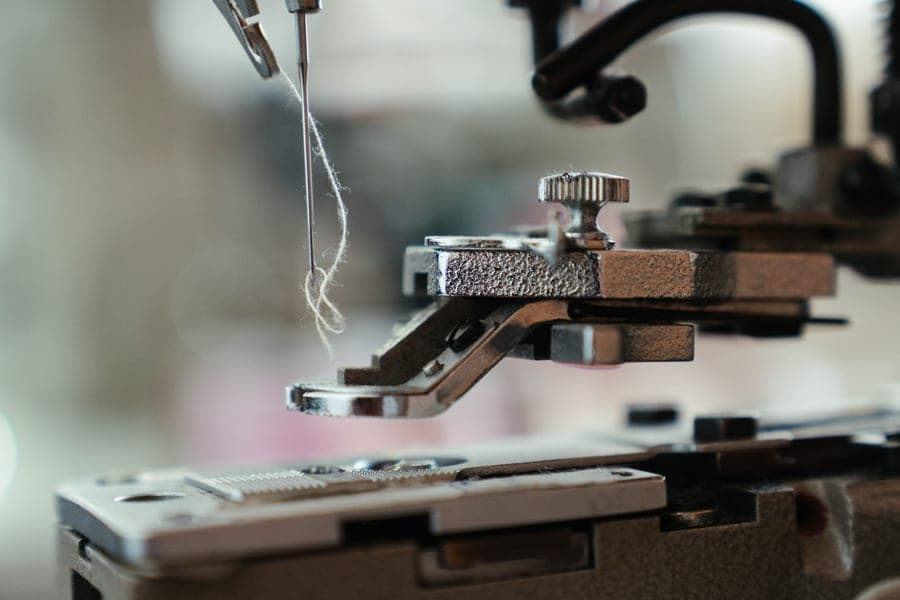 Brother CS7000XThe speed slider is the feature knits want, and it has the stretch stitches. Brother CS7000XThe speed slider is the feature knits want, and it has the stretch stitches. | Best overall for knits | 8.2 | |
| 2 | 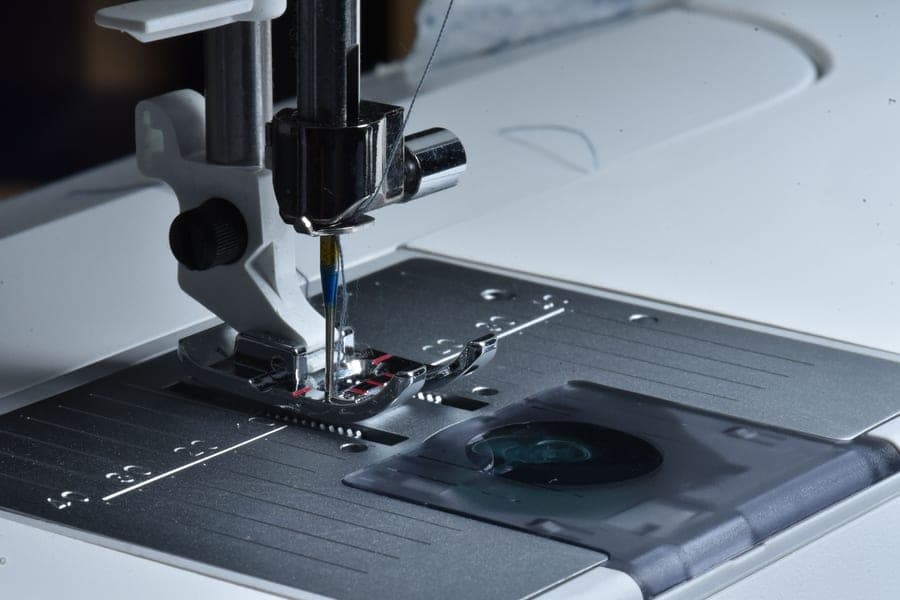 Brother XR9550A bigger library if you want to try every variation. No speed slider. Brother XR9550A bigger library if you want to try every variation. No speed slider. | Most stretch stitch options | 7.7 | |
| 3 |  Janome 2212Drop feed and real dials, so you set the stitch rather than pick it. Janome 2212Drop feed and real dials, so you set the stitch rather than pick it. | Best mechanical control | 7.6 | |
| 4 |  Brother XM2701Has the stretch stitch and the threader. You supply the patience. Brother XM2701Has the stretch stitch and the threader. You supply the patience. | Best cheap option | 7.3 |
Scores are our editorial judgment on six axes, explained on the methodology page. We do not run a test lab and never claim to.
The best sewing machine for knits and stretchy fabric is the Brother CS7000X, and the reason is its speed-control slider rather than any stitch in its library. Jersey, rib, scuba and sweatshirt fleece go wrong when they are fed too fast - the fabric stretches as it passes the needle and the seam comes out wavy. A machine you can set to run slowly, with a stretch stitch and a ballpoint needle, handles knits perfectly well. You do not need a serger to sew a t-shirt.
What you do need is three specific things, and only one of them is the machine.
The three things that fix knits
A ballpoint or jersey needle. This is most of the battle, and it costs very little. A universal needle has a slightly sharp point that cuts the loops knitted fabric is made of, which is what causes those small ladder-like holes along a seam. A ballpoint needle pushes between the loops instead. If your knit sewing has gone badly and you were using the needle that came with the machine, change it before you change anything else - our needle guide covers which size for which weight.
A stitch that stretches. A straight stitch has no give, so it snaps when the seam is pulled. You want either a narrow zigzag, a lightning-bolt stretch stitch, or a triple stretch stitch - all three exist on every machine on this page. Which one depends on the fabric, and all three beat a straight stitch every time. Our stitches guide explains the difference.
A slow, steady feed. The actual skill. Do not pull the fabric, do not push it, and let the feed dogs do the work at a pace you control. This is what a speed limiter buys you, and it is why the CS7000X beats machines with longer spec sheets here.
The four, side by side
Specifications as published by each manufacturer.
Note what is not in that table: a differential feed, which is the mechanism sergers use to stop knits stretching as they are sewn. No domestic sewing machine at this level has one. That is not a gap in this roundup - it is the reason the technique matters more than the model.
The accessory that does more than a machine upgrade
If knits are genuinely your main plan, a walking foot - also sold as an even-feed foot - is the best money you can spend after the needle. It grips the fabric from above and moves it in step with the feed dogs underneath, so the top layer cannot creep ahead of the bottom one. On slippery jersey and on anything with a nap, the difference is obvious immediately.
A walking foot that fits any of these machines costs a fraction of the gap between models. If you are weighing the CS7000X against a dearer machine for knit work, buy the CS7000X and a walking foot.
Do you need a serger for knits?
No, and buying one as a first machine is a mistake. A serger trims, seams and overlocks in one pass and gives you the inside finish you see on shop-bought t-shirts. It is a lovely machine and it cannot sew a zip, make a buttonhole or topstitch a hem - so it is a second machine, never a first one.
A twin needle on an ordinary machine gets you a hem that looks almost exactly like a coverstitched shop hem, which is the part of ready-to-wear finishing people most want. That is a two-dollar accessory solving a problem people spend hundreds on. Our serger guide makes the full case.
The picks in full
01 - Best overall for knits
Brother CS7000X
Does the fiddly parts for you so you can spend your energy learning to sew.
- 70 built-in stitches, 7 one-step buttonholes
- Automatic needle threader, drop-in top bobbin
- Speed-control slider
- Wide table and 10 presser feet included
- Get it if
- You want threading, buttonholes and stitch settings handled by the machine, and you might try quilting later - the wide table is already in the box.
- Skip it if
- You want physical dials instead of a menu, or you will be sewing canvas, upholstery or leather regularly.
The trade-off
Light and mostly plastic. That makes it easy to carry and quiet on cottons and mid-weights; it is not built for heavy layers every day.
#ad - opens Amazon in a new tab. How we earn
How the Brother CS7000X scores
Our judgment on the six axes described on the methodology page. Not measurements - we do not run a test lab.
- Setup and threading
- 9/10
- Everyday stitch quality
- 8/10
- Thick fabric
- 6/10
- Beginner features
- 9/10
- Durability reputation
- 7/10
- Help for this exact model
- 10/10
Overall 8.2/10
02 - Most stretch stitch options
Brother XR9550
More stitches and a bigger screen than the CS7000X, for the same job.
- 110 built-in stitches, 8 one-step buttonhole styles
- LCD display and stitch selection
- Wide table included
- Automatic threader, drop-in bobbin
- Get it if
- You want the CS7000X's convenience with a larger display and more decorative stitches.
- Skip it if
- You would rather put the difference toward fabric - you will use a fraction of the stitch library.
The trade-off
The extra stitches are decorative. The real difference from the CS7000X is the display, and the CS7000X's speed slider is arguably worth more to a beginner.
#ad - opens Amazon in a new tab. How we earn
How the Brother XR9550 scores
Our judgment on the six axes described on the methodology page. Not measurements - we do not run a test lab.
- Setup and threading
- 9/10
- Everyday stitch quality
- 8/10
- Thick fabric
- 6/10
- Beginner features
- 8/10
- Durability reputation
- 7/10
- Help for this exact model
- 8/10
Overall 7.7/10
03 - Best mechanical control
Janome 2212
Twelve stitches, nothing to break - the classroom favorite.
- 12 stitches, dial controls, four-step buttonhole
- Drop feed for free-motion quilting
- Free arm for cuffs and sleeves
- A reputation for lasting decades
- Get it if
- You value reliability over conveniences and want a machine still working long after the computerized ones are gone.
- Skip it if
- You want an automatic threader, a one-step buttonhole or a drop-in bobbin - it has none of them.
The trade-off
Fewer conveniences, more longevity. The four-step buttonhole and front-loading bobbin are a little more work to learn.
#ad - opens Amazon in a new tab. How we earn
How the Janome 2212 scores
Our judgment on the six axes described on the methodology page. Not measurements - we do not run a test lab.
- Setup and threading
- 6/10
- Everyday stitch quality
- 9/10
- Thick fabric
- 7/10
- Beginner features
- 4/10
- Durability reputation
- 10/10
- Help for this exact model
- 7/10
Overall 7.6/10
04 - Best cheap option
Brother XM2701
The find-out-if-I-actually-like-this machine.
- 27 stitches, one-step buttonhole
- Automatic needle threader, drop-in bobbin
- 6 presser feet included
- Light enough to carry to a class
- Get it if
- You are not sure sewing will stick and you want a real, capable machine without spending what a better one costs.
- Skip it if
- You already know you will sew every week, or you want speed control and a quilting table.
The trade-off
Lightweight and basic. It does everything a beginner needs - buttonholes, zippers, hems - but you will outgrow it sooner than the CS7000X.
#ad - opens Amazon in a new tab. How we earn
How the Brother XM2701 scores
Our judgment on the six axes described on the methodology page. Not measurements - we do not run a test lab.
- Setup and threading
- 9/10
- Everyday stitch quality
- 7/10
- Thick fabric
- 5/10
- Beginner features
- 7/10
- Durability reputation
- 6/10
- Help for this exact model
- 9/10
Overall 7.3/10
Questions beginners actually ask
What is the best sewing machine for stretchy fabric?
The Brother CS7000X, mainly because its speed-control slider lets you feed knits slowly, which is what stops a seam coming out wavy. It also has several stretch stitches. Pair it with a ballpoint needle and the fabric stops being difficult.
Can a regular sewing machine sew knit fabric?
Yes. Any machine with a zigzag or stretch stitch will sew jersey well if you use a ballpoint needle, keep the speed down and let the feed dogs move the fabric rather than pulling it. A serger produces a neater inside finish but is not required.
What stitch should I use for stretchy fabric?
A narrow zigzag for most seams, a lightning-bolt stretch stitch where the seam needs to take strain, and a twin needle for hems. A plain straight stitch has no give and will snap the first time the seam is pulled.
Why does my knit fabric get holes along the seam?
You are using a universal needle, which has a slightly sharp point that cuts the knitted loops. Switch to a ballpoint or jersey needle, which pushes between the loops instead. This is the single most common knit-sewing problem and the cheapest to fix.
Do I need a walking foot for knits?
Not to start, but it is the best accessory to add if knits become your main work. It grips from above and moves the top layer in step with the feed dogs below, which stops slippery jersey creeping. It costs far less than moving up a machine.
Sources
Specifications are taken from manufacturer listings. We do not run a test lab and never claim to - how each machine is assessed is set out on our methodology page.
Read next
- Easiest fabrics to sew for beginners
- Do you need a serger?
The honest answer for knit sewing.
- Sewing machine needle sizes
The ballpoint needle that fixes most knit problems.
- Best sewing machines for making clothes