Reviews · Biggest stitch library
Brother XR9550 review: 165 stitches, and the one it is missing
A capable first machine that is easy to recommend and easy to over-buy. The useful comparison is not against other brands - it is against its own cheaper sibling.
By Michael W. · Published
Disclosure: this page contains affiliate links. As an Amazon Associate, StitchStarter earns from qualifying purchases at no extra cost to you. Prices are read from Amazon daily and dated; the price you pay is the one Amazon shows at checkout. It never changes which machines we recommend. Full disclosure.
The Brother XR9550 is a good first sewing machine. That is the easy part of this review. The hard part is that almost everybody who searches for it is really asking a different question: should I buy this, or the Brother CS7000X that sits right next to it on the shelf and usually costs less?
So that is the question this page answers. The short version: the XR9550 gives you more stitches and a bigger, clearer display. It does not give you a speed-limiting slider, and for a complete beginner that single omission matters more than a hundred decorative stitches ever will.
What you actually get in the box
Brother publishes the specification plainly, so there is no mystery here. The XR9550 has 165 built-in stitches, and it is worth reading the breakdown rather than the headline: that number includes 55 alphanumeric characters for monogramming and 8 one-step auto-size buttonhole styles. The remaining utility and decorative stitches are the ones you will browse, and realistically you will use six of them — straight, zigzag, stretch, blind hem, overcast, buttonhole.
More useful than the stitch count is the hardware. There is a jam-resistant Quick-Set drop-in top bobbin, which means you can see how much thread is left through a clear cover instead of guessing. There is an automatic needle threading system, which removes the single most quit-inducing task in home sewing. Eight quick-change presser feet are included — buttonhole, blind hem, zipper, overcasting, monogramming, zigzag, spring-action quilting and button sewing — and so is a wide table and a hard case. Brother lists the machine at 10.14 lb, and the warranty is their usual tiered 1/2/25-year limited structure.
The wide table is the specification that genuinely earns its place. It clips on and turns a small, standard-bed machine into something you can feed a lap quilt across without the weight of the fabric dragging your seam off line. Buying one separately later costs real money, and on plenty of competing machines it is not even offered.
Brother XR9550 - the specifications that change how it sews, from Brother's published figures.
The case for the XR9550
The display is better than the CS7000X’s, and that is not a trivial point for someone who finds menus intimidating. Stitch selection is laid out clearly, the screen tells you which foot to fit and what stitch width and length the machine has chosen, and you can override those numbers without hunting through nested options. If you have been put off computerized machines because you assume they are fiddly, this is the one to look at.
The eight buttonhole styles are genuine value. A one-step buttonhole — you drop the button into the foot, the machine measures it and sews the hole to size — is the difference between finishing a shirt and abandoning it. Having eight variants means a keyhole buttonhole for a coat and a narrow one for a blouse are both there, which is more than most machines at this level offer. Our buttonhole guide walks through what the four-step alternative involves, and it is a fair argument for paying for the one-step.
And the monogramming is not entirely a gimmick. If you are buying partly to make gifts — labeled tote bags, named kids’ kit, embroidered tea towels — 55 built-in characters means you can do that without an embroidery machine. It is slow, it is one line at a time, and it is nothing like a proper embroidery unit, but it works. If that is the main reason you are buying, read our sewing machine vs embroidery machine guide before you spend, because the honest answer is probably a different machine.
The case against it
There is no speed-limiting slider. This is the review’s whole argument, so it is worth being precise about why it matters. A beginner’s first problem is not stitch selection — it is that the foot pedal is binary in their head. They press, the machine goes faster than they expected, the seam wanders and they stop trusting themselves. A slider that caps the top speed lets you sew at a pace your hands can keep up with for the first few weeks. The CS7000X has one. The XR9550 does not. One hundred extra stitches do not compensate.
The body is light plastic over a metal internal frame. At just over 10 lb, the machine will shift on the table when you hit the point where two folded denim hems cross. It will sew that seam, slowly, with a denim needle. It will not enjoy doing it every week. If denim, canvas or bag-making is the plan, the honest recommendation is in our denim and heavy fabric roundup instead.
Most of the stitch library is dead weight on your decision. We flag this on every computerized machine because it is how the whole category is sold, and it leads people to pay a premium for a number. Count the stitches you will actually select this year. It is six. Choose on the bobbin, the threader, the buttonhole and the table instead — which is the method our how to choose a sewing machine guide sets out from the start.
Who should buy the XR9550
Buy it if you have sewn a little before — a school class, a borrowed machine, an inherited one — so the pedal does not frighten you, and you want a machine that will still be enough three years from now. The wide table, the buttonhole range and the clear display are all things you grow into rather than out of.
Buy it if you want to make clothes with proper finished buttonholes and the odd monogram, on cotton, poplin, linen and light jersey. That is this machine’s natural territory and it is good at it. Our clothes-making roundup puts it in context against the alternatives.
Skip it if you have never touched a sewing machine and you are buying for yourself or a teenager. Get the speed slider. Our easiest machines roundup exists for exactly this buyer, and the XR9550 is not on it.
Skip it if your honest plan is hemming trousers and taking in waistbands. That is a job for something simpler and cheaper — see our alterations and mending picks.
The XR9550 and the two machines to weigh it against
One is the cheaper sibling with the feature it lacks. The other is the answer if thick fabric is in your plans.
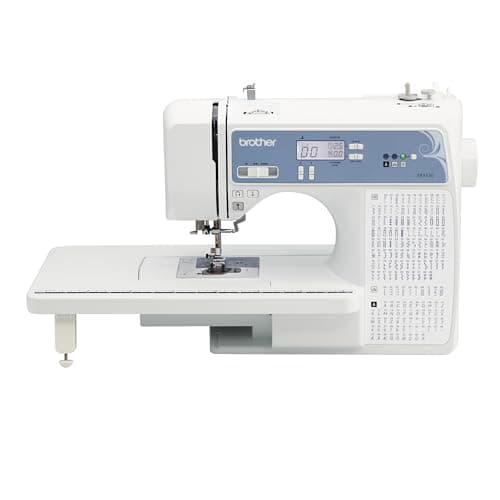
Brother XR9550
The bigger screen, 8 buttonhole styles, monogramming and the wide table in the box.
Skip it if You would rather put the difference toward fabric - you will use a fraction of the stitch library.
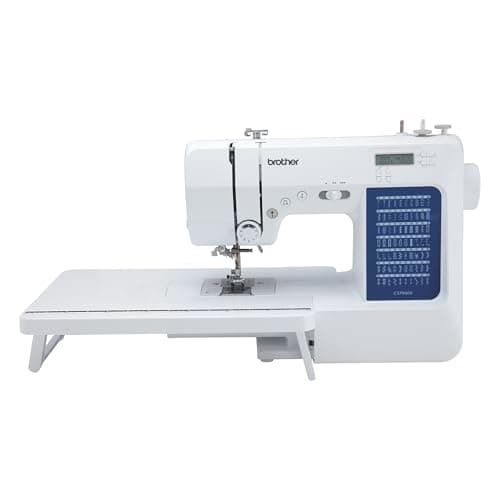
Brother CS7000X
Fewer stitches, usually cheaper, and it has the speed-limiting slider the XR9550 is missing.
Skip it if You want physical dials instead of a menu, or you will be sewing canvas, upholstery or leather regularly.
#ad - buy links go to Amazon and earn us a commission at no extra cost to you. Prices shown are Amazon prices as of October 11, 2026 and can change. Full disclosure.
The machine in full
Biggest stitch library at this level
Brother XR9550
More stitches and a bigger screen than the CS7000X, for the same job.
- 165 built-in stitches - 110 utility and decorative plus 55 alphanumeric
- 8 one-step buttonhole styles
- LCD display and stitch selection
- Wide table included
- Automatic threader, drop-in bobbin
- Get it if
- You want the CS7000X's convenience with a larger display and more decorative stitches.
- Skip it if
- You would rather put the difference toward fabric - you will use a fraction of the stitch library.
The trade-off
The extra stitches are decorative. The real difference from the CS7000X is the display, and the CS7000X's speed slider is arguably worth more to a beginner.
How the Brother XR9550 scores
Our judgment on the six axes described on the methodology page. Not measurements - we do not run a test lab.
- Setup and threading
- 9/10
- Everyday stitch quality
- 8/10
- Thick fabric
- 6/10
- Beginner features
- 8/10
- Durability reputation
- 7/10
- Help for this exact model
- 8/10
Overall 7.7/10
Questions beginners actually ask
Is the Brother XR9550 good for beginners?
Yes, with one caveat. The automatic needle threader, drop-in bobbin, one-step buttonholes and included wide table all make it a forgiving machine to learn on. What it lacks is a speed-limiting slider, so a complete beginner has to control the pace entirely with the foot pedal. If you have never used a sewing machine at all, the Brother CS7000X has that slider and is usually cheaper.
What is the difference between the Brother XR9550 and the CS7000X?
The XR9550 has more built-in stitches (165, including 55 alphanumeric characters), eight one-step buttonhole styles and a larger LCD display. The CS7000X has fewer stitches but includes a speed-limiting slider. Both include a wide table, an automatic needle threader and a drop-in top bobbin, and both are built on the same light plastic body over a metal internal frame. For a nervous beginner the slider is worth more than the extra stitches.
Does the Brother XR9550 come with a wide table?
Yes. Brother lists a wide table in the box, along with a hard case, eight quick-change presser feet, four bobbins, a needle set, twin and ball-point needles, an eyelet punch and the usual tools. The wide table is the accessory that matters most, because it is what makes quilting and long hems manageable on a standard-bed machine.
Can the Brother XR9550 sew denim?
Occasionally, yes. A single denim hem with a denim needle and a slow, steady pace is within its range. Regular denim or canvas work is not, because at just over 10 lb the machine shifts on the table where thick folded seams cross. For that, a metal-framed heavy duty machine is the honest answer.
Can the Brother XR9550 do embroidery?
No, not in the sense people usually mean. It has 55 built-in alphanumeric characters so you can monogram a name or initials one line at a time, but it has no embroidery hoop, no design memory and no way to load patterns. If embroidery is the main reason you are buying, you need a dedicated sewing and embroidery machine instead.
How many stitches on the Brother XR9550 will I actually use?
About six: straight, zigzag, a stretch stitch, blind hem, an overcast stitch and one buttonhole. That is not a criticism of the machine, it is how every computerized machine in this class is marketed. Choose between machines on the bobbin, the threader, the buttonhole type, the table and the speed control, not on the stitch count.
Sources
Specifications are taken from manufacturer listings. We do not run a test lab and never claim to - how each machine is assessed is set out on our methodology page.
Read next
- Brother CS7000X vs Brother XR9550
The comparison almost everyone looking at the XR9550 needs.
- Brother XR9550 vs Singer Heavy Duty 4452
Features against frame, in one page.
- Best computerized sewing machines for beginners
- Singer Heavy Duty 4452 review
The other machine in this round of reviews - the opposite philosophy.