Guides · Buying on a marketplace
Are Amazon sewing machines good?
The machines are the same Brother, Singer and Janome machines sold everywhere else. What a marketplace changes is who you are buying from - and that one fact decides your warranty, your returns and whether the price is real.
By Michael W. · Published
Disclosure: this page contains affiliate links. As an Amazon Associate, StitchStarter earns from qualifying purchases at no extra cost to you. Prices are read from Amazon daily and dated; the price you pay is the one Amazon shows at checkout. It never changes which machines we recommend. Full disclosure.
Quick picks
The short answer. Every pick is explained in full below, including who should skip it.
| # | Product | Best for | Score | Price |
|---|---|---|---|---|
| 1 | 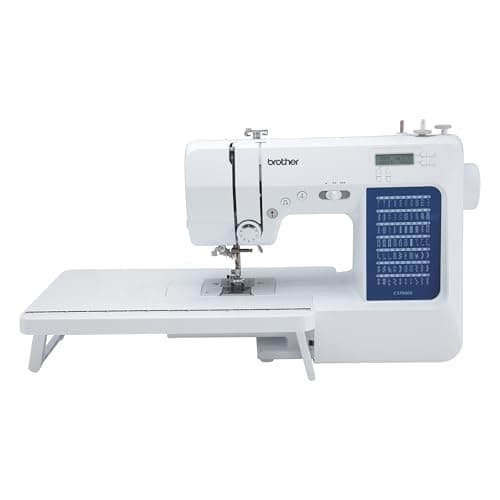 Brother CS7000XMainstream, hugely documented, stocked by everyone. Nothing to go wrong. | Safest marketplace buy overall | 8.2 | |
| 2 | 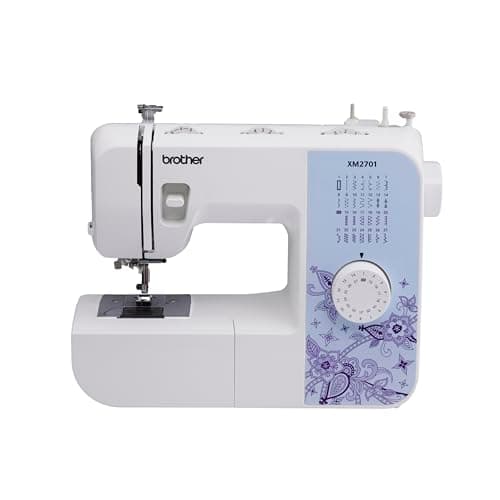 Brother XM2701A real machine at the bottom of the range, and a model number you can research. | Safest cheap marketplace buy | 7.3 | |
| 3 | 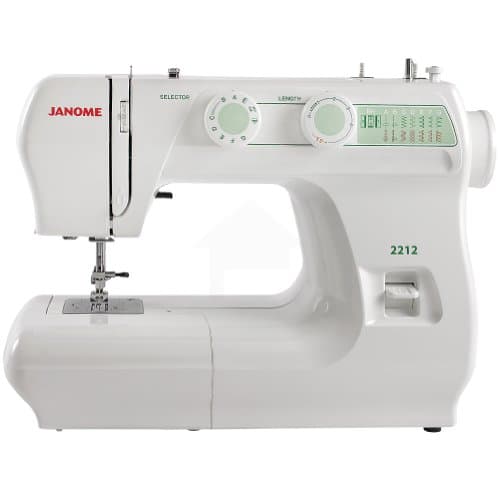 Janome 2212Mechanical, often dealer-stocked, and a setup lesson genuinely helps here. | The one we would buy from a dealer instead | 7.6 |
Prices shown are Amazon prices as of November 1, 2026 and can change.Scores are our editorial judgment on six axes, explained on the methodology page. We do not run a test lab and never claim to.
The short answer: yes, the machines are good — because they are the same machines. A Brother CS7000X bought on Amazon is a Brother CS7000X. Same factory, same parts, same manual. There is no separate, worse version of a named model made for online sale, and the brands that dominate the beginner end of the market — Brother, Singer and Janome — all sell heavily there.
What changes on a marketplace is not the machine. It is who you are buying from, and that single fact decides three things that matter a lot more than most buyers realize: whether your manufacturer warranty exists, what happens if the machine arrives faulty, and whether the price you are looking at is the real one.
We should be straightforward about our position here: this site earns a commission when someone buys through our links, and most of those links go to Amazon. That is exactly why this page spells out the parts a marketplace is bad at, including the machine below that we would rather you bought from a dealer. Our affiliate disclosure and editorial policy set out the rules we hold ourselves to.
The one thing to read on any listing
A marketplace is not a shop. It is a shop and a venue where other businesses sell, and the two are mixed together under the same product page. On any Amazon listing there are two small lines under the buy box: Ships from and Sold by. They are the most important text on the page and almost nobody reads them.
What the seller lines on a listing mean in practice. Read them before the price.
None of these is automatically bad. Plenty of excellent independent sewing retailers sell on marketplaces, and some are authorized dealers for the brands they stock. The point is that a marketplace listing does not tell you which kind of seller you have unless you look, and the identical machine can come with very different cover depending on the answer.
The warranty question, which is the real one
This is the part worth five minutes, because it is the one that costs money later. Manufacturer warranties on sewing machines are generally honored only on machines bought new through the brand’s authorized retail channel — and the brands are explicit about marketplaces.
Brother’s US limited warranty is written around an “Original Purchaser” who bought the product new from Brother or an authorized Brother reseller in the United States. Buy from anyone else and you are not the Original Purchaser, so the product is not covered. Brother’s warranty documents name the scenario directly, excluding purchases “via online marketplaces, such as eBay, Amazon Marketplace, Facebook Marketplace, Walmart Marketplace, etc., from a reseller who is not authorized by Brother.” Claims also require a dated bill of sale showing the machine came from an authorized reseller. Singer and Janome both run authorized dealer networks and route warranty service through them in the same way.
Read that carefully, because the trap is subtle. The exclusion is not “bought on a marketplace”. It is “bought on a marketplace from a seller who is not authorized”. A machine sold by the brand’s own storefront, or by an authorized dealer who happens to list on a marketplace, is fine. A machine sold by an unknown reseller who bought a pallet somewhere may carry no manufacturer cover at all, however new and sealed it is.
Two practical consequences. First, if the warranty matters to you — and on a computerized machine it should, because the electronics are the part you cannot fix yourself — confirm the seller is authorized before you pay, and keep the invoice. Second, note that headline warranty numbers are usually several tiers in a row rather than one long guarantee: a 25-year figure normally means 25 years on the frame casting and a much shorter tier on the parts, labor and electronics you would actually claim on. Our warranties guide takes a real one apart line by line.
New, Renewed, Warehouse and “used – like new”
Marketplaces sell the same machine in several conditions on or near the same page, and the savings look attractive until you know what you are buying.
New. Sealed, unused, and the only condition that gets you a manufacturer warranty — assuming the seller is authorized.
Renewed / refurbished. Inspected and tested by a qualified supplier rather than the manufacturer. Amazon’s Renewed program comes with its own guarantee: if you are not completely satisfied you can return the item within 90 days of receipt for a replacement or a refund. That is a real protection and it is worth knowing about — but it is a marketplace guarantee, not the brand’s warranty, and it is measured in months where a new machine’s cover is measured in years.
Warehouse / open box / used – like new. Returned stock, graded by condition. Often genuinely fine — a machine someone opened, looked at and sent back. The risks are the ones you cannot see in a photo: missing accessories (the foot pedal, the feet, the bobbins, the extension table), a timing knock from a rough return journey, and no manufacturer cover.
Our honest view: for a first machine, buy new. The gap in price between new and refurbished at this end of the market is usually small, and the thing a beginner needs most is the certainty that a problem is their threading rather than the machine. If you do buy used or refurbished, our guide to new vs used sewing machines has the checks that matter and the specific faults to look for.
Three checks before you pay
1. Is it a model number you can research? This is the check that matters most and it applies to every retailer, not just a marketplace. Search the exact model number. If you find hundreds of reviews and three threading videos, buy it with confidence. If you find a handful of listings and nothing else, walk away — not because the machine is bad, but because you will be on your own with it.
Help availability is one of the six axes we score every machine on, and that is deliberate: threading is the single biggest cause of beginner frustration, and “how to thread a Brother CS7000X” returning a dozen walkthroughs of your exact machine is worth more than any specification. See our methodology for how we weight it, and are Walmart sewing machines good for the related trap: retailer-exclusive model numbers that nobody has reviewed.
2. Does it have adjustable stitch length? This is the clearest single line between a real sewing machine and a toy. Marketplaces are full of tiny, cheap machines with impressive-sounding stitch counts, a plastic internal drive and no stitch length control at all. They skip stitches on two layers of cotton and teach their owner that they are bad at sewing. If a listing does not state a stitch length range, assume it has none.
3. Who is the seller, and what is the condition? The two sections above. Thirty seconds of reading, and it is the difference between a warranty and no warranty.
How to read sewing machine reviews on a marketplace
Marketplace reviews are genuinely useful for sewing machines, more so than for most categories, because the failure modes are consistent and owners describe them in plain language. Three ways to get more out of them:
Read the three-star reviews first. Five-star reviews written in the first week tell you the box arrived. One-star reviews are often a delivery complaint or a threading mistake. Three-star reviews are where people who have used a machine for a while describe what it does badly, which is the information you actually need.
Sort by most recent and check the dates. Long-running models get revised, and a listing can accumulate reviews across several versions. Recent reviews describe the machine currently in the box.
Watch for reviews that are not about this machine. Reviews are sometimes merged across variants of a product, so a page can carry feedback about a different model number or a different color. If a review mentions features the specification does not list, it is probably about something else.
And a specific warning: a burst of short, enthusiastic reviews all posted within a few days of each other, on a brand you have never heard of, with a model number that returns nothing on a search, is the pattern to walk away from. The machines we recommend are all mainstream, widely-sold models — that is not a coincidence, it is a selection criterion.
What a marketplace cannot give you
Three things, and one of them is worth paying for in some cases.
A setup lesson. A specialist sewing dealer will unbox the machine, thread it, run a test seam and show you how to wind a bobbin. For a nervous first-time buyer that half hour is worth more than a discount, and no marketplace offers it. If there is a dealer near you, our guide to where to buy a sewing machine makes the case for when the premium is the right call.
Someone to service it. Machines need cleaning, oiling and occasionally a timing adjustment. A dealer who sold you the machine is motivated to look after it. Our maintenance guide covers what you can do yourself, and is it worth repairing a sewing machine covers the point where it stops being worth it.
Trying it before you buy. You cannot feel how a machine handles from a listing. This matters less than people expect at the beginner end — the machines are well documented and broadly similar — and more than people expect if you have a physical reason to care, such as arthritis or poor eyesight. Our roundup for seniors ranks machines on exactly those factors.
Where a marketplace is genuinely the right answer
Having spent most of this page on caveats, the honest balance: for a mainstream beginner machine from a mainstream brand, bought new from an identifiable seller, a marketplace is one of the best places to buy. You get the widest selection of models, typically the lowest price on popular machines, hundreds of owner reviews on the same page as the product, and a returns process that works.
The Brother CS7000X is the clearest example. It is one of the most documented beginner machines in existence, stocked by everyone, and there is nothing a dealer adds that you need in order to own it successfully. The same goes for the Brother XM2701 at the cheap end — it costs little enough that a dealer premium would be a meaningful fraction of the machine.
The counter-example is on this page too. The Janome 2212 is the machine we would most often buy from a dealer instead: it is a mechanical machine with a front-loading bobbin, a four-step buttonhole and no needle threader, which is to say it is the one where a half-hour setup lesson removes most of the early frustration, and Janome’s dealer network is where its servicing lives. We recommend the machine strongly — we just do not think a marketplace is always the best way to buy that particular one.
The picks in full
01 - Safest marketplace buy overall
Brother CS7000X
Does the fiddly parts for you so you can spend your energy learning to sew.
- 70 built-in stitches, 7 one-step buttonholes
- Automatic needle threader, drop-in top bobbin
- Speed-control slider
- Wide table and 10 presser feet included
- Get it if
- You want threading, buttonholes and stitch settings handled by the machine, and you might try quilting later - the wide table is already in the box.
- Skip it if
- You want physical dials instead of a menu, or you will be sewing canvas, upholstery or leather regularly.
The trade-off
A metal internal frame inside a light plastic shell. That makes it easy to carry and quiet on cottons and mid-weights; it is not built for heavy layers every day the way a Heavy Duty is.
How the Brother CS7000X scores
Our judgment on the six axes described on the methodology page. Not measurements - we do not run a test lab.
- Setup and threading
- 9/10
- Everyday stitch quality
- 8/10
- Thick fabric
- 6/10
- Beginner features
- 9/10
- Durability reputation
- 7/10
- Help for this exact model
- 10/10
Overall 8.2/10
02 - Safest cheap marketplace buy
Brother XM2701
The find-out-if-I-actually-like-this machine.
- 27 stitches, one-step buttonhole
- Automatic needle threader, drop-in bobbin
- 6 presser feet included
- Light enough to carry to a class
- Get it if
- You are not sure sewing will stick and you want a real, capable machine without spending what a better one costs.
- Skip it if
- You already know you will sew every week, or you want speed control and a quilting table.
The trade-off
Lightweight and basic. It does everything a beginner needs - buttonholes, zippers, hems - but you will outgrow it sooner than the CS7000X.
How the Brother XM2701 scores
Our judgment on the six axes described on the methodology page. Not measurements - we do not run a test lab.
- Setup and threading
- 9/10
- Everyday stitch quality
- 7/10
- Thick fabric
- 5/10
- Beginner features
- 7/10
- Durability reputation
- 6/10
- Help for this exact model
- 9/10
Overall 7.3/10
03 - The one we would buy from a dealer instead
Janome 2212
Twelve stitches, nothing to break - the classroom favorite.
- 12 stitches, dial controls, four-step buttonhole
- Drop feed for free-motion quilting
- Free arm for cuffs and sleeves
- A reputation for lasting decades
- Get it if
- You value reliability over conveniences and want a machine still working long after the computerized ones are gone.
- Skip it if
- You want an automatic threader, a one-step buttonhole or a drop-in bobbin - it has none of them.
The trade-off
Fewer conveniences, more longevity. The four-step buttonhole and front-loading bobbin are a little more work to learn.
How the Janome 2212 scores
Our judgment on the six axes described on the methodology page. Not measurements - we do not run a test lab.
- Setup and threading
- 6/10
- Everyday stitch quality
- 9/10
- Thick fabric
- 7/10
- Beginner features
- 4/10
- Durability reputation
- 10/10
- Help for this exact model
- 7/10
Overall 7.6/10
Questions beginners actually ask
Are sewing machines sold on Amazon genuine?
The mainstream models from Brother, Singer and Janome are the same machines sold everywhere else - same factory, same parts, same manual. There is no separate, worse version made for online sale. What varies is the seller: a listing may be fulfilled by Amazon on behalf of a third-party business, so check the 'Sold by' line before you pay.
Does buying a sewing machine on Amazon void the warranty?
Not automatically, but it can. Brother's US limited warranty covers only the Original Purchaser who bought new from Brother or an authorized Brother reseller, and its documents specifically exclude purchases made through online marketplaces from a reseller who is not authorized by Brother. A machine sold by the brand's own storefront or an authorized dealer is fine. One sold by an unknown reseller may carry no manufacturer cover at all.
Is it safe to buy a sewing machine from a third-party seller?
Often yes - plenty of good independent sewing retailers sell on marketplaces, and some are authorized dealers. The checks are the same ones either way: confirm the seller is authorized for that brand if the warranty matters to you, read the returns window on the order page rather than assuming it, and keep the dated invoice, because a warranty claim needs proof of where the machine came from.
What does 'Renewed' mean on a sewing machine listing?
It has been inspected and tested by a qualified supplier rather than the manufacturer. Amazon's Renewed program carries its own guarantee - if you are not completely satisfied you can return the item within 90 days of receipt for a replacement or refund - but that is a marketplace guarantee rather than the brand's warranty, and it runs in months where a new machine's cover runs in years.
Should I buy a cheap no-name sewing machine from a marketplace?
We would not. Two tests sort them out: search the exact model number, and look for an adjustable stitch length. If the model number returns a handful of listings and nothing else, you will be on your own with it. If the listing does not state a stitch length range, assume it has none - that is the clearest line between a real machine and a toy that skips stitches on two layers of cotton.
Is it cheaper to buy a sewing machine online or from a dealer?
Online is usually cheaper on popular models, sometimes substantially. What the dealer premium buys is a setup lesson, somewhere to take the machine for servicing, and someone who is motivated to keep it running. For a well-documented machine like the Brother CS7000X that is not worth paying for. For a mechanical machine with a four-step buttonhole and a front-loading bobbin, like the Janome 2212, it often is.
How can I tell if a sewing machine's reviews are trustworthy?
Read the three-star reviews first - that is where people who have used the machine for a while describe what it does badly. Sort by most recent, because long-running models get revised. Be wary of a burst of short, enthusiastic reviews posted within a few days on a brand you have never heard of, and check that the reviews actually describe the model in the specification rather than a merged variant.
What should I do first when a new sewing machine arrives?
Unbox it, check the accessory list in the manual against what is in the box, and then thread it with the presser foot raised. Threading with the foot down leaves the thread beside the tension discs instead of between them, which produces a nest of loops underneath that looks exactly like a broken machine - and is the single most common reason a perfectly good machine gets returned as faulty.
Sources
- Brother 3-Year Limited Warranty (warranty terms, authorized reseller and marketplace exclusions)
- Brother Limited Warranty (marketplace reseller exclusion wording)
- Amazon - Renewed: like-new products with a guarantee (90-day return guarantee)
- Singer (manufacturer support and dealer locator)
- Janome America (manufacturer support and dealer locator)
Specifications are taken from manufacturer listings. We do not run a test lab and never claim to - how each machine is assessed is set out on our methodology page.
Read next
- Where to buy a sewing machine
Online, big-box, dealer or secondhand, and what each one gets you.
- Are Walmart sewing machines good?
The big-box version of this question, and the store-exclusive model trap.
- Sewing machine warranties explained
Why a 25-year warranty is not 25 years of cover.
- New vs used sewing machines