Guides
Is it worth repairing a sewing machine?
Sometimes. A published tune-up costs less than most people assume - but on a cheap machine the labor alone can outrun the machine's value in one visit.
By Michael W. · Published
Disclosure: this page contains affiliate links. As an Amazon Associate, StitchStarter earns from qualifying purchases at no extra cost to you. Prices are read from Amazon daily and dated; the price you pay is the one Amazon shows at checkout. It never changes which machines we recommend. Full disclosure.
Quick picks
The short answer. Every pick is explained in full below, including who should skip it.
| # | Product | Best for | Score | Price |
|---|---|---|---|---|
| 1 | 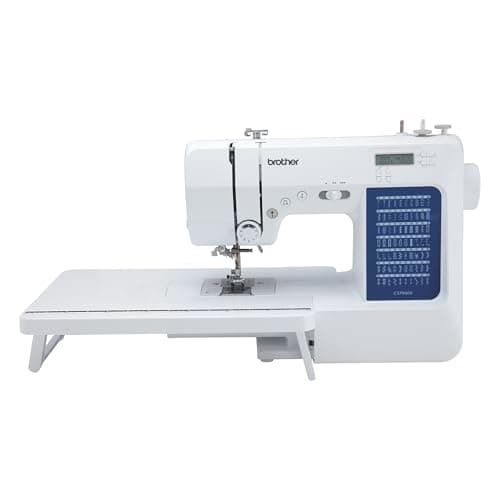 Brother CS7000XIf a repair is not worth it, this is the machine most people should land on. Brother CS7000XIf a repair is not worth it, this is the machine most people should land on. | Best replacement overall | 8.2 | |
| 2 | 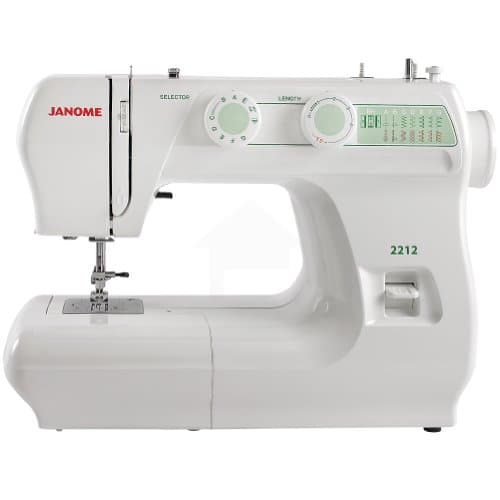 Janome 2212Mechanical, simple, dealer-backed - very little on it to fail. Janome 2212Mechanical, simple, dealer-backed - very little on it to fail. | Best for not needing a repair again | 7.6 | |
| 3 | 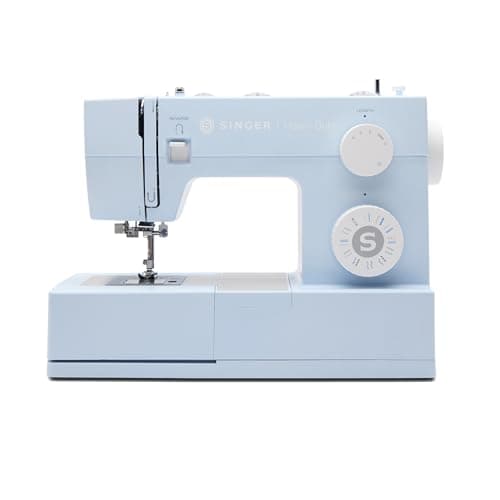 Singer Heavy Duty 4423Metal frame and a fast motor, if the old machine died on thick seams. Singer Heavy Duty 4423Metal frame and a fast motor, if the old machine died on thick seams. | Best replacement for heavy fabric | 7.8 |
Prices shown are Amazon prices as of October 11, 2026 and can change.Scores are our editorial judgment on six axes, explained on the methodology page. We do not run a test lab and never claim to.
You are probably reading this with one of three machines in front of you: an inherited all-metal Singer that has seized, a ten-year-old plastic machine that has started skipping stitches, or a cheap one that lasted eight months. The answer is different for each, and the deciding factor is almost never the fault itself. It is the relationship between the labor cost and what the machine is worth.
Here is the honest short version. Before you pay anyone, rule out the five things that look like faults and are not — they account for most “broken machine” visits and all five are free to fix. If the machine is genuinely faulty, get the free estimate most shops offer, then apply one rule: if the quote is more than roughly half to two-thirds of what the machine is worth today, replace it. If it is less, and the machine is mechanically simple, repair is usually the better deal — often by a wide margin.
First: the five faults that are not faults
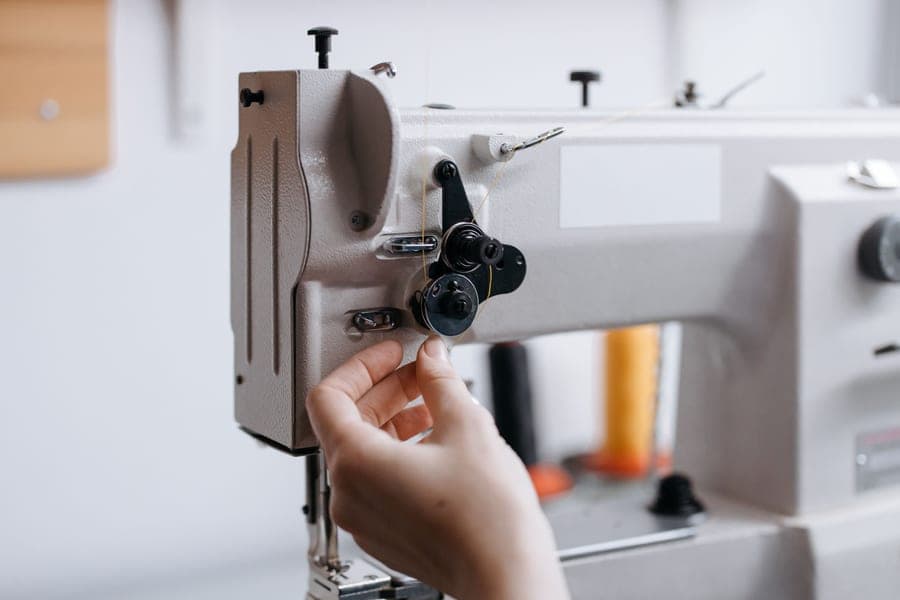
This section will save some readers a hundred dollars, so it goes before everything else. A machine that will not sew, bunches thread underneath, skips stitches or jams is far more likely to be suffering one of these than a mechanical failure.
1. It is threaded wrong. Specifically, threaded with the presser foot down. The upper thread has to seat between the tension discs, and on most machines those discs only open when the foot is raised. Thread with the foot up, every time. Our threading guide goes through the full path.
2. The bobbin is in backwards or wound badly. A bobbin unwinding the wrong way, or wound loose and lumpy, produces exactly the symptoms people read as a tension fault. See thread bunching underneath and bobbin winding problems.
3. The needle is blunt, bent or the wrong size. Needles are consumables and most people never change them. A blunt needle causes skipped stitches, popping noises and puckered seams. A new needle costs pennies — our needle size guide matches the needle to the fabric.
4. There is lint packed under the feed dogs and in the bobbin case. Compacted lint stops the feed dogs gripping and stops the bobbin case rotating cleanly. Ten minutes with a brush is the single highest-value thing you can do to a machine — our maintenance guide shows what to open and what never to oil.
5. Something got moved. The tension dial, the stitch-length dial, the drop-feed lever, the bobbin-winding spindle left engaged. A machine with the bobbin winder still pushed across will turn over and refuse to sew, which looks catastrophic and is not. Our machine will not sew guide and tension guide cover both.
Work through those five before booking anything. If the machine sews after that, you did not need a repair.
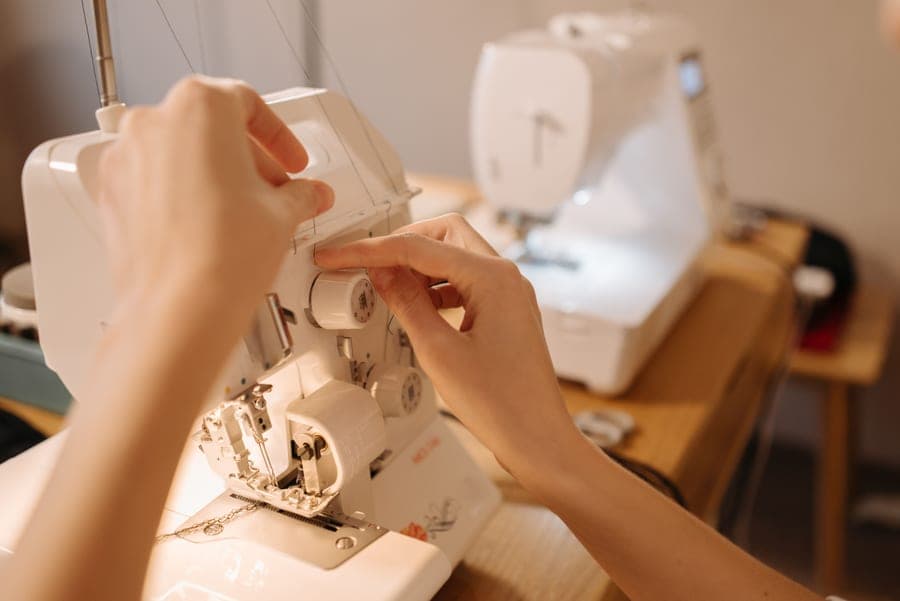
What a sewing machine repair actually costs
Published rates vary by region, brand and how computerized the machine is, so the useful thing is to look at what shops actually print rather than a single average. Here is real published pricing, with sources at the foot of the page.
One long-established US shop publishes flat-rate home machine tune-ups: $90 plus tax for Janome machines (plus $10 for embroidery models), $99 plus tax for other brands such as Kenmore and Babylock, $139 for a full service on a serger or coverstitch machine, a $139 minimum on mechanical Pfaff and Bernina machines and a $159 minimum on Viking and Husqvarna. Parts over $5 are quoted separately, estimates are free before work starts, and there is a $15 minimum counter fee for the first fifteen minutes. A quilting shop giving general guidance puts a basic tune-up in the $75 to $100 range, excluding parts, and recommends servicing roughly once a year.
Independent cost guides covering a wider sample report higher figures for actual repairs rather than routine servicing: labor commonly $60 to $120 an hour, a diagnostic fee of $40 to $100 where one is charged, a standard service $100 to $200, timing recalibration $75 to $150, a full mechanical overhaul $150 to $300, and $150 to $400 for embroidery machine repairs that involve replacing a board. Small parts are cheap by comparison — a bobbin case replacement at $20 to $60, feed dog repair at $50 to $100.
Published US repair and service pricing, from the sources listed at the foot of this page. Rates vary by region, brand and shop - always get the free estimate before agreeing to work.
The rule: compare the quote to today’s value
The threshold the trade generally works to is that once a repair reaches somewhere around 50 to 70 percent of the machine’s current value, you should price a replacement. That is a useful rule because it quietly handles every case at once.
A $99 tune-up on an inherited all-metal machine that will run for another thirty years is an easy yes. A $99 tune-up on a machine that cost well under that new is an obvious no — and plenty of entry-level machines sit in exactly that bracket, which is the uncomfortable arithmetic of the cheapest end of this market. A $250 board replacement on a computerized beginner machine is almost always a no, because you can usually buy a current model with a full warranty for similar money.
Note what the rule does not do: it does not tell you to throw away a good machine because the bill is annoying. Labor is the bulk of most quotes, and on a well-built mechanical machine the thing you are paying a technician to restore — timing, tension, feed — is the thing that makes it last another decade. Our lifespan guide makes the longer case: servicing, not brand, is what decides how long a machine lives.
When repair is clearly the right call
An inherited all-metal machine. Vintage Singers, old Kenmores, mid-century Japanese-made machines: these were built with replaceable, mechanically simple parts and a technician can usually bring one back for the price of a tune-up. If it has been sitting in a loft, it probably needs cleaning, oiling and a new belt rather than a repair at all. Our vintage machines guide is honest about the catch, though: parts are findable, but you need someone who knows the model.
A mid-range or better machine under about ten years old. Timing, tension and feed faults on a machine that cost a few hundred dollars are routine work and a long way short of replacement cost.
Anything where the fault is a cheap part. A cracked bobbin case, a worn belt, a bent needle plate, a broken foot pedal lead. These are small parts and modest labor, and refusing them means scrapping a working machine over $40.
A machine you already know and like. This one is not sentimental. Knowing a machine’s quirks, having its feet and bobbins, having the manual — that is worth real money you would spend again on anything new.
When replacing is the honest answer
The circuit board has failed on a budget computerized machine. This is the clearest case on the list. Boards are model-specific, often no longer stocked for older models, and the published range for a board job runs from $150 to $400. That is replacement money on a beginner machine.
The machine was very cheap and is out of warranty. If the quote approaches or exceeds what the machine cost, there is nothing to discuss. This is why we are consistently wary of the cheapest machines on the market in our how much to spend guide — a machine too cheap to repair is a machine with one life.
Nobody local will touch it. An obscure brand, an own-label supermarket machine or a model with no parts supply can be beyond economic repair regardless of the fault. Shops sometimes charge a small disposal fee for machines they cannot fix — one published rate card lists $5 — which tells you this is a routine outcome, not a rare one.
The machine was never right for the work. If a light plastic machine failed because you were pushing denim and canvas through it every week, a repair buys you a few months of the same. That is not a fault, it is a mismatch, and our heavy duty guide explains where the line sits.
It needs several things at once. Timing plus a motor plus a feed problem is three bills, and the second one always arrives after you have paid the first.
If replacing is the answer, these are the three to look at
Chosen for the three reasons a machine usually gets replaced: it was too fiddly, it was too flimsy for the fabric, or it broke and could not be fixed.
Brother CS7000X
The forgiving all-rounder. Speed slider, drop-in bobbin, wide table in the box, and more help available for this exact model than almost any other.
Skip it if You want physical dials instead of a menu, or you will be sewing canvas, upholstery or leather regularly.
Janome 2212
Mechanical and deliberately simple, with a dealer network behind it. No screen means no board to fail.
Skip it if You want an automatic threader, a one-step buttonhole or a drop-in bobbin - it has none of them.
Singer Heavy Duty 4423
The answer if the old machine gave up on thick seams. Metal frame, steel bed plate, fast motor.
Skip it if You mostly want gentle control on light fabrics, or a quiet machine for an apartment.
#ad - buy links go to Amazon and earn us a commission at no extra cost to you. Prices shown are Amazon prices as of October 11, 2026 and can change. Full disclosure.
If you do replace: buy differently this time
A machine that has just failed is useful information. Three things worth changing about the next purchase.
Buy a model your local shop services. Ask one shop which two brands they see least often and can get parts for fastest. It is the most useful ten minutes in the whole process, and it is why we weight help availability heavily in our scoring.
Consider mechanical if the failure was electronic. A machine with no screen has no board to replace. That is the central argument of our mechanical vs computerized guide and the reason the Janome 2212 keeps appearing on this site despite having almost no features.
Read the warranty tiers, not the headline. A 25-year warranty is usually three warranties in a row, and the short labor tier is the one you would have claimed on. Our warranties guide takes that apart, and where to buy matters too, because cover is generally honored only through authorized channels.
Match the machine to why the last one died. If the old machine gave up on thick seams, the walking foot and metal frame in our Singer Heavy Duty 4452 review are the direct fix. If it was simply too limited to finish anything properly, the Brother XR9550 review covers the buttonhole and table range that usually solves that.
And if you are weighing a second-hand machine as the replacement, our new vs used guide sets out the checks to make before money changes hands — a used machine with no service history is how people end up reading this page again in a year.
The picks in full
01 - Best replacement overall
Brother CS7000X
Does the fiddly parts for you so you can spend your energy learning to sew.
- 70 built-in stitches, 7 one-step buttonholes
- Automatic needle threader, drop-in top bobbin
- Speed-control slider
- Wide table and 10 presser feet included
- Get it if
- You want threading, buttonholes and stitch settings handled by the machine, and you might try quilting later - the wide table is already in the box.
- Skip it if
- You want physical dials instead of a menu, or you will be sewing canvas, upholstery or leather regularly.
The trade-off
A metal internal frame inside a light plastic shell. That makes it easy to carry and quiet on cottons and mid-weights; it is not built for heavy layers every day the way a Heavy Duty is.
$279.99 · 11% off · price as of October 11, 2026
#ad - opens Amazon in a new tab. How we earn
How the Brother CS7000X scores
Our judgment on the six axes described on the methodology page. Not measurements - we do not run a test lab.
- Setup and threading
- 9/10
- Everyday stitch quality
- 8/10
- Thick fabric
- 6/10
- Beginner features
- 9/10
- Durability reputation
- 7/10
- Help for this exact model
- 10/10
Overall 8.2/10
02 - Best for not needing a repair again
Janome 2212
Twelve stitches, nothing to break - the classroom favorite.
- 12 stitches, dial controls, four-step buttonhole
- Drop feed for free-motion quilting
- Free arm for cuffs and sleeves
- A reputation for lasting decades
- Get it if
- You value reliability over conveniences and want a machine still working long after the computerized ones are gone.
- Skip it if
- You want an automatic threader, a one-step buttonhole or a drop-in bobbin - it has none of them.
The trade-off
Fewer conveniences, more longevity. The four-step buttonhole and front-loading bobbin are a little more work to learn.
How the Janome 2212 scores
Our judgment on the six axes described on the methodology page. Not measurements - we do not run a test lab.
- Setup and threading
- 6/10
- Everyday stitch quality
- 9/10
- Thick fabric
- 7/10
- Beginner features
- 4/10
- Durability reputation
- 10/10
- Help for this exact model
- 7/10
Overall 7.6/10
03 - Best replacement for heavy fabric
Singer Heavy Duty 4423
Fast, sturdy and simple - the machine for denim hems and tote bags.
- Metal interior frame, stainless steel bedplate
- 1,100 stitches per minute
- 23 stitches (97 stitch applications), one-step buttonhole, automatic threader
- Top drop-in bobbin with a clear cover
- Extra-high presser foot lift for thick layers
- Get it if
- You want physical dials, you plan to sew jeans, canvas or several layers, and you do not mind a machine that is loud and quick.
- Skip it if
- You mostly want gentle control on light fabrics, or a quiet machine for an apartment.
The trade-off
Heavy duty means a metal frame and a fast motor, not an industrial machine. It handles denim well; real leather is still a struggle.
How the Singer Heavy Duty 4423 scores
Our judgment on the six axes described on the methodology page. Not measurements - we do not run a test lab.
- Setup and threading
- 7/10
- Everyday stitch quality
- 8/10
- Thick fabric
- 9/10
- Beginner features
- 6/10
- Durability reputation
- 8/10
- Help for this exact model
- 9/10
Overall 7.8/10
Questions beginners actually ask
Is it worth repairing a sewing machine?
It depends on the quote against the machine's current value. The working threshold is roughly 50 to 70 percent: if the repair costs more than about half to two-thirds of what the machine is worth today, price a replacement instead. A tune-up on an inherited all-metal machine is almost always worth it; a circuit board replacement on a budget computerized machine almost never is. Get the free estimate first, because the rule needs a number.
How much does a sewing machine repair cost?
Published flat-rate tune-ups at established shops run around $90 to $99 for a home machine and about $139 for a serger, with parts over $5 quoted separately. Wider cost surveys report labor at $60 to $120 an hour, a standard service at $100 to $200, timing recalibration at $75 to $150, a full mechanical overhaul at $150 to $300, and $150 to $400 for embroidery repairs involving a board. Small parts are much cheaper - a bobbin case replacement is $20 to $60.
How much does a sewing machine tune-up cost?
Around $75 to $100 at shops publishing flat rates, excluding any parts, with some brands carrying higher minimums - $139 for mechanical Pfaff and Bernina, $159 for Viking and Husqvarna at one published rate card. Wider surveys put a standard service at $100 to $200. Most guidance recommends a service roughly once a year.
When is a sewing machine not worth repairing?
Four clear cases: the circuit board has failed on a budget computerized machine; the machine was very cheap and is out of warranty so the quote approaches its original price; no local technician will service it or parts are unavailable; or it needs several jobs at once. Shops sometimes charge a small disposal fee for machines they cannot economically fix, which tells you this is a routine outcome.
Can I fix my sewing machine myself?
Often, yes - most 'broken machine' symptoms are not mechanical failures. Check five things before paying anyone: that the machine was threaded with the presser foot raised, that the bobbin is seated and wound correctly, that the needle is new and the right size for the fabric, that lint is cleared from the feed dogs and bobbin case, and that no dial or lever has been moved - including the bobbin winder, which stops a machine sewing entirely when left engaged.
Is it cheaper to repair or replace a sewing machine?
On a well-built mechanical machine, repair is usually far cheaper - a tune-up restores timing, tension and feed for a fraction of replacement cost and can add a decade. On a cheap or computerized beginner machine, replacement often wins, because labor is the bulk of any quote and a current model comes with a fresh warranty. Compare the quote to what your machine is worth today, not what it cost new.
How often should a sewing machine be serviced?
About once a year is the common recommendation, and every two years can be enough if you clean and oil it yourself between visits. Servicing is maintenance rather than repair, and it is the main thing that decides how long a machine lasts - which makes it the cheapest money you will spend on one.
Sources
- The Sewing Machine Shop - published repair rates
- I See Stars Quilting - what a machine service costs and includes
- SewingTrip - sewing machine repair cost estimates
Specifications are taken from manufacturer listings. We do not run a test lab and never claim to - how each machine is assessed is set out on our methodology page.
Read next
- How long does a sewing machine last?
Servicing, not brand, is what decides it.
- Sewing machine maintenance
Ten minutes that prevents most repair visits.
- New vs used sewing machines
- Sewing machine will not sew
Work through this before you book anything.