Guides · The honest answer
Do you need a heavy-duty sewing machine?
Probably not - and the reason matters, because the phrase does not mean what the box implies.
By Michael W. · Published
Disclosure: this page contains affiliate links. As an Amazon Associate, StitchStarter earns from qualifying purchases at no extra cost to you. We do not display prices - they change daily, so every button opens the live listing. It never changes which machines we recommend. Full disclosure.
Quick picks
The short answer. Every pick is explained in full below, including who should skip it.
| # | Product | Best for | Score | Price |
|---|---|---|---|---|
| 1 | 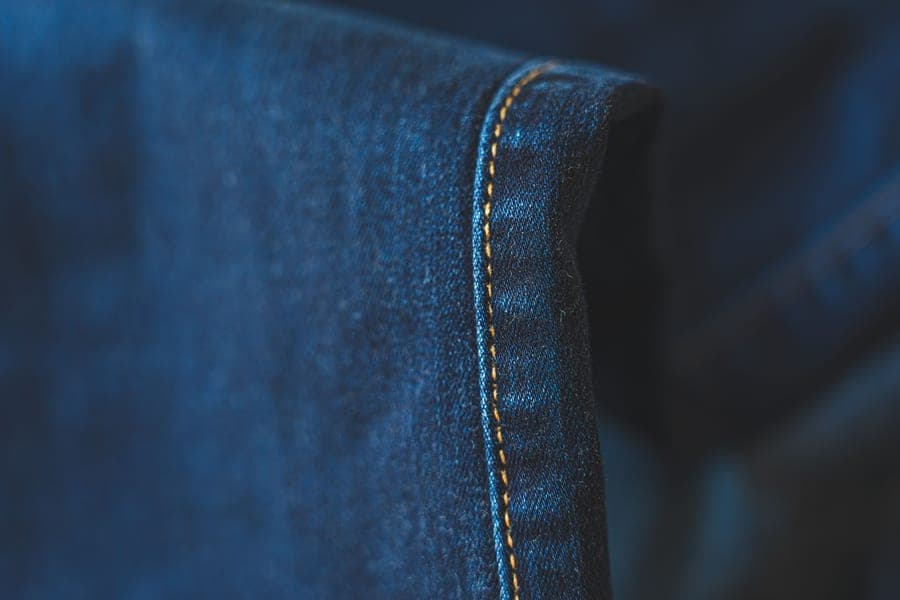 Singer Heavy Duty 4423The machine the phrase was built around, and the one worth buying. Singer Heavy Duty 4423The machine the phrase was built around, and the one worth buying. | If the answer is yes | 7.8 | |
| 2 | 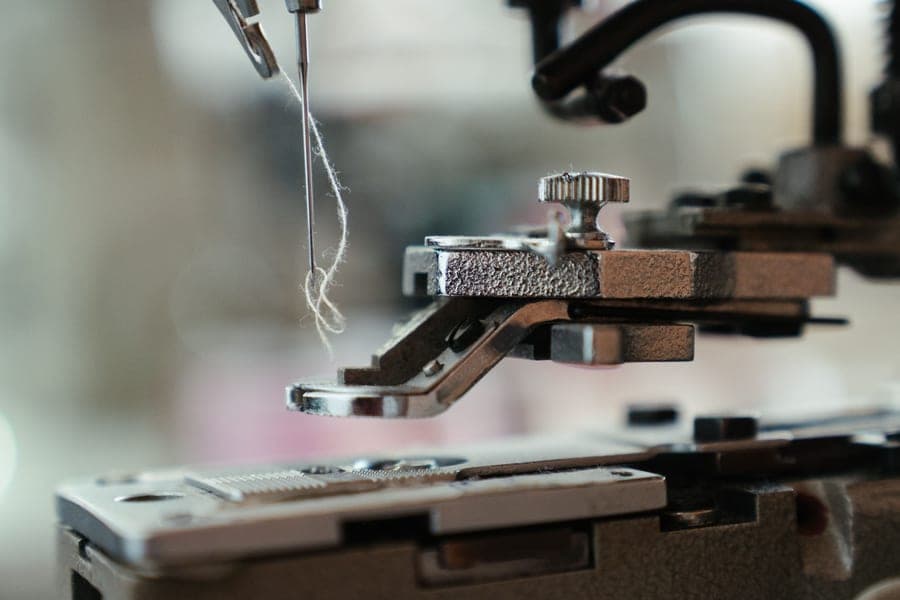 Brother CS7000XHandles the occasional thick seam and is better at everything else. Brother CS7000XHandles the occasional thick seam and is better at everything else. | If the answer is no | 8.2 |
Scores are our editorial judgment on six axes, explained on the methodology page. We do not run a test lab and never claim to.
Most beginners do not need a heavy-duty sewing machine. You need one if you will regularly sew folded denim, canvas, webbing, outdoor fabric or several layers of upholstery-weight material - roughly, if thick fabric is a weekly job rather than an occasional one. For everything else, a heavy-duty machine is louder, less forgiving and no better at the sewing you will actually do.
The confusion is almost entirely the phrase’s fault, so it is worth being precise about what it means.
What “heavy duty” actually means
On a domestic machine, heavy duty is a marketing term with three concrete things usually behind it:
A metal interior frame. The chassis the needle bar, feed dogs and bobbin case are mounted to is metal rather than plastic. That keeps everything in alignment under load and stops the machine flexing or skidding across the table when the needle meets resistance. This is the real feature.
A faster motor. Typically around 1,100 stitches per minute against roughly 750 on a standard domestic machine. More speed is also more torque at the needle, which is what carries it through layers.
A higher presser foot lift. Unglamorous and frequently the thing that decides whether a job is possible at all. If the foot does not rise far enough, you cannot physically get four folded layers of denim underneath it.
The four cases where the answer is yes
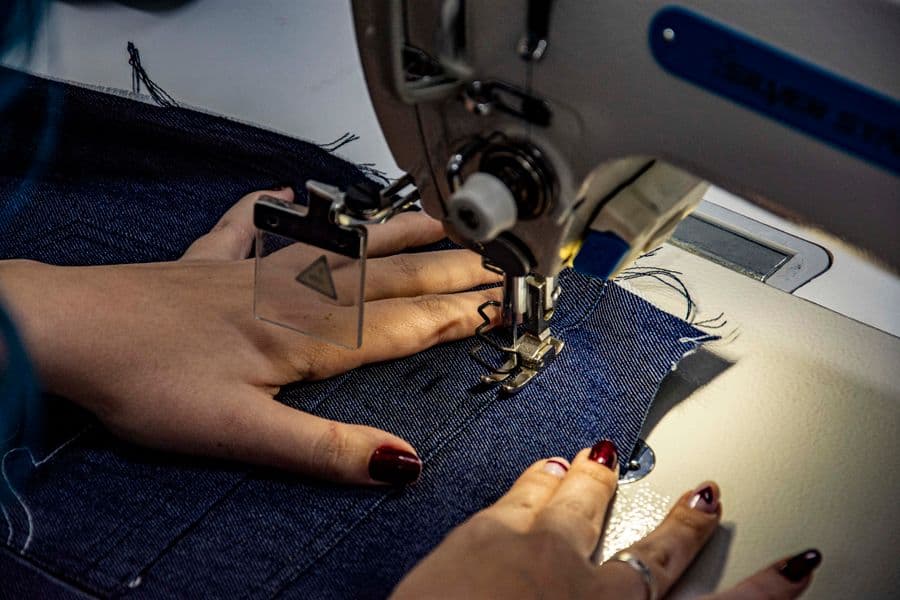
Jeans, regularly. Not one pair of trousers a year - hemming your own jeans and your family’s, taking in waistbands, patching knees. The crossing point where two folded denim hems meet is the specific seam that defeats light machines.
Bags and totes. Bag making stacks outer fabric, interfacing, lining and often webbing straps, and then asks you to topstitch through all of it at the edge. This is thicker work than most garment sewing.
Home furnishing with heavy cloth. Curtain headers, blackout linings, cushion covers in upholstery-weight fabric, loose covers. Long seams in thick cloth is exactly the job a fast metal-framed machine is pleasant for.
Outdoor and technical fabric. Canvas, waxed cotton, heavy waterproofs, tent repairs. Possible on a heavy-duty domestic machine; not pleasant on a light one.
When the answer is no
If what you mostly want is garments in cotton, poplin, linen or jersey; quilting; children’s clothes; ordinary repairs on ordinary clothes; or you genuinely do not know yet - a heavy-duty machine is the wrong purchase, and three things you give up are worth naming.
It is loud. A fast motor in a metal frame makes a noise you cannot ignore in an apartment or a shared room. It has no slow setting, which is the feature beginners most benefit from. And the Heavy Duty line uses a front-loading bobbin, which is harder to load than the drop-in bobbins on lighter machines and is the single most common source of early frustration.
There is also a fabric cost at the other end. A fast, strong machine is less gentle on chiffon, fine jersey and anything slippery.
Try these before buying a different machine
A surprising share of “I need a heavy-duty machine” conclusions are actually needle, thread or technique problems, and all three are cheap to rule out.
Use a denim needle. A size 16 or 18 denim needle has a stronger shaft and a sharper point than the universal needle that came with your machine. Most skipped stitches on thick fabric are this and nothing else - our needle size guide covers which one for what fabric.
Hammer the seam flat. Tap the crossing point of a denim hem with a hammer before you sew it. It sounds absurd and it works, because it is thickness rather than toughness that stops the machine.
Walk the wheel by hand. Turn the hand wheel manually through the thickest part instead of using the pedal. You get the full mechanical advantage of your own arm.
Lengthen the stitch. A longer stitch on thick fabric puts fewer holes in it and asks less of the feed system.
The two machines this question resolves to
Once you know which side of the line you are on, the choice is usually between these.
Singer Heavy Duty 4423
The machine the category is named after. Metal interior frame, 1,100 spm, extra-high foot lift.
Skip it if You mostly want gentle control on light fabrics, or a quiet machine for an apartment.
Brother CS7000X
Not heavy duty, and better for most beginners. Copes with the occasional thick seam, and is quieter, gentler and easier.
Skip it if You want physical dials instead of a menu, or you will be sewing canvas, upholstery or leather regularly.
#ad - buy links go to Amazon and earn us a commission at no extra cost to you. Full disclosure.
The picks in full
01 - If the answer is yes
Singer Heavy Duty 4423
Fast, sturdy and simple - the machine for denim hems and tote bags.
- Metal interior frame, stainless steel bedplate
- 1,100 stitches per minute
- 23 stitches, one-step buttonhole, automatic threader
- Extra-high presser foot lift for thick layers
- Get it if
- You want physical dials, you plan to sew jeans, canvas or several layers, and you do not mind a machine that is loud and quick.
- Skip it if
- You mostly want gentle control on light fabrics, or a quiet machine for an apartment.
The trade-off
Heavy duty means a metal frame and a fast motor, not an industrial machine. It handles denim well; real leather is still a struggle.
#ad - opens Amazon in a new tab. How we earn
How the Singer Heavy Duty 4423 scores
Our judgment on the six axes described on the methodology page. Not measurements - we do not run a test lab.
- Setup and threading
- 7/10
- Everyday stitch quality
- 8/10
- Thick fabric
- 9/10
- Beginner features
- 6/10
- Durability reputation
- 8/10
- Help for this exact model
- 9/10
Overall 7.8/10
02 - If the answer is no
Brother CS7000X
Does the fiddly parts for you so you can spend your energy learning to sew.
- 70 built-in stitches, 7 one-step buttonholes
- Automatic needle threader, drop-in top bobbin
- Speed-control slider
- Wide table and 10 presser feet included
- Get it if
- You want threading, buttonholes and stitch settings handled by the machine, and you might try quilting later - the wide table is already in the box.
- Skip it if
- You want physical dials instead of a menu, or you will be sewing canvas, upholstery or leather regularly.
The trade-off
Light and mostly plastic. That makes it easy to carry and quiet on cottons and mid-weights; it is not built for heavy layers every day.
#ad - opens Amazon in a new tab. How we earn
How the Brother CS7000X scores
Our judgment on the six axes described on the methodology page. Not measurements - we do not run a test lab.
- Setup and threading
- 9/10
- Everyday stitch quality
- 8/10
- Thick fabric
- 6/10
- Beginner features
- 9/10
- Durability reputation
- 7/10
- Help for this exact model
- 10/10
Overall 8.2/10
Questions beginners actually ask
Do beginners need a heavy-duty sewing machine?
Most do not. A heavy-duty machine earns its keep if you will regularly sew folded denim, canvas, webbing or upholstery-weight fabric. For cotton garments, quilting, children's clothes and ordinary repairs it is louder, has no slow speed setting and uses a harder-to-load front bobbin, with no benefit.
What does heavy duty mean on a sewing machine?
Three things, usually: a metal interior frame instead of a plastic one, a faster motor at around 1,100 stitches per minute, and a higher presser foot lift so thick layers fit underneath. It does not mean an industrial machine and it does not mean the machine will sew leather.
Can a regular sewing machine sew denim?
Yes, with a size 16 denim needle, a longer stitch and a slow pass. The limit is thickness rather than toughness - the crossing point where two folded hems meet is four layers plus topstitch thread, and that is where light machines skip stitches or shift sideways.
Is the Singer Heavy Duty 4423 good for beginners?
It is a good machine with two beginner disadvantages: a front-loading bobbin you load without seeing it, and no slow speed setting. If thick fabric is your main plan, those are worth accepting. If it is not, a lighter machine with a drop-in bobbin and a speed limiter is the easier first year.
Will a heavy-duty machine sew leather?
Not real leather of any thickness. A domestic heavy-duty machine will manage thin garment leather or faux leather with the right needle, occasionally. Leatherwork needs a walking-foot or cylinder-arm machine built for it, which is a different category entirely.
Sources
Specifications are taken from manufacturer listings. We do not run a test lab and never claim to - how each machine is assessed is set out on our methodology page.
Read next
- Best sewing machines for denim and heavy fabric
- Brother XM2701 vs Singer Heavy Duty 4423
- Sewing machine needle sizes
The cheapest way to fix a thick-fabric problem.
- Best sewing machines for alterations and mending