Help
How to thread a sewing machine
The path is the same on almost every machine. Two steps get missed, and both produce the same mess.
By Michael W. · Published
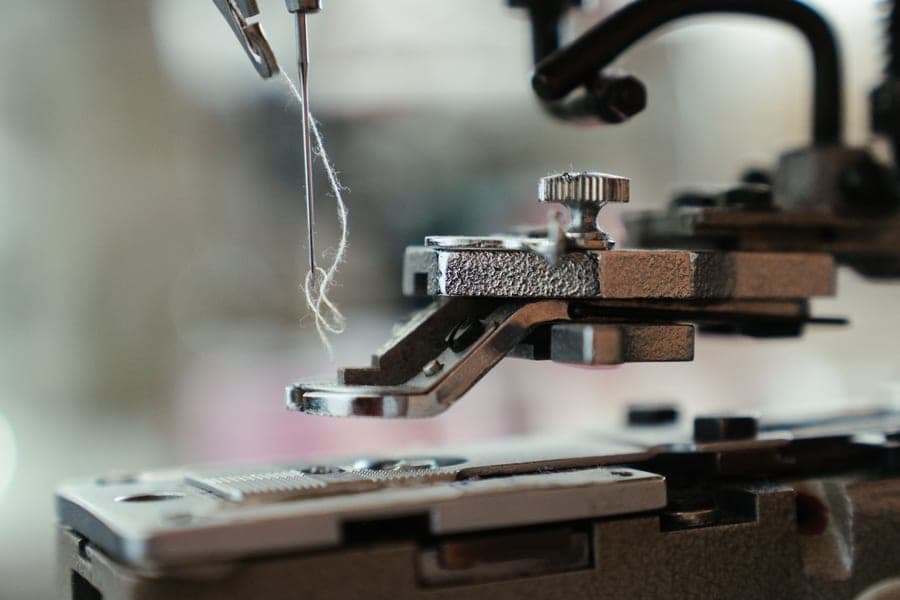
Threading paths differ in detail between machines and are almost identical in structure. If you understand what each stage is for, you can thread any machine from its printed diagram - and, more usefully, you can tell when you have got it wrong.
Before you start
Raise the presser foot. This is the step that matters most and the one most often skipped. The tension discs inside the machine only open when the presser foot is up. Thread with the foot down and the thread lies beside the discs instead of between them, so it has no tension at all - and the result is a nest of loops on the underside of your fabric.
Raise the needle to its highest point by turning the hand wheel toward you. This lifts the take-up lever so you can pass the thread through it.
The path, stage by stage
The bobbin
Wind the bobbin through the bobbin-winding tension guide near the spool pin - not through the needle threading path. Drop it into the case or the compartment so it unwinds in the direction the diagram shows, usually counter-clockwise for drop-in bobbins, and pull the thread through its slot until you feel a slight resistance.
More detail is in bobbins explained.
Bringing the bobbin thread up
Hold the top thread loosely. Turn the hand wheel toward you one full turn. The needle goes down, catches the bobbin thread and brings up a loop. Pull that loop through with your fingers or a pin, and lay both threads back under the presser foot toward the rear.
Some machines with a needle threader and an automatic thread cutter do this for you. Doing it by hand never hurts.
How to tell threading is the problem
Look at the underside of a test seam. A nest of loose loops underneath means the top thread has no tension - which is a threading problem in the top thread, not a bobbin problem, despite where the mess appears. Our page on bunching underneath covers exactly this.
Stitching that looks fine on top and slightly loose underneath is usually a genuine tension adjustment - see the tension guide.
Questions beginners actually ask
Why does the presser foot need to be up when threading?
Because the tension discs inside the machine only open when the presser foot is raised. Thread with the foot down and the thread sits beside the discs rather than between them, so it carries no tension - which produces a nest of loops on the underside of your stitching.
Which way does thread go through a sewing machine needle?
On almost every domestic machine, front to back. Check the printed diagram on your machine if you are unsure - a few side-loading models differ, and threading the wrong way means no stitches will form.
Do I need to bring the bobbin thread up before sewing?
It is good practice. Hold the top thread, turn the hand wheel one full turn toward you, and pull up the loop of bobbin thread the needle brings with it. Lay both threads back under the foot. Some machines with automatic cutters handle it for you.
How do I know if I have threaded the machine wrong?
Sew a test seam and look at the underside. Loose loops or a nest underneath almost always mean the top thread missed the tension discs. Unthread completely, raise the presser foot, and rethread from the start - that is faster than hunting for the mistake.
Sources
Specifications are taken from manufacturer listings. We do not run a test lab and never claim to - how each machine is assessed is set out on our methodology page.