Help
When the machine will not wind a bobbin
Bobbin winding has its own little mechanism, and three things about it catch everyone out.
By Michael W. · Published
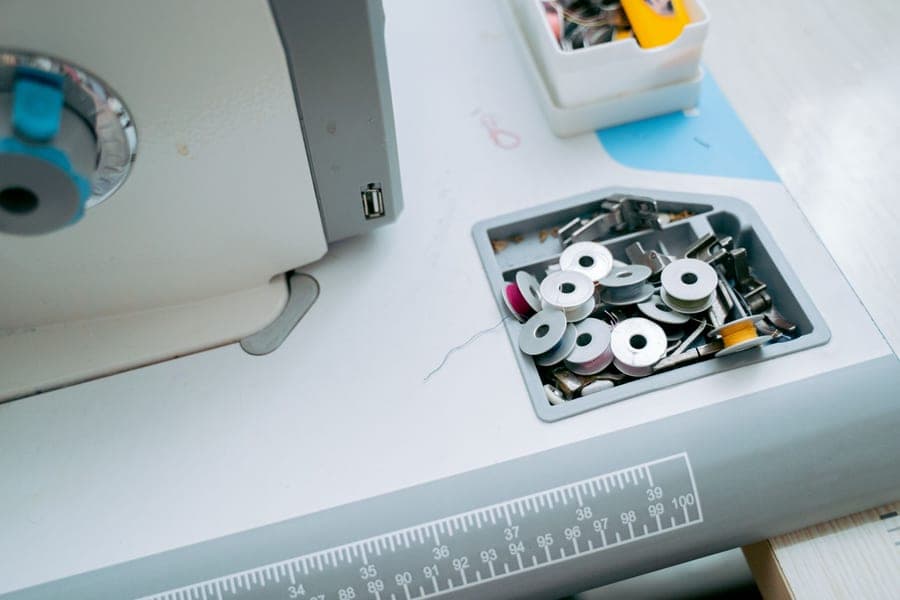
Bobbin winding uses a separate little mechanism from sewing, and it has its own set of things that go wrong. All of them are quick once you know what to look at.
The winder does not turn at all
The spindle is not pushed across. Put the bobbin on the spindle at the top of the machine and push the spindle to the right until it clicks. That click engages the winder and disengages the needle. If nothing happens when you press the pedal, this is almost always the reason.
The bobbin is not seated. Push it down fully onto the spindle. Some machines have a small pin that must line up with a hole in the bobbin.
It is the wrong bobbin class. A bobbin that is slightly the wrong size will sit at an angle and not engage the stop mechanism.
It winds, but unevenly
The thread is not through the winding tension guide. This is the one everybody misses. Bobbin winding has its own small guide or disc near the spool pin, separate from the needle threading path. Without it the thread arrives loose and piles up in humps.
A bobbin wound in humps feeds unevenly and causes tension faults that look exactly like a machine problem.
The thread is winding to one end. Some machines have a small adjustment for this; on most, holding the thread and guiding it for the first few turns is enough to start it evenly.
It will not stop when full
Most machines have a stop that the filling bobbin pushes against. If it is not stopping, the bobbin is usually the wrong class - slightly too small in diameter to reach the stop.
Check the class in your manual. Bobbins explained covers why they are not interchangeable.
Two habits worth forming
Always wind onto an empty bobbin. Winding new thread over old layers produces slipping and uneven feed, and it is a common hidden cause of tension problems. This is the practical reason to own four or more bobbins.
Wind the bobbin before you start a project, not mid-seam. Running out halfway through a long seam means unpicking back to where the bottom thread stopped.
Questions beginners actually ask
Why will my sewing machine not wind a bobbin?
Usually the winder spindle has not been pushed across until it clicks - that click engages the winder and disengages the needle. Also check the bobbin is pushed fully down onto the spindle and that it is the class your manual specifies.
Why does my bobbin wind unevenly?
Because the thread is not passing through the bobbin-winding tension guide near the spool pin. That guide is separate from the needle threading path and it is the step almost everyone misses. Without it the thread arrives loose and piles up in humps.
Why does the bobbin winder not stop when the bobbin is full?
Usually the wrong bobbin class - one slightly too small in diameter to reach the stop mechanism. Check the class your manual specifies; bobbins are not interchangeable between machines.
Can I wind thread onto a bobbin that already has some on it?
You can, but it causes problems. The new layers slip against the old ones and feed unevenly, which produces tension faults that look like a machine fault. Always wind onto an empty bobbin - which is why owning four or more is worth it.
Sources
Specifications are taken from manufacturer listings. We do not run a test lab and never claim to - how each machine is assessed is set out on our methodology page.