Best For · Best under $300
The best sewing machines under $300
This is the tier where a beginner machine stops making you work around it. Our pick is the Brother CS7000X - and the honest news is that almost nothing above this bracket would serve a first-time sewer better.
By Michael W. · Published
Disclosure: this page contains affiliate links. As an Amazon Associate, StitchStarter earns from qualifying purchases at no extra cost to you. Prices are read from Amazon daily and dated; the price you pay is the one Amazon shows at checkout. It never changes which machines we recommend. Full disclosure.
Quick picks
The short answer. Every pick is explained in full below, including who should skip it.
| # | Product | Best for | Score | Price |
|---|---|---|---|---|
| 1 | 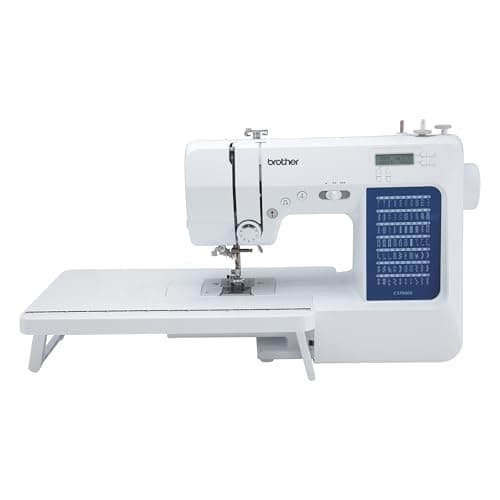 Brother CS7000XSpeed slider, wide table, drop-in bobbin - the whole beginner checklist. | Best under $300 overall | 8.2 | |
| 2 | 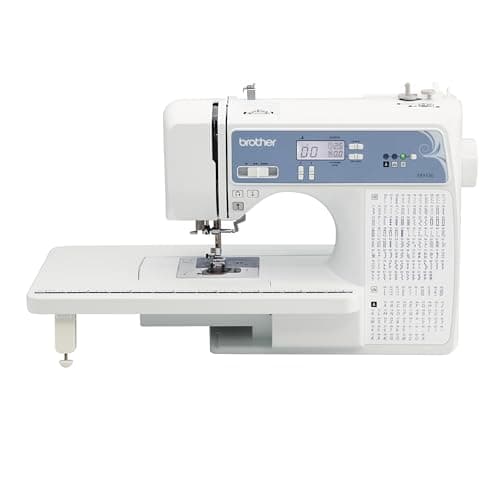 Brother XR9550The CS7000X's convenience with a larger display and far more stitches. | Best if you want the bigger screen | 7.7 | |
| 3 | 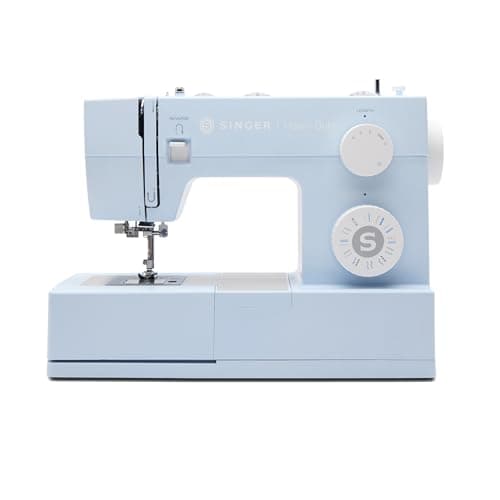 Singer Heavy Duty 4423Metal frame and a fast motor, if denim and canvas are the plan. | Best for thick fabric | 7.8 | |
| 4 | 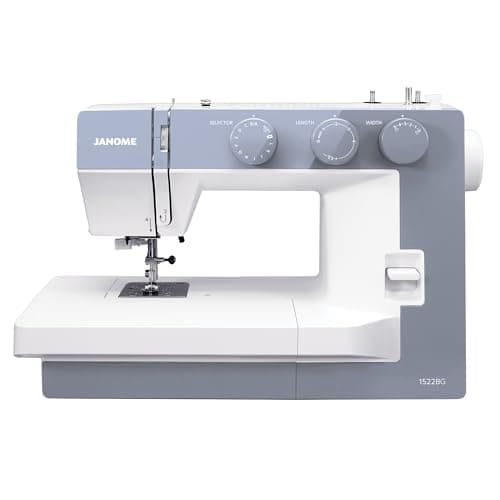 Janome 1522Mechanical, dealer-backed, with a one-step buttonhole the 2212 lacks. | Best built to last | 7.6 |
Prices shown are Amazon prices as of November 1, 2026 and can change.Scores are our editorial judgment on six axes, explained on the methodology page. We do not run a test lab and never claim to.
If you have $300 to spend on a first sewing machine, buy the Brother CS7000X. It is the machine that answers the greatest number of beginner problems at once — it threads its own needle, it lets you sew slowly while your hands learn, you can see the bobbin running out through a clear cover, and the wide quilting table is already in the box. Spend less and you give up one or two of those. Spend more and, for a first machine, you mostly buy stitches you will not use.
The live price sits inside each buy button below, read from Amazon and dated, because a number typed into a paragraph is wrong within the week. What a paragraph can describe honestly is the tier, and this is the most important thing to understand about the $300 bracket: it is not a better version of the cheap bracket. It is the point at which the compromises stop being the thing you think about every time you sit down.
What the step up from a cheap machine actually buys
Our cheap machines roundup covers the floor of usable quality, and the machines there are genuinely fine. The honest difference at this tier is not stitch count and it is not “power”. It is four specific features, in this order of how much they matter.
What separates the sub-$200 tier from the sub-$300 tier on the machines we recommend.
Notice what is not on that list: stitch count. The Brother XR9550 has 165 built-in stitches and the Janome 2212 has twelve, and nobody has ever finished a garment because of the other 153. Our stitches explained guide goes through the five or six you will genuinely use.
Best under $300 overall: Brother CS7000X
This is the machine we recommend more than any other on the site, and the $300 bracket is where it lives. The combination that matters is the automatic needle threader, the top drop-in bobbin, the 70 built-in stitches with seven one-step buttonholes, and the speed-control slider. That slider is the thing people underestimate: it means a nervous first-timer can sew at a pace they can actually steer, which is how a first project gets finished instead of abandoned.
Who should skip it: anyone who would rather have physical dials than a menu, and anyone whose real plan is canvas, upholstery or leather every week. It has a metal internal frame inside a light plastic shell, so it is quiet and easy to carry and it is not a heavy-duty machine. Our full Brother CS7000X review is the longer version, and CS7000X vs XR9550 settles the only pairing inside this tier that people genuinely agonize over.
Best if you want the bigger screen: Brother XR9550
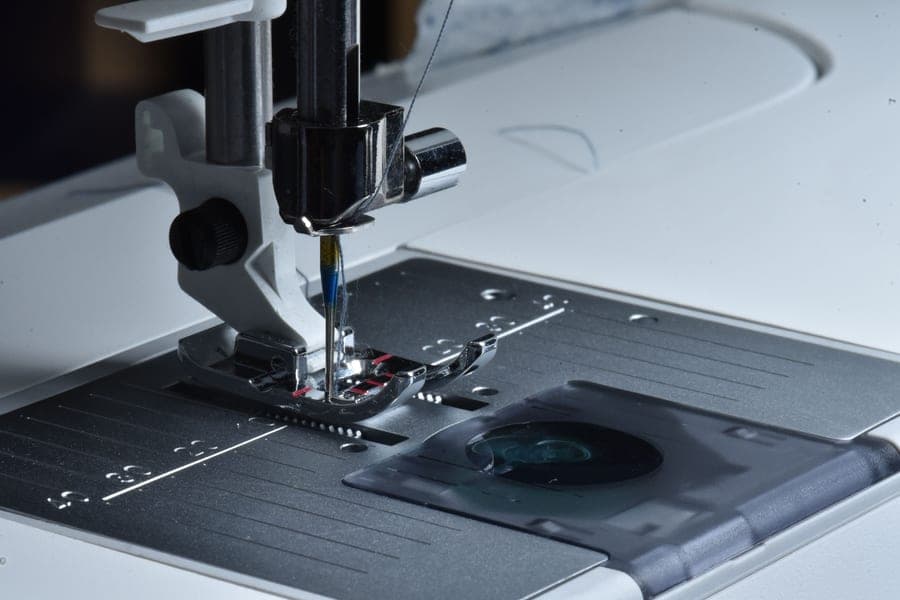
The XR9550 is the CS7000X with a larger LCD, 165 stitches including 55 alphanumeric characters, and eight one-step buttonhole styles. It also includes the wide table. If you like the idea of stitching a name onto something, or you simply find a bigger display easier to read, it is the better buy of the two.
Who should skip it: anyone who would rather put the difference toward fabric. The XR9550 does not have the CS7000X’s speed slider, and for a beginner that is a real loss against a stitch library you will mostly scroll past.
Best for thick fabric: Singer Heavy Duty 4423
If the honest answer to “what will you sew first?” is jeans hems, tote bags, canvas or several layers of anything, the 4423 is the machine in this tier for you. It has a metal interior frame, a stainless steel bedplate, 1,100 stitches per minute and an extra-high presser foot lift that gets thick layers under the needle in the first place. It has a one-step buttonhole and an automatic threader too, which the cheaper Heavy Duty models do not both have.
Who should skip it: anyone who mostly wants gentle control on light fabric, and anyone sewing in an apartment at night. It is loud and it has no speed limiter, so the foot pedal is the only control you have. “Heavy duty” means a metal frame and a fast motor, not an industrial machine — our heavy duty guide draws that line properly, because it is the most commonly oversold phrase in the category.
Best built to last: Janome 1522
The Janome 1522 is the mechanical answer in this bracket: 22 stitches, a one-step buttonhole, a built-in needle threader, drop feed, an extra-high foot lift and the solid metal frame the brand is known for. Nothing on it depends on a circuit board, which is exactly why mechanical machines routinely outlive computerized ones — see our lifespan guide for the arithmetic.
Who should skip it: anyone buying on price, because the Janome 2212 is the value pick in that line and costs meaningfully less. Stock on the 1522 also comes and goes, since it is sold mainly as a color edition.
Is it worth going above $300?
For a first machine, usually not — with one exception. Above this bracket the money goes on embroidery capability, more automation and dealer-level build. The exception is if you specifically want to embroider: a combination sewing and embroidery machine is a different product, not a better sewing machine, and our sewing and embroidery roundup covers that properly, as does sewing machine vs embroidery machine.
The other thing worth saying plainly: it is better to spend $250 on a machine you will use than $500 on one that intimidates you. Our guide to how much to spend on a first sewing machine works through the two kinds of buyer — the one who should spend less and the one who will end up buying twice.
The picks in full
01 - Best under $300 overall
Brother CS7000X
Does the fiddly parts for you so you can spend your energy learning to sew.
- 70 built-in stitches, 7 one-step buttonholes
- Automatic needle threader, drop-in top bobbin
- Speed-control slider
- Wide table and 10 presser feet included
- Get it if
- You want threading, buttonholes and stitch settings handled by the machine, and you might try quilting later - the wide table is already in the box.
- Skip it if
- You want physical dials instead of a menu, or you will be sewing canvas, upholstery or leather regularly.
The trade-off
A metal internal frame inside a light plastic shell. That makes it easy to carry and quiet on cottons and mid-weights; it is not built for heavy layers every day the way a Heavy Duty is.
How the Brother CS7000X scores
Our judgment on the six axes described on the methodology page. Not measurements - we do not run a test lab.
- Setup and threading
- 9/10
- Everyday stitch quality
- 8/10
- Thick fabric
- 6/10
- Beginner features
- 9/10
- Durability reputation
- 7/10
- Help for this exact model
- 10/10
Overall 8.2/10
02 - Best if you want the bigger screen
Brother XR9550
More stitches and a bigger screen than the CS7000X, for the same job.
- 165 built-in stitches - 110 utility and decorative plus 55 alphanumeric
- 8 one-step buttonhole styles
- LCD display and stitch selection
- Wide table included
- Automatic threader, drop-in bobbin
- Get it if
- You want the CS7000X's convenience with a larger display and more decorative stitches.
- Skip it if
- You would rather put the difference toward fabric - you will use a fraction of the stitch library.
The trade-off
The extra stitches are decorative. The real difference from the CS7000X is the display, and the CS7000X's speed slider is arguably worth more to a beginner.
How the Brother XR9550 scores
Our judgment on the six axes described on the methodology page. Not measurements - we do not run a test lab.
- Setup and threading
- 9/10
- Everyday stitch quality
- 8/10
- Thick fabric
- 6/10
- Beginner features
- 8/10
- Durability reputation
- 7/10
- Help for this exact model
- 8/10
Overall 7.7/10
03 - Best for thick fabric
Singer Heavy Duty 4423
Fast, sturdy and simple - the machine for denim hems and tote bags.
- Metal interior frame, stainless steel bedplate
- 1,100 stitches per minute
- 23 stitches (97 stitch applications), one-step buttonhole, automatic threader
- Top drop-in bobbin with a clear cover
- Extra-high presser foot lift for thick layers
- Get it if
- You want physical dials, you plan to sew jeans, canvas or several layers, and you do not mind a machine that is loud and quick.
- Skip it if
- You mostly want gentle control on light fabrics, or a quiet machine for an apartment.
The trade-off
Heavy duty means a metal frame and a fast motor, not an industrial machine. It handles denim well; real leather is still a struggle.
How the Singer Heavy Duty 4423 scores
Our judgment on the six axes described on the methodology page. Not measurements - we do not run a test lab.
- Setup and threading
- 7/10
- Everyday stitch quality
- 8/10
- Thick fabric
- 9/10
- Beginner features
- 6/10
- Durability reputation
- 8/10
- Help for this exact model
- 9/10
Overall 7.8/10
04 - Best built to last
Janome 1522
A step up the mechanical ladder - more stitches, same build.
- 22 built-in stitches
- One-step buttonhole
- Built-in needle threader
- Drop feed, 3-piece feed dog, foot pressure adjustment dial
- Solid metal frame in the Janome tradition
- Get it if
- You like what the 2212 stands for but want a one-step buttonhole, a needle threader and a wider stitch range.
- Skip it if
- You are buying on price - the 2212 is the value pick in the line - or you want a drop-in bobbin.
The trade-off
You pay a clear premium over the 2212, and what you get for it is convenience rather than a better seam: the buttonhole, the threader and the extra stitches. Whether that is worth it depends on how many buttonholes you expect to sew.
How the Janome 1522 scores
Our judgment on the six axes described on the methodology page. Not measurements - we do not run a test lab.
- Setup and threading
- 8/10
- Everyday stitch quality
- 9/10
- Thick fabric
- 7/10
- Beginner features
- 7/10
- Durability reputation
- 10/10
- Help for this exact model
- 6/10
Overall 7.6/10
Questions beginners actually ask
What is the best sewing machine under $300?
The Brother CS7000X. It answers more beginner problems at once than anything else in the bracket: an automatic needle threader, a drop-in bobbin you can see, 70 stitches with seven one-step buttonholes, a speed-control slider so you can sew slowly while learning, and a wide quilting table included in the box.
Is $300 enough for a good sewing machine?
Yes - it is arguably the sweet spot of the whole beginner market. Below about $200 you give up the speed limiter, the wide table and the larger accessory set. Above $300 the money mostly goes on embroidery capability and stitch libraries a beginner will not use.
What is the difference between a $150 and a $300 sewing machine?
Four things, in order of how much they matter: a speed control slider, an included wide or extension table, a metal internal frame on the heavy-duty models, and up to ten presser feet instead of six. Stitch count is not on that list and should not drive the decision.
Should I buy a heavy duty machine or a computerized one under $300?
Answer one question: will you sew denim, canvas or several layers regularly? If yes, the Singer Heavy Duty 4423 - metal frame, 1,100 stitches per minute, extra-high foot lift. If no, the Brother CS7000X, because its speed slider and wide table matter more for clothes, quilting and light fabric.
Where do the prices in the buy buttons come from?
Amazon's own product data, refreshed daily and stamped with the date. We never type a price into an article, and if the refresh stops the number is removed rather than left to go stale. What you pay is whatever Amazon shows at checkout.
Sources
- Brother (manufacturer specifications)
- Singer (manufacturer specifications)
- Janome America (manufacturer specifications)
Specifications are taken from manufacturer listings. We do not run a test lab and never claim to - how each machine is assessed is set out on our methodology page.
Read next
- The best cheap sewing machines for beginners
The tier below, and where its floor sits.
- How much to spend on a first sewing machine
- Brother CS7000X review
- Brother CS7000X vs XR9550
The only pairing inside this tier worth agonising over.