Reviews · Best mechanical step-up
Janome 1522 review: the 2212 with the two things people miss
A mechanical machine bought for the twenty years after you buy it. The useful question is not Janome against Brother - it is the 1522 against its own cheaper sibling.
By Michael W. · Published
Disclosure: this page contains affiliate links. As an Amazon Associate, StitchStarter earns from qualifying purchases at no extra cost to you. Prices are read from Amazon daily and dated; the price you pay is the one Amazon shows at checkout. It never changes which machines we recommend. Full disclosure.
The Janome 1522 is a genuinely good mechanical sewing machine, and almost everyone who searches for it is really asking one question: is it worth the premium over the Janome 2212, which sits in the same lineup and costs meaningfully less?
The short answer: yes, if you will sew buttonholes and you change thread colors often. No, if you will not. The 1522 is not a better-built machine than the 2212 and it does not sew a better stitch — it is the same mechanical philosophy with 22 stitches instead of 12, a one-step buttonhole instead of a four-step one, and a built-in needle threader the 2212 does not have. That is the whole difference, and whether it is worth the money is a question about your projects rather than about the machine.
What you actually get
Janome publishes the specification plainly. The 1522 carries 22 built-in stitches and one one-step buttonhole. Thread tension is manual — a physical dial, not a sensor — and there is a built-in needle threader. The hook is a front-loading vertical oscillating type, which matters and we come back to below. Feet are snap-on, the feed system is a three-piece feed dog, and the feed dogs can be lowered for free-motion work. There is a free arm for cuffs and sleeves, and a foot pressure adjustment dial, which is the feature on this machine most people have never used on any other.
Maximum stitch width is 5mm and maximum stitch length is 4mm. Top speed is 860 stitches per minute from a 0.6 amp motor. The machine weighs 14.3 lb with a footprint of 17 inches wide, 11 high and 7.5 deep, and the usable workspace to the right of the needle measures 6.7 inches wide by 4.3 high. The body is built on a solid metal frame with a generous sewing bed and an accessory compartment, and the bobbin winder is an auto-declutch design, so it disengages itself when the bobbin is full instead of straining.
The accessory set is better than most machines at this level: an automatic buttonhole foot, blind hem foot, zigzag foot, button sewing foot, zipper feet, a quarter-inch seam foot, a ten-pack of bobbins, a bobbin case unit, an assorted needle set, lint brush, seam ripper and the foot control.
Janome 1522 - the published specifications that change how it sews, from Janome's own product pages (linked in Sources).
How it sews
This is the part of a Janome review that is hard to make exciting, because the answer is that it sews cleanly and does not argue. On quilting cotton, poplin, linen and mid-weight fabric, the stitch is even and the feed is predictable, and that is the property the brand has built its reputation on — it is the same reason sewing classes keep buying the 2212 by the dozen.
Two things stand out in practice. The first is the 860 stitches-per-minute ceiling. There is no speed-limiting slider on the 1522, so the foot pedal is your only control, but a slower top speed means feathering the pedal is far easier than on a 1,100 stitch-per-minute machine. For a beginner that is a real advantage, and it is the main reason we rate the mechanical Janomes well for learners despite their thin feature list.
The second is the foot pressure dial. Most machines in this price bracket fix the pressure the presser foot applies; the 1522 lets you reduce it, which is the correct fix for voile, chiffon and fine jersey being pushed down into the needle plate rather than fed. If you sew light fabric, this is worth more than the extra ten stitches. Our settings for thin and delicate fabric guide covers the rest of that job.
The front-loading bobbin, honestly
The 1522 uses a front-loading vertical oscillating hook: the bobbin sits in a removable case that goes in through a door at the front of the machine, rather than dropping into a well on the top under a clear cover.
This is the 1522’s one genuine disadvantage against cheaper computerized machines, and it is worth being blunt about. A front-loading bobbin takes a few attempts to learn, the case has to go in the right way round, and — the part that actually bites — you cannot see how much thread is left. Running out mid-seam without warning is a beginner rite of passage on this kind of machine. Our bobbins guide walks through both styles.
In the machine’s favor: the mechanism is mechanically simple and long-lived, the bobbin case is a cheap part when one eventually needs replacing, and once you have loaded it twenty times it is no slower than a drop-in. If a visible bobbin is a must for you, that points at the Brother CS7000X or a Singer Heavy Duty, not at Janome.
Janome 1522 vs Janome 2212: the actual decision
Both machines are mechanical, both have dials, neither has a screen or a board to fail, and both are built on the metal-framed Janome platform that earns the brand its longevity reputation. What you pay the premium for is convenience, not quality.
Choose the 1522 if you will sew clothes with buttons. A one-step buttonhole means the machine sizes the buttonhole to your button and sews all four sides in one pass; the 2212’s four-step version means turning a dial through four positions and pivoting the fabric for every single buttonhole. Both work. Only one is consistent at the sixth buttonhole down a shirt front. Our buttonhole guide shows both methods if you want to judge the gap for yourself.
Choose the 1522 if you change thread color often, because the built-in needle threader removes the most tedious two minutes in sewing, and the 2212 does not have one.
Choose the 2212 if your sewing is seams, hems, repairs and quilting. You will not miss the buttonhole, the stitch quality is the same, and the money saved buys fabric, needles and a service. Our 2212 vs 1522 comparison sets the two out side by side.
The stock problem, and what it means for price
The 1522 is sold mainly as a series of color editions rather than as one standard model — Janome lists a run of variants under the 1522 banner, and which one a retailer has in stock changes through the year. Mechanically they are the same machine.
Two practical consequences. First, availability comes and goes, and a model you cannot buy is not a recommendation however good it is — so the live price and stock state sit in the buy button on this page rather than in this paragraph. Second, the 1522 is a dealer-network machine as much as an online one, and a dealer will usually set it up and demonstrate it, which on a front-loading-bobbin machine is worth something real. Our guide to where to buy a sewing machine weighs that against the online price.
Who should buy the Janome 1522
Buy it if you want one mechanical machine for the next couple of decades and your sewing includes garments. The combination of Janome stitch quality, a one-step buttonhole, a threader and a foot pressure dial covers garment sewing without a circuit board anywhere in the machine. Our lifespan guide explains why that matters more than any feature list.
Buy it if you have been sewing on a cheap plastic machine and you are tired of it moving on the table. At 14.3 lb on a metal frame, this one stays put.
Skip it if you are buying your first machine on a budget. The 2212 is the value pick in this line, and the under-$300 roundup covers the computerized alternatives at a similar price with more conveniences.
Skip it if you want to see the bobbin, want a speed slider, or want to carry the machine to a class. Those are three different machines, and none of them is this one — see our easiest machines roundup and portable picks.
Skip it if your work is denim, canvas and upholstery every week. A metal-framed Heavy Duty Singer is faster and lifts higher over thick layers — our 1522 against the Singer 4452 is that argument in one page, and our Singer Heavy Duty 4432 review covers what that platform does differently.
The 1522 and the two machines to weigh it against
One is the cheaper sibling you are probably comparing it to. The other is what the same money buys if you would rather have conveniences than longevity.
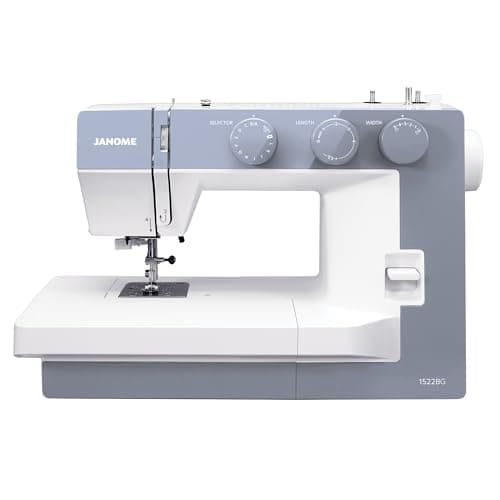
Janome 1522
Janome build with the two things the 2212 lacks: a one-step buttonhole and a built-in needle threader.
Skip it if You are buying on price - the 2212 is the value pick in the line - or you want a drop-in bobbin.
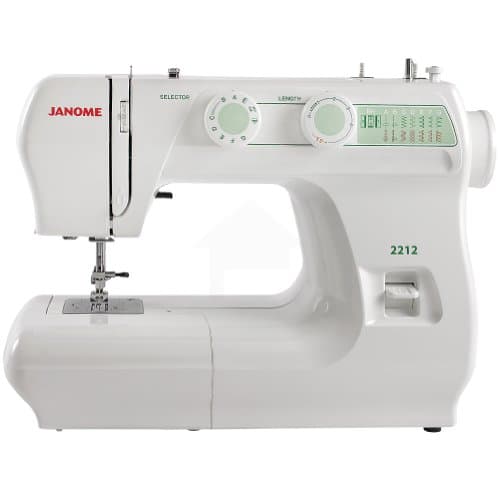
Janome 2212
The value pick in the line. Same stitch quality, twelve stitches, a four-step buttonhole and no threader.
Skip it if You want an automatic threader, a one-step buttonhole or a drop-in bobbin - it has none of them.
#ad - buy links go to Amazon and earn us a commission at no extra cost to you. Prices shown are Amazon prices as of November 1, 2026 and can change. Full disclosure.
The machine in full
Best mechanical step-up
Janome 1522
A step up the mechanical ladder - more stitches, same build.
- 22 built-in stitches
- One-step buttonhole
- Built-in needle threader
- Drop feed, 3-piece feed dog, foot pressure adjustment dial
- Solid metal frame in the Janome tradition
- Get it if
- You like what the 2212 stands for but want a one-step buttonhole, a needle threader and a wider stitch range.
- Skip it if
- You are buying on price - the 2212 is the value pick in the line - or you want a drop-in bobbin.
The trade-off
You pay a clear premium over the 2212, and what you get for it is convenience rather than a better seam: the buttonhole, the threader and the extra stitches. Whether that is worth it depends on how many buttonholes you expect to sew.
How the Janome 1522 scores
Our judgment on the six axes described on the methodology page. Not measurements - we do not run a test lab.
- Setup and threading
- 8/10
- Everyday stitch quality
- 9/10
- Thick fabric
- 7/10
- Beginner features
- 7/10
- Durability reputation
- 10/10
- Help for this exact model
- 6/10
Overall 7.6/10
Questions beginners actually ask
Is the Janome 1522 good for beginners?
Yes, with one caveat. It is slower than most machines at 860 stitches per minute, which makes it easier to control, and it has a one-step buttonhole and a built-in needle threader. The caveat is the front-loading bobbin: it takes practice to load and you cannot see the thread running out. If a visible drop-in bobbin matters to you, look at a Brother CS7000X instead.
What is the difference between the Janome 1522 and the Janome 2212?
Three things: the 1522 has 22 built-in stitches against the 2212's 12, a one-step buttonhole instead of a four-step one, and a built-in needle threader the 2212 does not have. Stitch quality, frame and durability are the same. If you sew garments with buttons the 1522 is worth the premium; if you sew seams, hems and quilts the 2212 is the value pick.
Does the Janome 1522 have a drop-in bobbin?
No. Janome lists a front-loading vertical oscillating hook, so the bobbin sits in a removable case that goes in through a door at the front. It is mechanically simple and long-lived, but you cannot see how much thread is left, which is the machine's main disadvantage against cheaper computerized models.
How fast is the Janome 1522?
860 stitches per minute, from a 0.6 amp motor. That is slower than a Singer Heavy Duty at 1,100, and the lower ceiling is an advantage while you are learning, because there is no speed-limiting slider on this machine and the foot pedal is your only control.
Can the Janome 1522 sew denim?
Hems, seams and repairs in denim, yes - with a denim needle, a longer stitch and a steady pace. Heavy multi-layer denim and canvas work every week is not its job: a metal-framed Heavy Duty Singer has a faster motor and an extra-high presser foot lift for exactly that, which is what makes it the better buy for thick fabric.
Does the Janome 1522 come in different colors?
Yes. Janome sells it as a series of color editions under the 1522 name rather than as a single standard model, and which variant a retailer stocks changes through the year. The machines are mechanically the same, so buy whichever version is actually available at a sensible price.
Is the Janome 1522 good for quilting?
For piecing and small quilts, yes - it includes a quarter-inch seam foot, and the feed dogs drop for free-motion work, which is unusual at this level. For a full-size quilt the limit is the 6.7 inch workspace to the right of the needle, so a machine with a wider throat and an extension table is the better tool.
Sources
- Janome - 1522 series product pages
- Janome - 1522BL specifications
- Janome - 1522 instruction book (PDF)
Specifications are taken from manufacturer listings. We do not run a test lab and never claim to - how each machine is assessed is set out on our methodology page.
Read next
- Janome 2212 vs Janome 1522
The comparison almost everyone looking at the 1522 needs.
- Janome 2212 review
- Are Janome sewing machines good for beginners?
- Sewing machine bobbins explained
Front-loading vs drop-in, and why it matters here.