Reviews · Cheapest way into the Heavy Duty line
Singer Heavy Duty 4411 review: the same frame, two features short
The entry point to the Heavy Duty line, and a genuinely good machine for straight seams on thick fabric. Two omissions decide whether it is the right one for you.
By Michael W. · Published
Disclosure: this page contains affiliate links. As an Amazon Associate, StitchStarter earns from qualifying purchases at no extra cost to you. Prices are read from Amazon daily and dated; the price you pay is the one Amazon shows at checkout. It never changes which machines we recommend. Full disclosure.
The Singer Heavy Duty 4411 is the cheapest way into the Heavy Duty line, and the thing to understand before anything else is that it is not a cut-down version of the hardware. Singer gives it the same heavy duty metal frame, the same stainless steel bed plate, the same 1,100 stitches per minute, the same 6.25 inch sewing space and the same extra high presser foot lifter as the 4423 and the 4432. It pushes through denim and canvas exactly as well as they do.
What it gives up is above the needle plate: 11 built-in stitches (69 stitch applications) instead of 23 or 32, and a four-step buttonhole rather than a one-step one. Singer also does not list a built-in needle threader for it, where the 4423 and 4432 both have one. Those are the whole review, and whether they matter depends entirely on whether you sew clothes.
What you actually get
Singer lists 11 built-in stitches and 69 stitch applications, a four-step buttonhole “sewn in four easy steps”, and a top drop-in bobbin taking Class 15 transparent bobbins — so you do get the visible bobbin, which is one of the best things about this line and is not cut from the entry model. Stitch width adjusts to 6mm.
The hardware is the Heavy Duty platform: heavy duty metal frame, stainless steel bed plate, 1,100 stitches per minute, extra high presser foot lifter, 6.25 inch sewing space from needle to tower with 4.25 inches of height. Four presser feet come in the box — general purpose, zipper, buttonhole and button sewing — inside a 13-item accessory set Singer values at $60. The machine measures 15.5 by 6.25 by 12 inches and weighs about 14 lb, and the warranty is the same tiered 90-day / 2-year / 24-year structure as the rest of the range.
Singer Heavy Duty 4411 against the 4423, from Singer's published specifications. The hardware rows are identical; the differences are all features.
The four-step buttonhole, which is the whole decision
A one-step buttonhole means you drop a button into the back of the buttonhole foot, select the stitch, and the machine sews both sides and both bar tacks to the right length in one pass. A four-step buttonhole means you turn the stitch dial through four positions in sequence — one side, a bar tack, the other side, the other bar tack — judging the length yourself each time.
It is not hard. It is learnable in an afternoon and plenty of people sewed on four-step machines for decades. What it is not is consistent without practice, and the place that bites is the sixth buttonhole down a shirt front, where the first five set a standard the sixth has to match. Our buttonhole guide walks through both methods so you can judge the gap honestly rather than from a spec sheet.
So the rule is simple. If your sewing is hems, seams, curtains, bags and repairs, the four-step buttonhole will cost you nothing, because you will make a buttonhole roughly never. If clothes with buttons are anywhere in the plan, pay the small step up to the 4423 — it is the feature beginners most often wish they had bought.
The missing needle threader
Singer lists a built-in needle threader on the 4423 and the 4432 and does not list one for the 4411. It is a small thing that gets annoying in a specific situation: changing thread color repeatedly in one session. If you sew one color at a time, you will barely notice; if you are matching thread to several fabrics in an afternoon, you will notice every time.
A standalone handheld needle threader costs very little and solves most of it, which is worth knowing before the missing feature talks you into spending more.
How it sews
Like the rest of the line: fast, loud and planted. On jeans hems, canvas, duck cotton, webbing and several layers of anything, the metal frame keeps the body still while the needle goes through, and the extra high foot lifter means you can actually get the work under the foot — the specification that quietly decides whether a thick-fabric job is possible at all.
With 11 stitches you get the useful ones: straight, zigzag, blind hem, a stretch option and the four-step buttonhole sequence. For the work this machine is bought for, that is a complete set. Our stitches guide explains why the number on the box is the least useful figure in the specification.
The weaknesses are the line’s weaknesses, not this model’s. No speed limiter, so the pedal is your only control and the slowest speed is brisk. Loud. Fixed foot pressure, so fine and delicate fabric is not its strength — see settings for thin and delicate fabric for what that work actually needs.
One practical note on buying it
The 4411 is widely sold as a decorated or color special edition rather than as the plain machine, so the unit that arrives may not look like the photograph you first saw. Mechanically it is the standard 4411 — same frame, same motor, same specification — and the finish is the only difference. Worth knowing so an unexpected color is not mistaken for the wrong machine.
The live price and stock state sit in the buy button on this page rather than in this paragraph, because a number written into a paragraph is stale within the week. What is structurally true is that the 4411 is the cheapest entry to the platform and that the gap to the 4423 is usually small — small enough that the buttonhole question, not the price, should decide it.
Who should buy the Singer Heavy Duty 4411
Buy it if your sewing is straight seams on heavy fabric: hemming jeans, canvas totes, curtains, aprons, repairs to work clothes. You get the whole Heavy Duty hardware story for the least money. Our alterations and mending roundup is written for that buyer.
Buy it if you already know how to use a four-step buttonhole, or you are confident you will never need one.
Skip it if clothes with buttons are in the plan. Buy the 4423. This is the single most common regret with the 4411 and the fix costs very little at the point of purchase.
Skip it if this is your first ever sewing machine and nobody is sitting next to you. Between the four-step buttonhole, the missing threader and the absent speed limiter, there are gentler places to start — our easiest machines roundup and under-$300 picks both point elsewhere.
Skip it if you want a walking foot or an extension table in the box. That is the 4452, and for upholstery-type work it is the model worth paying for — see our upholstery roundup.
The 4411 and the machine most people should buy instead
Identical hardware. One has the buttonhole and the threader, and the gap between them is usually small.
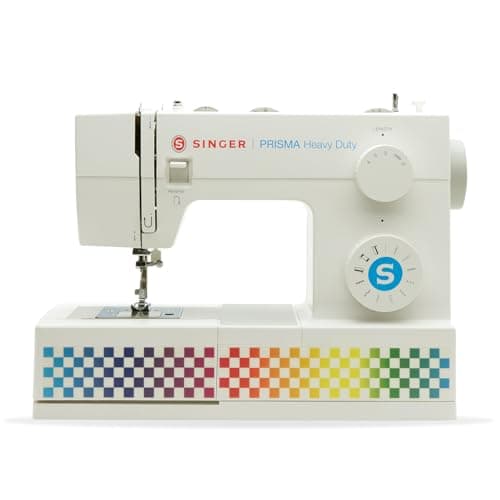
Singer Heavy Duty 4411
The whole Heavy Duty frame-and-motor story for the least money. Right if you will never sew a buttonhole.
Skip it if You want a one-step buttonhole - the 4423 adds one for a small step up.
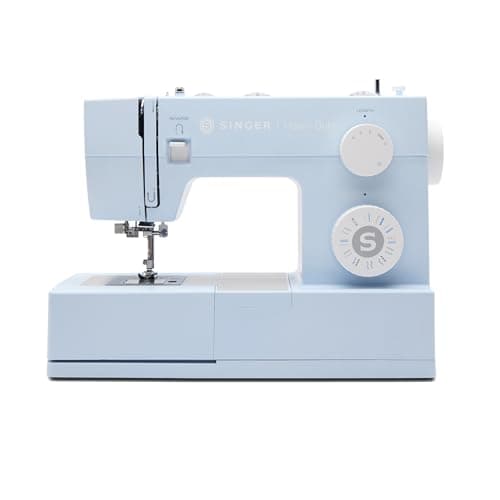
Singer Heavy Duty 4423
Adds a one-step buttonhole and a built-in needle threader for a small step up. The model we recommend across the line.
Skip it if You mostly want gentle control on light fabrics, or a quiet machine for an apartment.
#ad - buy links go to Amazon and earn us a commission at no extra cost to you. Prices shown are Amazon prices as of November 2, 2026 and can change. Full disclosure.
The machine in full
Cheapest way into the Heavy Duty line
Singer Heavy Duty 4411
The entry point to the Heavy Duty line - same frame, fewer stitches.
- 11 built-in stitches (69 stitch applications), four-step buttonhole
- 1,100 stitches per minute
- Metal interior frame, stainless steel bedplate
- Adjustable stitch length and width, drop feed
- Extra-high presser foot lift
- Get it if
- You want the Heavy Duty frame and motor for straight seams and hems, and you will rarely make a buttonhole.
- Skip it if
- You want a one-step buttonhole - the 4423 adds one for a small step up.
The trade-off
The four-step buttonhole is the real difference, and it is the feature beginners most often wish they had paid for. Amazon currently stocks the 4411 only as a decorated special edition, so the machine you receive is the standard 4411 in a non-standard color.
$219.99 · 5% off · price as of November 2, 2026
#ad - opens Amazon in a new tab. How we earn
How the Singer Heavy Duty 4411 scores
Our judgment on the six axes described on the methodology page. Not measurements - we do not run a test lab.
- Setup and threading
- 7/10
- Everyday stitch quality
- 8/10
- Thick fabric
- 9/10
- Beginner features
- 4/10
- Durability reputation
- 8/10
- Help for this exact model
- 8/10
Overall 7.2/10
Questions beginners actually ask
Is the Singer Heavy Duty 4411 good for beginners?
For straight-seam sewing on heavy fabric, yes - and it has the visible Class 15 drop-in bobbin that makes this line easy to live with. Three things count against it for a complete beginner: a four-step buttonhole, no built-in needle threader listed by Singer, and no speed-limiting slider, so the foot pedal is your only speed control.
What is the difference between the Singer 4411 and the 4423?
Features, not hardware. Singer gives both the same heavy duty metal frame, stainless steel bed plate, 1,100 stitches per minute, extra high presser foot lifter, 6.25 inch sewing space and Class 15 top drop-in bobbin. The 4423 adds a one-step buttonhole, a built-in needle threader and 12 more stitches. If you sew clothes with buttons, that is worth the step up.
Is a four-step buttonhole hard to use?
Not hard, but less consistent than a one-step buttonhole without practice. You turn the stitch dial through four positions - one side, a bar tack, the other side, the other bar tack - judging the length yourself. It is fine for the occasional buttonhole and frustrating when you need six matching ones down a shirt front.
Does the Singer Heavy Duty 4411 have a needle threader?
Singer does not list one for the 4411, where it does list a built-in threader on the 4423 and the 4432. It matters most if you change thread color several times in a session. A cheap handheld needle threader solves most of the inconvenience for a fraction of the price gap.
Can the Singer 4411 sew denim?
Yes, and this is what it is for. It has the same heavy duty metal frame, stainless steel bed plate, 1,100 stitches per minute motor and extra high presser foot lifter as the rest of the line, so it handles jeans hems, canvas and several layers as well as the dearer models. Use a size 16 or 18 needle and a longer stitch.
How many stitches does the Singer 4411 have?
11 built-in stitches and 69 stitch applications, according to Singer. That is fewer than the 4423 and 4432, but it includes the ones that matter for this machine's work: straight, zigzag, blind hem, a stretch option and the four-step buttonhole sequence.
Why does the Singer 4411 come in unusual colors?
It is widely sold as a decorated or color special edition rather than as the plain machine, so the unit that arrives may not match the first photo you saw. Mechanically it is the standard 4411 - the finish is the only difference.
Sources
- Singer - Heavy Duty 4411 product specifications
- Singer - Heavy Duty 4432 product specifications (line comparison)
Specifications are taken from manufacturer listings. We do not run a test lab and never claim to - how each machine is assessed is set out on our methodology page.
Read next
- Singer 4423 vs Singer 4411
The comparison almost everyone looking at the 4411 needs.
- Singer 4411 vs Singer 4452
- Which Singer Heavy Duty sewing machine is best?
- How to sew a buttonhole on a sewing machine
Both methods, so you can judge the four-step gap.