Compare · Entry vs loaded
Singer Heavy Duty 4411 vs 4452
Same frame. Same motor. Same 1,100 stitches a minute. The entire difference is the buttonhole and the accessory box.
By Michael W. · Published
Disclosure: this page contains affiliate links. As an Amazon Associate, StitchStarter earns from qualifying purchases at no extra cost to you. Prices are read from Amazon daily and dated; the price you pay is the one Amazon shows at checkout. It never changes which machines we recommend. Full disclosure.
Quick picks
The short answer. Every pick is explained in full below, including who should skip it.
| # | Product | Best for | Score | Price |
|---|---|---|---|---|
| 1 | 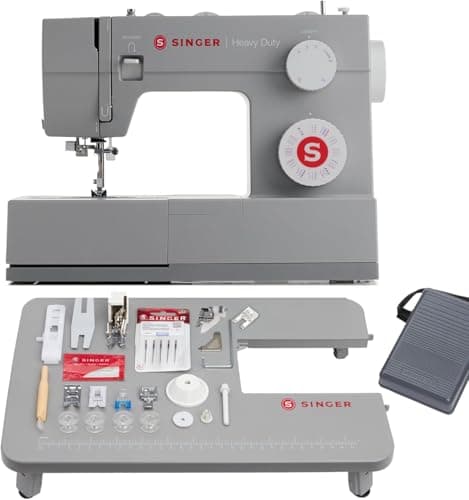 Singer Heavy Duty 445232 stitches, one-step buttonhole, walking foot and table included. Singer Heavy Duty 445232 stitches, one-step buttonhole, walking foot and table included. | Best if you will use the accessories | 7.7 | |
| 2 | 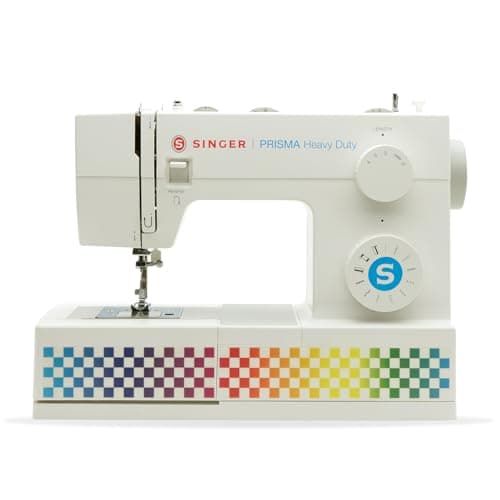 Singer Heavy Duty 4411The same frame and motor for the least money in the line. Singer Heavy Duty 4411The same frame and motor for the least money in the line. | Best if straight seams are the job | 7.2 | |
| 3 | 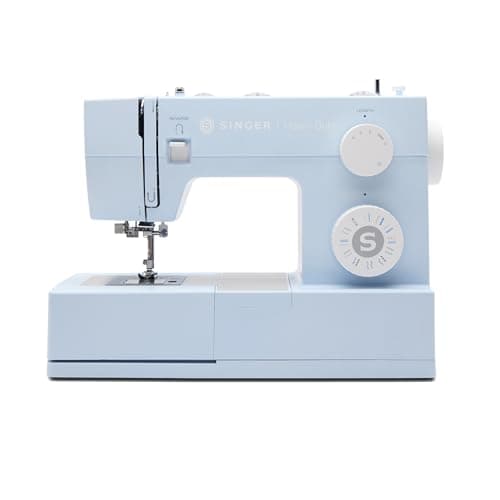 Singer Heavy Duty 4423One-step buttonhole and a threader, without the accessory premium. Singer Heavy Duty 4423One-step buttonhole and a threader, without the accessory premium. | Best middle of the line | 7.8 |
Prices shown are Amazon prices as of October 10, 2026 and can change.Scores are our editorial judgment on six axes, explained on the methodology page. We do not run a test lab and never claim to.
Buy the Singer Heavy Duty 4423. That is an odd way to open a comparison of the 4411 and the 4452, and it is the honest answer for most buyers, because these two machines are the bottom and top of a line whose members all sew identically - and the middle of the line is where the useful features stop costing extra.
If you only want the two on this page: the Singer Heavy Duty 4411 if you are sewing straight seams and hems on thick fabric and will almost never make a buttonhole, and the Singer Heavy Duty 4452 if you want the walking foot and extension table in the box rather than bought separately. The frame, the bedplate, the motor and the presser foot lift are the same on both.
At a glance
Specifications as published by Singer.
Read the bottom half of that table first. Everything that decides whether a machine can sew thick fabric - frame, bedplate, motor speed, foot lift, drop feed - is identical. Everything that differs is convenience and accessories.
The buttonhole is the real gap
On the 4452 you drop a button into a holder, lower a lever and press the pedal. The machine sews all four sides of the buttonhole, sized to the button, and stops.
On the 4411 you sew the buttonhole in four separate passes, turning a dial between each one, after measuring and marking the length yourself. The first attempt takes a quarter of an hour and a scrap of fabric. By the fourth it takes two minutes - but it never becomes automatic, and it is the single feature beginners most often wish they had paid for. Our buttonhole guide walks through both methods so you can judge honestly whether you mind.
The second convenience gap is the needle threader. The 4452 has one; the 4411 does not. That is a non-issue with good light and good close vision and a genuine daily irritation without - see our roundup for older sewers.
What the walking foot actually does
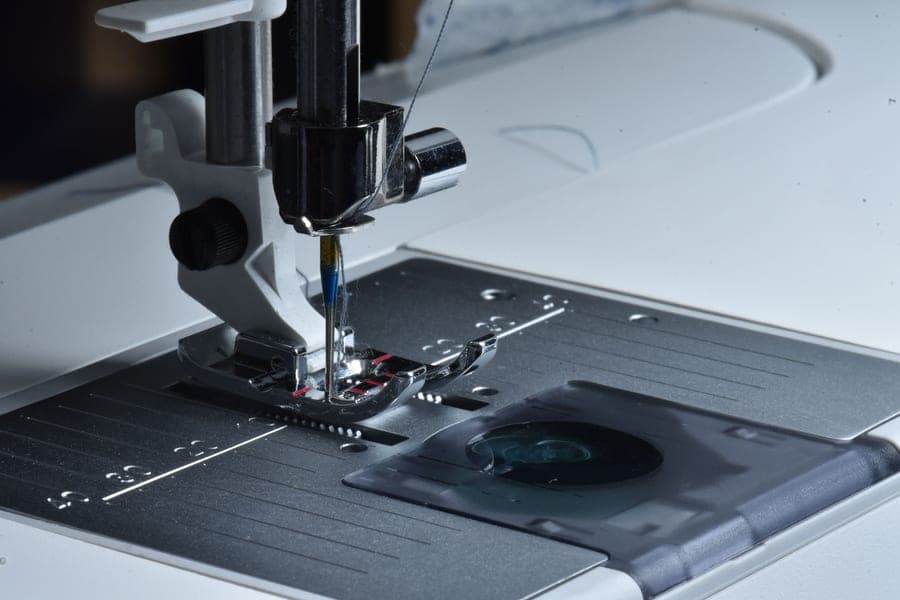
A normal presser foot holds fabric down while the feed dogs underneath pull it through. That works until the top layer does not slide - thick quilt sandwiches, vinyl, faux leather, laminated cotton - at which point the bottom layer feeds and the top one stalls, and your seam ends up shorter on one side.
A walking foot grips and steps the top layer forward in time with the feed dogs, so both layers move together. On the 4452 it is in the accessory box. On the 4411 it is a separate purchase, and a cheap one - which is exactly why the accessory bundle is not automatically good value. Our presser feet guide lists which feet are worth buying and in what order, and the leather roundup covers the materials that make it essential.
Thick fabric: a dead heat
Both machines take four layers of denim at a folded hem, canvas for a tote, several layers of quilt batting and thin faux leather with the right needle. Both do it because of the metal interior frame and the extra-high presser foot lift, and both do it at the same speed.
Both also share the line’s limits, which are worth stating plainly. Heavy duty is not industrial - it means a metal frame and a fast motor in a household machine. Real structural leather, upholstery hide and belt work are beyond both. And neither has a speed limiter, so the slowest the machine goes is however gently you can hold a pedal. Our heavy-duty guide is the honest scope of the phrase.
11 stitches against 32
The 4411’s eleven stitches include straight, zigzag, a blind hem, a stretch stitch and an overcast - which is to say, all the stitches a beginner actually uses. The 4452’s extra twenty-one are decorative, and most owners settle on four or five stitches within a month regardless of how many they bought.
So do not let the stitch count decide this. Let the buttonhole decide it. Our stitch guide names the six that matter, and the 4452 against the 4432 takes apart the same question one rung further up the line.
The verdict
Buy the 4452 if you are sewing quilts, vinyl or laminated fabric where a walking foot earns its place, and you would otherwise buy the foot and the table separately anyway. Then the bundle is fair value rather than a premium.
Buy the 4411 if the work is hems, repairs, canvas and straight seams, you do not need buttonholes, and you want the Heavy Duty frame for the least money. Be aware that Amazon currently stocks the 4411 mainly as a decorated special edition, so the machine that arrives is the standard 4411 in a non-standard color.
Buy the 4423 - the middle of the line - if you want a one-step buttonhole and a needle threader without paying for an accessory bundle. For most people reading this page, that is the right machine, and our 4423 against the 4411 and 4423 against the 4452 are the two comparisons that follow from it.
The picks in full
01 - Best if you will use the accessories
Singer Heavy Duty 4452
The 4423 with a bigger accessory kit, including a walking foot.
- 32 built-in stitches (110 stitch applications), one-step buttonhole
- 1,100 stitches per minute
- Full metal interior frame, top drop-in bobbin
- Larger accessory set, including an even-feed walking foot
- Slide-on extension table for larger projects
- Get it if
- You already know you want the Heavy Duty platform and you would otherwise buy a walking foot and an extension table separately.
- Skip it if
- You are only guessing that you might sew heavy fabric - start with the 4423.
The trade-off
Mechanically it is the same machine as the 4423. You are buying accessories, so the only question is whether you will use them.
How the Singer Heavy Duty 4452 scores
Our judgment on the six axes described on the methodology page. Not measurements - we do not run a test lab.
- Setup and threading
- 7/10
- Everyday stitch quality
- 8/10
- Thick fabric
- 9/10
- Beginner features
- 6/10
- Durability reputation
- 8/10
- Help for this exact model
- 8/10
Overall 7.7/10
02 - Best if straight seams are the job
Singer Heavy Duty 4411
The entry point to the Heavy Duty line - same frame, fewer stitches.
- 11 built-in stitches (69 stitch applications), four-step buttonhole
- 1,100 stitches per minute
- Metal interior frame, stainless steel bedplate
- Adjustable stitch length and width, drop feed
- Extra-high presser foot lift
- Get it if
- You want the Heavy Duty frame and motor for straight seams and hems, and you will rarely make a buttonhole.
- Skip it if
- You want a one-step buttonhole - the 4423 adds one for a small step up.
The trade-off
The four-step buttonhole is the real difference, and it is the feature beginners most often wish they had paid for. Amazon currently stocks the 4411 only as a decorated special edition, so the machine you receive is the standard 4411 in a non-standard colour.
$219.99 · 5% off · price as of October 10, 2026
#ad - opens Amazon in a new tab. How we earn
How the Singer Heavy Duty 4411 scores
Our judgment on the six axes described on the methodology page. Not measurements - we do not run a test lab.
- Setup and threading
- 7/10
- Everyday stitch quality
- 8/10
- Thick fabric
- 9/10
- Beginner features
- 4/10
- Durability reputation
- 8/10
- Help for this exact model
- 8/10
Overall 7.2/10
03 - Best middle of the line
Singer Heavy Duty 4423
Fast, sturdy and simple - the machine for denim hems and tote bags.
- Metal interior frame, stainless steel bedplate
- 1,100 stitches per minute
- 23 stitches (97 stitch applications), one-step buttonhole, automatic threader
- Top drop-in bobbin with a clear cover
- Extra-high presser foot lift for thick layers
- Get it if
- You want physical dials, you plan to sew jeans, canvas or several layers, and you do not mind a machine that is loud and quick.
- Skip it if
- You mostly want gentle control on light fabrics, or a quiet machine for an apartment.
The trade-off
Heavy duty means a metal frame and a fast motor, not an industrial machine. It handles denim well; real leather is still a struggle.
How the Singer Heavy Duty 4423 scores
Our judgment on the six axes described on the methodology page. Not measurements - we do not run a test lab.
- Setup and threading
- 7/10
- Everyday stitch quality
- 8/10
- Thick fabric
- 9/10
- Beginner features
- 6/10
- Durability reputation
- 8/10
- Help for this exact model
- 9/10
Overall 7.8/10
Questions beginners actually ask
What is the difference between the Singer 4411 and the 4452?
The frame, bedplate, motor, 1,100 stitches per minute and extra-high foot lift are identical. The 4452 adds a one-step buttonhole, an automatic needle threader, 32 stitches instead of 11, and a walking foot and extension table in the box. The 4411 has a four-step buttonhole and no threader.
Do the Singer 4411 and 4452 sew the same?
Yes. They share the metal interior frame, the stainless steel bedplate, the same motor speed, the same presser foot lift and a drop feed. On thick fabric there is no meaningful difference between them - you are paying for convenience features and accessories.
Is the Singer 4411 good for a beginner?
For straight seams, hems and repairs on thick fabric, yes. Its weak point for a beginner is the four-step buttonhole and the lack of a needle threader, which are the two features new sewers most often wish they had paid for.
Is the walking foot on the 4452 worth the extra?
Only if you will use it. A walking foot steps the top layer forward with the feed dogs, which matters for quilt sandwiches, vinyl and faux leather. It is a cheap accessory bought separately, so the bundle is good value only if the foot and the extension table are both things you want.
Should I buy the 4411, the 4423 or the 4452?
For most buyers the 4423 in the middle: it adds a one-step buttonhole and a needle threader without the accessory premium. Choose the 4411 to spend the least on the Heavy Duty frame, and the 4452 if you specifically want the walking foot and table included.
Can the Singer Heavy Duty line sew leather?
Faux leather, vinyl and thin garment leather, with a leather needle and a longer stitch. Neither the 4411 nor the 4452 - nor any household machine - will sew belt leather or upholstery hide; that needs an industrial machine with a compound feed.
Sources
Specifications are taken from manufacturer listings. We do not run a test lab and never claim to - how each machine is assessed is set out on our methodology page.
Read next
- Singer 4423 vs Singer 4411
The same question against the middle of the line.
- Singer 4452 vs Singer 4432
- Best sewing machines for denim and heavy fabric
- Do you need a heavy-duty sewing machine?