Best For · Best for upholstery
The best sewing machines for upholstery
Our pick is the Singer Heavy Duty 4452, because it comes with the walking foot upholstery needs. But read the honest part first: a home machine does cushions and slipcovers, not car seats.
By Michael W. · Published
Disclosure: this page contains affiliate links. As an Amazon Associate, StitchStarter earns from qualifying purchases at no extra cost to you. Prices are read from Amazon daily and dated; the price you pay is the one Amazon shows at checkout. It never changes which machines we recommend. Full disclosure.
Quick picks
The short answer. Every pick is explained in full below, including who should skip it.
| # | Product | Best for | Score | Price |
|---|---|---|---|---|
| 1 | 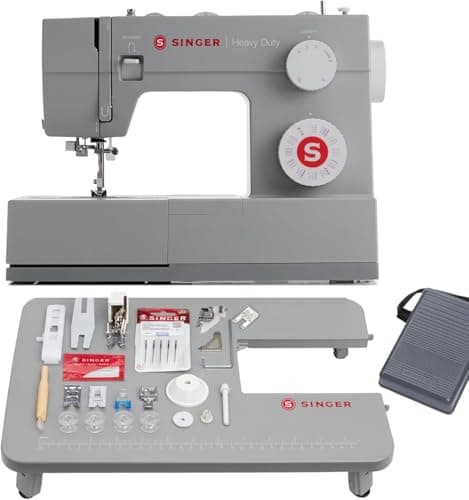 Singer Heavy Duty 4452The only pick that includes the walking foot upholstery actually needs. | Best for upholstery overall | 7.7 | |
| 2 | 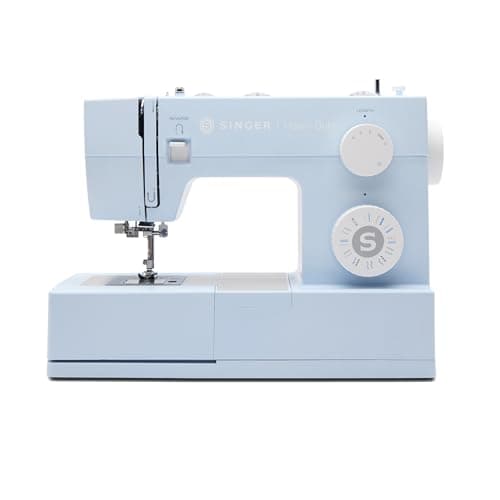 Singer Heavy Duty 4423Same frame and motor; buy the walking foot separately. | Best value heavy-duty | 7.8 | |
| 3 | 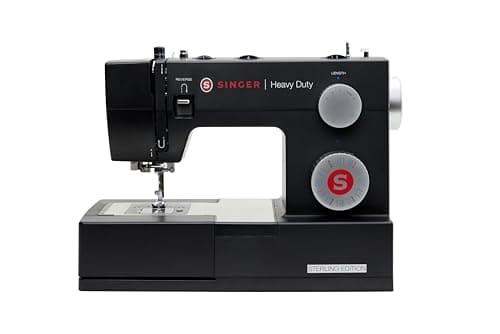 Singer Heavy Duty 4432Identical sewing, wider stitch library, same metal frame. | Best if you also want stretch stitches | 7.6 | |
| 4 | 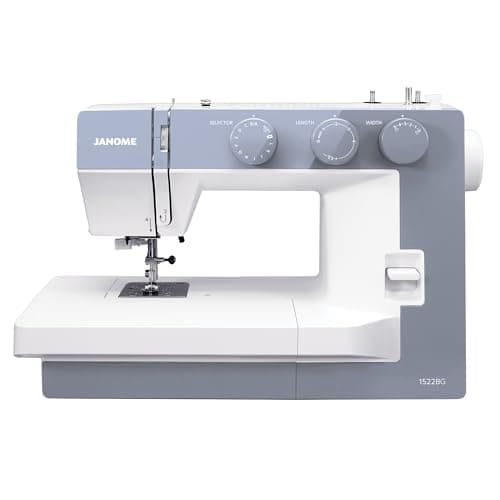 Janome 1522Slower and quieter, with the foot lift and drop feed heavy work needs. | Best mechanical alternative | 7.6 |
Prices shown are Amazon prices as of November 1, 2026 and can change.Scores are our editorial judgment on six axes, explained on the methodology page. We do not run a test lab and never claim to.
For upholstery on a home machine, buy the Singer Heavy Duty 4452. Mechanically it is the same machine as the 4423 — full metal interior frame, 1,100 stitches per minute, extra-high presser foot lift — but it ships with an even-feed walking foot and a slide-on extension table, and on upholstery fabric the walking foot is worth more than any amount of extra motor.
Now the honest part, because this is a query where most of the internet oversells. “Upholstery” covers two very different jobs. Cushion covers, dining chair seats, slipcovers, headboards, bench pads and heavyweight upholstery-weight cotton or linen: a good heavy-duty domestic machine will do all of that. Marine vinyl, bonded leather, automotive seats, webbing, several layers of foam-backed material: that is an industrial walking-foot machine’s work, and no beginner-priced domestic machine will do it for long. If that is your project, the kindest thing we can tell you is to stop reading roundups and price a used industrial machine.
What actually matters on upholstery fabric
The specifications that get advertised are rarely the ones that decide whether a seam happens. In rough order of importance:
What decides whether a home machine copes with upholstery work.
That last row is not a joke. More upholstery projects fail on the wrong needle and thread than on the wrong machine. Our needle size guide and thread guide are the two pages to read before you blame the motor.
The picks, and who should skip each
Singer Heavy Duty 4452. The walking foot and extension table in the box are the reason it leads. Skip it if you are only guessing that you might sew heavy fabric — you are buying an accessory bundle, and if the bundle goes unused the 4423 is the same machine for less.
Singer Heavy Duty 4423. The value route: buy it, then buy a walking foot. Skip it if you want gentle control on light fabric, because it is loud and has no speed limiter. Our 4423 vs 4452 comparison is the page that settles which of those two you want.
Singer Heavy Duty 4432. Identical sewing to the 4423 with a wider stitch library and an automatic threader. Skip it if you would only ever use straight and zigzag — most owners settle on four or five stitches within a month.
Janome 1522. The mechanical alternative, and the one to choose if you would rather have a quieter, slower machine with a reputation for lasting. Skip it if you are buying on price, and note that stock comes and goes.
The technique that does half the work
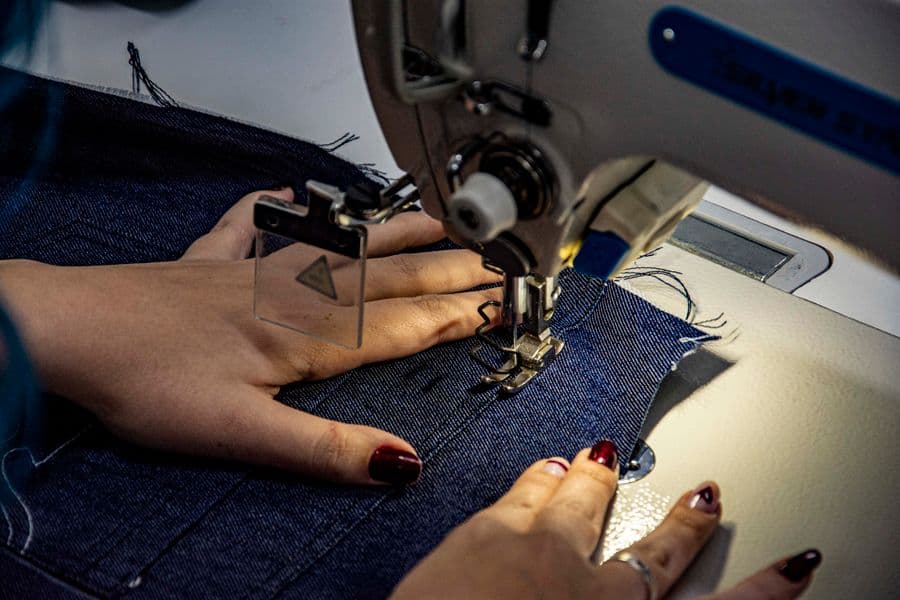
Upholstery on a domestic machine is mostly about removing load from the machine rather than demanding more of it. Five things that change the outcome:
Lengthen the stitch. Go to the long end of the range. A long stitch looks correct on heavy fabric and puts less strain on everything.
Go up to a size 16 or 18 needle, and use upholstery thread on top. Match the bobbin thread to your machine’s tolerance rather than to the top thread — some home machines refuse heavy thread in the bobbin and are happier with all-purpose below.
Hand-walk the hand wheel over seam intersections. Where four layers meet, drive the needle through with the wheel rather than the pedal.
Support the weight. A chair cover dragging off the table pulls the seam crooked and the feed dogs lose grip. This is what the extension table is for.
Clip, do not force. Pins leave holes in vinyl and faux leather. Clips, a walking foot and a slow steady pedal do the work that pulling never will.
The four jobs a home machine will not do
Worth stating plainly, because the disappointment is avoidable. First, automotive interiors: seat covers, headliners and door cards involve heavy vinyl, foam backing and seams that must survive years of sunlight and body weight. Second, marine work: boat covers and canvas biminis are thick, often doubled and frequently need a long-arm reach no domestic machine has. Third, true leather furniture: a home machine may punch a single layer of thin garment leather, but furniture hide is a different material entirely. Fourth, anything continuous: an industrial machine is built to run all day, and a domestic motor asked to do that will overheat and wear out early.
If any of those is your project, the honest route is a used industrial walking-foot machine. They are plentiful secondhand, cost less than people expect, and will do in an afternoon what a domestic machine will fail at over a week. Nothing on this page changes that, and we would rather say so than sell you a machine that disappoints.
If your project is nearer the edge of this
Real leather and heavy faux leather sit outside what these machines do comfortably — our leather and faux leather roundup is honest about where the line falls. Curtains, blinds and heavyweight home decor are a gentler job and have their own page at curtains and home decor. And if the work is bags, straps and webbing rather than furniture, see bags and totes, which weights the same machines against a different kind of bulk.
The picks in full
01 - Best for upholstery overall
Singer Heavy Duty 4452
The 4423 with a bigger accessory kit, including a walking foot.
- 32 built-in stitches (110 stitch applications), one-step buttonhole
- 1,100 stitches per minute
- Full metal interior frame, top drop-in bobbin
- Larger accessory set, including an even-feed walking foot
- Slide-on extension table for larger projects
- Get it if
- You already know you want the Heavy Duty platform and you would otherwise buy a walking foot and an extension table separately.
- Skip it if
- You are only guessing that you might sew heavy fabric - start with the 4423.
The trade-off
Mechanically it is the same machine as the 4423. You are buying accessories, so the only question is whether you will use them.
How the Singer Heavy Duty 4452 scores
Our judgment on the six axes described on the methodology page. Not measurements - we do not run a test lab.
- Setup and threading
- 7/10
- Everyday stitch quality
- 8/10
- Thick fabric
- 9/10
- Beginner features
- 6/10
- Durability reputation
- 8/10
- Help for this exact model
- 8/10
Overall 7.7/10
02 - Best value heavy-duty
Singer Heavy Duty 4423
Fast, sturdy and simple - the machine for denim hems and tote bags.
- Metal interior frame, stainless steel bedplate
- 1,100 stitches per minute
- 23 stitches (97 stitch applications), one-step buttonhole, automatic threader
- Top drop-in bobbin with a clear cover
- Extra-high presser foot lift for thick layers
- Get it if
- You want physical dials, you plan to sew jeans, canvas or several layers, and you do not mind a machine that is loud and quick.
- Skip it if
- You mostly want gentle control on light fabrics, or a quiet machine for an apartment.
The trade-off
Heavy duty means a metal frame and a fast motor, not an industrial machine. It handles denim well; real leather is still a struggle.
How the Singer Heavy Duty 4423 scores
Our judgment on the six axes described on the methodology page. Not measurements - we do not run a test lab.
- Setup and threading
- 7/10
- Everyday stitch quality
- 8/10
- Thick fabric
- 9/10
- Beginner features
- 6/10
- Durability reputation
- 8/10
- Help for this exact model
- 9/10
Overall 7.8/10
03 - Best if you also want stretch stitches
Singer Heavy Duty 4432
The middle Heavy Duty - more stitches than the 4423, same bones.
- 32 built-in stitches (110 stitch applications), one-step buttonhole
- 1,100 stitches per minute
- Full metal interior frame, top drop-in bobbin
- Automatic needle threader, drop feed
- Get it if
- You want the Heavy Duty platform and will genuinely use stretch and decorative stitches.
- Skip it if
- You would only ever use straight and zigzag - the 4423 covers that for less.
The trade-off
It sews identically to the 4423. The stitch library is the whole difference, and most owners settle on four or five stitches within a month.
How the Singer Heavy Duty 4432 scores
Our judgment on the six axes described on the methodology page. Not measurements - we do not run a test lab.
- Setup and threading
- 7/10
- Everyday stitch quality
- 8/10
- Thick fabric
- 9/10
- Beginner features
- 6/10
- Durability reputation
- 8/10
- Help for this exact model
- 8/10
Overall 7.6/10
04 - Best mechanical alternative
Janome 1522
A step up the mechanical ladder - more stitches, same build.
- 22 built-in stitches
- One-step buttonhole
- Built-in needle threader
- Drop feed, 3-piece feed dog, foot pressure adjustment dial
- Solid metal frame in the Janome tradition
- Get it if
- You like what the 2212 stands for but want a one-step buttonhole, a needle threader and a wider stitch range.
- Skip it if
- You are buying on price - the 2212 is the value pick in the line - or you want a drop-in bobbin.
The trade-off
You pay a clear premium over the 2212, and what you get for it is convenience rather than a better seam: the buttonhole, the threader and the extra stitches. Whether that is worth it depends on how many buttonholes you expect to sew.
How the Janome 1522 scores
Our judgment on the six axes described on the methodology page. Not measurements - we do not run a test lab.
- Setup and threading
- 8/10
- Everyday stitch quality
- 9/10
- Thick fabric
- 7/10
- Beginner features
- 7/10
- Durability reputation
- 10/10
- Help for this exact model
- 6/10
Overall 7.6/10
Questions beginners actually ask
What is the best sewing machine for upholstery?
Among home machines, the Singer Heavy Duty 4452 - it has the full metal interior frame, 1,100 stitches per minute and the extra-high presser foot lift of the Heavy Duty line, and it includes the even-feed walking foot that upholstery fabric needs. For automotive seats, marine vinyl or bonded leather you need an industrial walking-foot machine instead.
Can a regular home sewing machine sew upholstery fabric?
For cushion covers, dining chair seats, slipcovers and upholstery-weight cotton or linen, yes - with a size 16 or 18 needle, a long stitch length and ideally a walking foot. For marine vinyl, bonded leather, webbing or foam-backed automotive material, no. That is industrial work and a domestic machine will not do it for long.
Do I need a walking foot for upholstery?
It is the single most useful accessory for the job. Upholstery fabric does not slide, so a standard foot drags the top layer while the feed dogs move the bottom one - which is what causes puckering and skipped stitches. A walking foot feeds both layers at the same rate. The Singer 4452 includes one; for the other picks you buy it separately.
What needle and thread do I use for upholstery?
A size 16 or 18 heavy needle, upholstery or heavy-duty thread on top, and a long stitch length. Many home machines are happier with all-purpose thread in the bobbin even when heavy thread is on top. More upholstery projects fail on a too-fine needle than on an underpowered machine.
Is a heavy duty sewing machine the same as an industrial one?
No, and this is the most oversold phrase in the category. Heavy duty on a domestic machine means a metal internal frame and a faster motor. An industrial machine has a separate motor, a single purpose-built stitch and a walking-foot mechanism designed for continuous heavy work. For upholstery beyond cushions and slipcovers, that difference is the whole ballgame.
Can these machines sew vinyl?
Light upholstery vinyl, in short runs, with a walking foot or a roller foot, a heavy needle and clips rather than pins - often yes. Heavy marine vinyl or several layers of it, no. Vinyl also cannot be pinned without leaving permanent holes, which is a technique problem rather than a machine problem.
Sources
Specifications are taken from manufacturer listings. We do not run a test lab and never claim to - how each machine is assessed is set out on our methodology page.
Read next
- Best sewing machines for leather and faux leather
Where the honest limit of a home machine falls.
- Do you need a heavy duty sewing machine?
- Singer 4423 vs 4452
Which of the two Heavy Duty picks you want.
- Sewing machine needle sizes