Guides · Glossary
Sewing machine terms: a plain-English glossary
Every word the manual assumes you already know, defined without assuming anything.
By Michael W. · Published

Disclosure: this page contains affiliate links. As an Amazon Associate, StitchStarter earns from qualifying purchases at no extra cost to you. We do not display prices - they change daily, so every button opens the live listing. It never changes which machines we recommend. Full disclosure.
Quick picks
The short answer. Every pick is explained in full below, including who should skip it.
| # | Product | Best for | Score | Price |
|---|---|---|---|---|
| 1 | 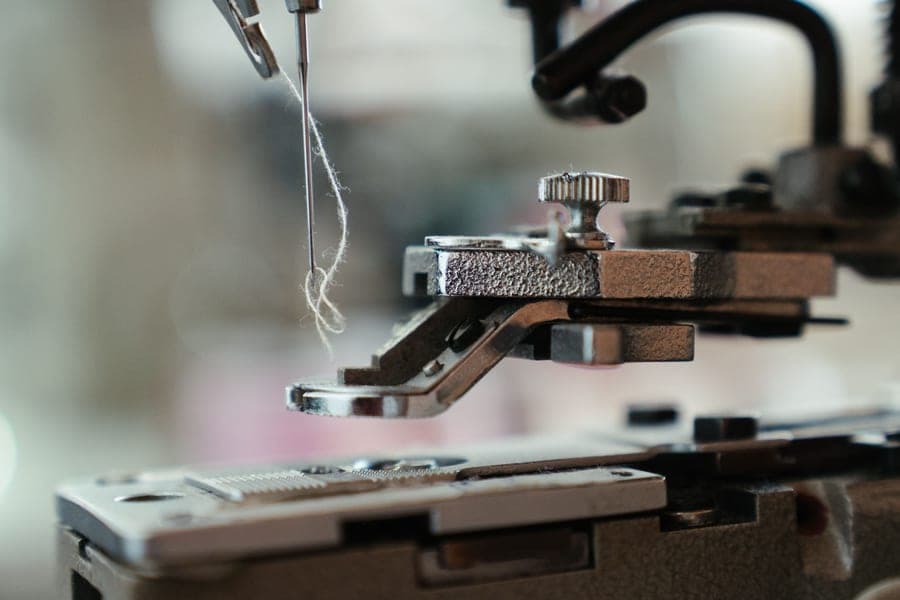 Brother CS7000XHas nearly every feature in this glossary. Brother CS7000XHas nearly every feature in this glossary. | The machine most of these terms describe | 8.2 | |
| 2 |  Janome 2212You set everything yourself, so you learn what each word means. Janome 2212You set everything yourself, so you learn what each word means. | The machine that teaches the terms | 7.6 |
Scores are our editorial judgment on six axes, explained on the methodology page. We do not run a test lab and never claim to.
Sewing manuals are written for people who already sew. This page is the translation layer: every term you meet in a product listing or a manual, defined once, plainly.
Parts of the machine
Bobbin. The small spool of thread that sits under the needle plate and supplies the bottom half of every stitch. See bobbins explained.
Bobbin race / hook. The mechanism that catches the top thread and loops it around the bobbin thread. Where lint collects, and where most mysterious faults live.
Feed dogs. The small toothed bars under the needle plate that grip the fabric and move it along. You do not push the fabric; they do.
Free arm. The narrow arm left when you remove the flat accessory tray. Lets you sew tubes - sleeves, cuffs, trouser hems - without turning them inside out.
Hand wheel. The wheel on the right-hand side. Turn it toward you to move the needle by hand. Never turn it away from you.
Needle plate / throat plate. The metal plate under the needle, usually marked with seam allowance guides.
Presser foot. Holds the fabric against the feed dogs. Swapping it changes what the machine can do - presser feet explained.
Take-up lever. The metal arm that rises and falls above the needle. The top thread must pass through it, and missing it is a classic threading error.
Throat space / harp. The gap between the needle and the body of the machine. Determines how much rolled-up quilt you can fit through.
Settings and adjustments
Tension. How tightly the top and bottom threads are held. Correct tension locks the two threads inside the fabric rather than on either surface.
Stitch length. How far the fabric travels between needle punctures, in millimeters. Around 2.5mm is standard.
Stitch width. How far the needle swings sideways, for stitches that move side to side.
Drop feed. Lowering the feed dogs so you move the fabric yourself. What free-motion quilting requires.
Needle up/down. Whether the needle stops in the fabric or out of it. Stopping down means you can pivot at a corner without losing your place.
Backstitch / reverse. Sewing backwards a few stitches to lock a seam at the start and end.
Terms you meet when buying
Fabric and sewing terms
Right side / wrong side. The outward-facing and inward-facing faces of the fabric. Patterns assume you know which is which.
Seam allowance. The distance between the stitching and the raw edge. Garment patterns usually assume 5/8 inch; quilting uses 1/4 inch.
Selvage. The finished edge running down both sides of a bolt of fabric. It does not fray, and it tells you the grain direction.
Grain. The direction of the woven threads. Cutting against it makes garments hang wrong.
Basting. Long temporary stitches that hold something in place before you sew it properly.
Ease. The extra room a pattern adds beyond your measurements so the garment can be moved in.
Machines that illustrate these terms
Brother CS7000X
Has nearly every feature defined on this page, which makes it a good machine to learn the vocabulary on.
Skip it if You want physical dials instead of a menu, or you will be sewing canvas, upholstery or leather regularly.
Janome 2212
You set tension, length and width yourself, so the words stop being abstract quickly.
Skip it if You want an automatic threader, a one-step buttonhole or a drop-in bobbin - it has none of them.
#ad - buy links go to Amazon and earn us a commission at no extra cost to you. Full disclosure.
The picks in full
01 - The machine most of these terms describe
Brother CS7000X
Does the fiddly parts for you so you can spend your energy learning to sew.
- 70 built-in stitches, 7 one-step buttonholes
- Automatic needle threader, drop-in top bobbin
- Speed-control slider
- Wide table and 10 presser feet included
- Get it if
- You want threading, buttonholes and stitch settings handled by the machine, and you might try quilting later - the wide table is already in the box.
- Skip it if
- You want physical dials instead of a menu, or you will be sewing canvas, upholstery or leather regularly.
The trade-off
Light and mostly plastic. That makes it easy to carry and quiet on cottons and mid-weights; it is not built for heavy layers every day.
#ad - opens Amazon in a new tab. How we earn
How the Brother CS7000X scores
Our judgment on the six axes described on the methodology page. Not measurements - we do not run a test lab.
- Setup and threading
- 9/10
- Everyday stitch quality
- 8/10
- Thick fabric
- 6/10
- Beginner features
- 9/10
- Durability reputation
- 7/10
- Help for this exact model
- 10/10
Overall 8.2/10
02 - The machine that teaches the terms
Janome 2212
Twelve stitches, nothing to break - the classroom favorite.
- 12 stitches, dial controls, four-step buttonhole
- Drop feed for free-motion quilting
- Free arm for cuffs and sleeves
- A reputation for lasting decades
- Get it if
- You value reliability over conveniences and want a machine still working long after the computerized ones are gone.
- Skip it if
- You want an automatic threader, a one-step buttonhole or a drop-in bobbin - it has none of them.
The trade-off
Fewer conveniences, more longevity. The four-step buttonhole and front-loading bobbin are a little more work to learn.
#ad - opens Amazon in a new tab. How we earn
How the Janome 2212 scores
Our judgment on the six axes described on the methodology page. Not measurements - we do not run a test lab.
- Setup and threading
- 6/10
- Everyday stitch quality
- 9/10
- Thick fabric
- 7/10
- Beginner features
- 4/10
- Durability reputation
- 10/10
- Help for this exact model
- 7/10
Overall 7.6/10
Questions beginners actually ask
What are feed dogs on a sewing machine?
The small toothed bars under the needle plate that grip the fabric and move it along as you sew. You guide the fabric; the feed dogs move it. Lowering them - a drop feed - is what free-motion quilting requires.
What is a free arm?
The narrow arm left when you remove the flat accessory tray from the machine bed. It lets you sew tubes - sleeves, cuffs, trouser hems - without turning them inside out, and usually stores accessories inside.
What does throat space mean?
The gap between the needle and the body of the machine. It determines how much rolled-up fabric you can physically fit through, which is the practical limit on how large a quilt you can handle.
What does low shank mean?
The most common presser foot fitting on domestic sewing machines. Feet come in low shank, high shank and slant shank versions, and a foot in the wrong fitting will not attach - so check your manual before buying third-party feet.
Sources
Specifications are taken from manufacturer listings. We do not run a test lab and never claim to - how each machine is assessed is set out on our methodology page.