Guides
Can you sew leather with a regular sewing machine?
Yes - for garment-weight leather, suede and faux leather, in short runs, with four changes first. No for belts, bag bases and upholstery hide. Here is how to tell which one you have.
By Michael W. · Published
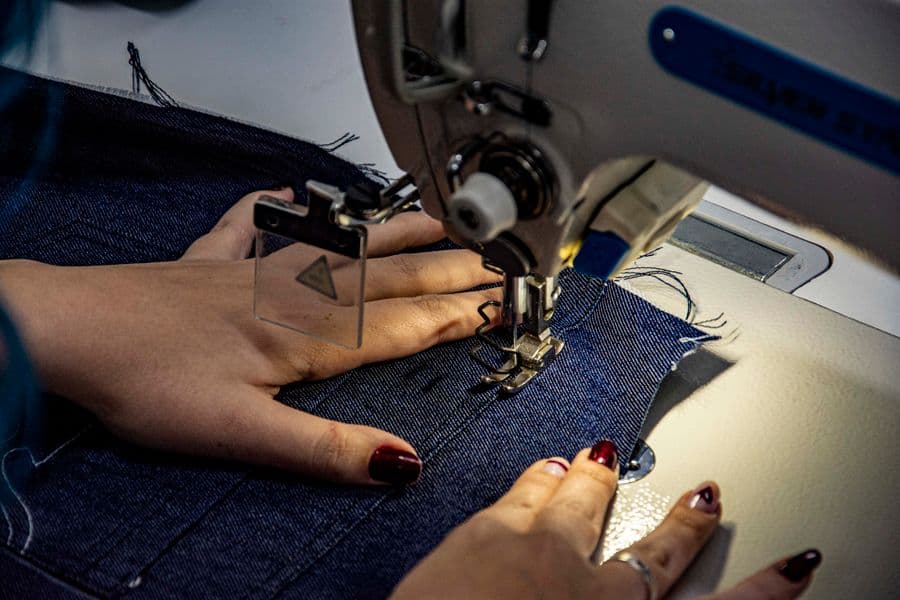
Disclosure: this page contains affiliate links. As an Amazon Associate, StitchStarter earns from qualifying purchases at no extra cost to you. Prices are read from Amazon daily and dated; the price you pay is the one Amazon shows at checkout. It never changes which machines we recommend. Full disclosure.
Quick picks
The short answer. Every pick is explained in full below, including who should skip it.
| # | Product | Best for | Score | Price |
|---|---|---|---|---|
| 1 | 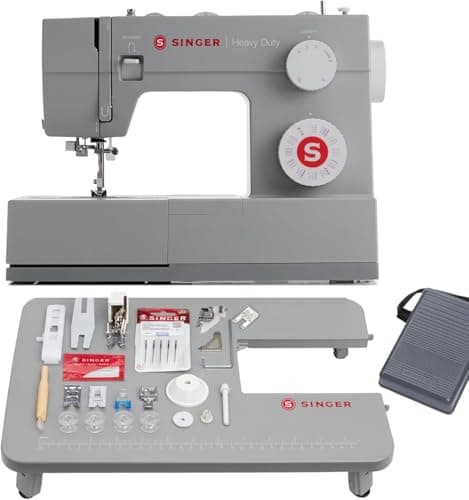 Singer Heavy Duty 4452The only pick that includes the walking foot leather actually needs. | Best if your machine cannot cope | 7.7 | |
| 2 | 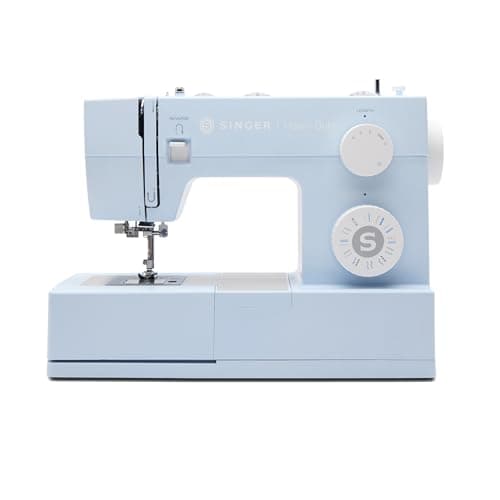 Singer Heavy Duty 4423Same frame and foot lift; buy a walking or roller foot separately. | Best value heavy-duty | 7.8 | |
| 3 | 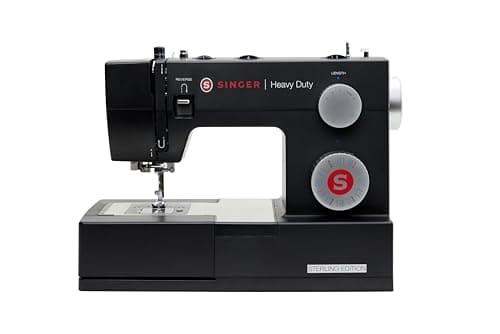 Singer Heavy Duty 4432Identical hardware, wider stitch library. | Best if you also sew knits | 7.6 |
Prices shown are Amazon prices as of November 1, 2026 and can change.Scores are our editorial judgment on six axes, explained on the methodology page. We do not run a test lab and never claim to.
Yes — with limits that matter. A regular household sewing machine will sew garment-weight leather, suede, split hide and faux leather, in short runs, if you change four things first: the needle, the stitch length, the presser foot and the thread. Plenty of people make bags, pouches, patches and leather-trimmed garments on an ordinary domestic machine every week.
No — for the thick end. Belt leather, bag bases, saddlery, upholstery hide, anything where several layers of heavy hide cross, and anything you need to sew continuously for hours. That is industrial walking-foot machine work, and a domestic machine attempting it will skip stitches, deflect or break needles, strain its motor, and eventually cost more in repairs than the job was worth.
The useful question is therefore not “can it?” but “which side of that line is my project on?” — and the test below answers it in about thirty seconds.
The thirty-second test
Fold your actual material to the thickest point the project will reach — every layer, including seam allowances where two seams cross — and try to get it under the presser foot with the foot raised to its highest position.
If it will not fit under the foot, stop. No technique, needle or thread fixes that, and forcing it is how the needle bar and the foot get bent.
If it fits but the machine groans and the handwheel is hard to turn by hand, the project is at the edge. You may get it done; you will not enjoy it, and you should not plan to repeat it.
If it fits and the handwheel turns the needle through cleanly by hand, your machine can sew it. Make the four changes below and go.
The four changes to make before you start
What to change, and why. Three of the four are consumables rather than machine features - which is why the same machine can fail and then succeed on the same material.
Our needle size guide has the full needle chart, and what thread to use covers weights. If your machine did not come with a walking or roller foot, see presser feet explained — it is the most useful accessory you can add to a domestic machine and it is not expensive.
What actually goes wrong, and which symptom means stop
Skipped stitches. Almost always the needle: wrong point, wrong size, or blunt. Leather blunts needles fast, so change it more often than you would on cotton. See skipping stitches.
The top layer lags and the seam puckers. The foot is grabbing. Walking foot, roller foot or non-stick foot — or, as a field fix, a strip of tape on the sole of a standard foot.
Thread breaking or shredding. Usually the needle hole is too small for the thread, or the thread is cotton. Go up a needle size, switch to polyester. Thread breaking walks the rest of the causes.
The machine slows, whines or smells warm. Stop. That is the motor telling you the project is past the machine, and it is the one symptom on this list that costs money to ignore.
A bent or broken needle at a seam intersection. Hand-walk the handwheel over crossing seams rather than using the pedal. If the handwheel will not go through, the layers are too thick.
The technique that does the other half
Clips, never pins. A pin hole in leather is permanent and visible. Binder clips or sewing clips hold seam allowances without marking.
Test on a scrap of the same hide. Not on cotton, not on a different piece. Thirty seconds of test seam tells you whether the tension, length and needle are right — and leather does not forgive an unpicked seam, because the holes stay.
Do not backstitch. Reversing over the same holes perforates the hide at the one point taking the most strain. Either shorten the stitch for the first and last few stitches, use your machine’s lock-stitch function if it has one, or leave long tails and tie them off. Our backstitch guide covers the alternatives properly.
Glue or tape the seam allowances before sewing. Leather cannot be pressed open with an iron the way fabric can, so seam allowances are held flat with leather glue, double-sided tape or a roller and a hammer. This is the step people skip, and it is most of why home-sewn leather looks home-sewn.
Go slowly and steadily. A constant slow pace beats a fast one you keep correcting, and it keeps the needle cool. A machine with a speed-control slider makes this trivial.
Use a longer stitch and fewer of them. Design the project with fewer seams where you can. Every seam is a row of permanent holes.
Faux leather and vinyl are a different job
Faux leather, leatherette, pleather and laminated cotton behave differently from hide, and in most ways more easily: they are thinner, more consistent and cheaper to practice on. Two things change. They stick to a metal foot even more than real leather does, so the walking or non-stick foot moves from “helpful” to “necessary”. And they can melt — never press them directly with an iron, and keep the speed moderate so needle friction does not heat the surface.
A universal or microtex needle often works better on faux leather than a leather needle does, because the chisel point is designed to cut hide and can over-cut a synthetic coating. Test both on a scrap.
If your machine is the thing holding you back
Only relevant if the thirty-second test says no - a needle and a foot fix far more leather problems than a new machine does. These three have the metal frame and the extra-high presser foot lift that thick material needs.
Singer Heavy Duty 4452
The one pick that includes an even-feed walking foot, which is the single most useful accessory for leather, vinyl and anything that refuses to slide. Metal frame, steel bed plate, extra-high foot lift.
Skip it if You are only guessing that you might sew heavy fabric - start with the 4423.
Singer Heavy Duty 4423
Mechanically the same machine for less: same frame, same 1,100 stitches per minute, same extra-high presser foot lift. Buy a walking or roller foot separately and you are in the same place.
Skip it if You mostly want gentle control on light fabrics, or a quiet machine for an apartment.
Singer Heavy Duty 4432
The same hardware again with a wider stitch library, including stretch stitches. Worth it only if knits are also in the plan.
Skip it if You would only ever use straight and zigzag - the 4423 covers that for less.
#ad - buy links go to Amazon and earn us a commission at no extra cost to you. Prices shown are Amazon prices as of November 1, 2026 and can change. Full disclosure.
Four projects to stop attempting on a domestic machine
Belts. Belt leather is thick, uniform and unforgiving. This is the classic ruined-machine project, and our leather roundup says the same thing: a household machine will sew faux leather and thin hide, and it will not sew a belt.
Structured bag bases and hardware-heavy bags. Where the base, the lining, the interfacing and two straps meet, you have more layers than any domestic foot lift will clear. Our bags roundup covers what is achievable in canvas instead.
Upholstery hide. Furniture leather is a different material to garment leather. See the upholstery roundup for where the domestic line falls on that work.
Anything continuous. An industrial machine is built to run all day; a domestic motor asked to do the same will overheat and wear out early. If leather is becoming the hobby rather than a material in it, a used industrial walking-foot machine costs less than people expect and is the right answer.
The picks in full
01 - Best if your machine cannot cope
Singer Heavy Duty 4452
The 4423 with a bigger accessory kit, including a walking foot.
- 32 built-in stitches (110 stitch applications), one-step buttonhole
- 1,100 stitches per minute
- Full metal interior frame, top drop-in bobbin
- Larger accessory set, including an even-feed walking foot
- Slide-on extension table for larger projects
- Get it if
- You already know you want the Heavy Duty platform and you would otherwise buy a walking foot and an extension table separately.
- Skip it if
- You are only guessing that you might sew heavy fabric - start with the 4423.
The trade-off
Mechanically it is the same machine as the 4423. You are buying accessories, so the only question is whether you will use them.
How the Singer Heavy Duty 4452 scores
Our judgment on the six axes described on the methodology page. Not measurements - we do not run a test lab.
- Setup and threading
- 7/10
- Everyday stitch quality
- 8/10
- Thick fabric
- 9/10
- Beginner features
- 6/10
- Durability reputation
- 8/10
- Help for this exact model
- 8/10
Overall 7.7/10
02 - Best value heavy-duty
Singer Heavy Duty 4423
Fast, sturdy and simple - the machine for denim hems and tote bags.
- Metal interior frame, stainless steel bedplate
- 1,100 stitches per minute
- 23 stitches (97 stitch applications), one-step buttonhole, automatic threader
- Top drop-in bobbin with a clear cover
- Extra-high presser foot lift for thick layers
- Get it if
- You want physical dials, you plan to sew jeans, canvas or several layers, and you do not mind a machine that is loud and quick.
- Skip it if
- You mostly want gentle control on light fabrics, or a quiet machine for an apartment.
The trade-off
Heavy duty means a metal frame and a fast motor, not an industrial machine. It handles denim well; real leather is still a struggle.
How the Singer Heavy Duty 4423 scores
Our judgment on the six axes described on the methodology page. Not measurements - we do not run a test lab.
- Setup and threading
- 7/10
- Everyday stitch quality
- 8/10
- Thick fabric
- 9/10
- Beginner features
- 6/10
- Durability reputation
- 8/10
- Help for this exact model
- 9/10
Overall 7.8/10
03 - Best if you also sew knits
Singer Heavy Duty 4432
The middle Heavy Duty - more stitches than the 4423, same bones.
- 32 built-in stitches (110 stitch applications), one-step buttonhole
- 1,100 stitches per minute
- Full metal interior frame, top drop-in bobbin
- Automatic needle threader, drop feed
- Get it if
- You want the Heavy Duty platform and will genuinely use stretch and decorative stitches.
- Skip it if
- You would only ever use straight and zigzag - the 4423 covers that for less.
The trade-off
It sews identically to the 4423. The stitch library is the whole difference, and most owners settle on four or five stitches within a month.
How the Singer Heavy Duty 4432 scores
Our judgment on the six axes described on the methodology page. Not measurements - we do not run a test lab.
- Setup and threading
- 7/10
- Everyday stitch quality
- 8/10
- Thick fabric
- 9/10
- Beginner features
- 6/10
- Durability reputation
- 8/10
- Help for this exact model
- 8/10
Overall 7.6/10
Questions beginners actually ask
Can you sew leather with a regular sewing machine?
Yes for garment-weight leather, suede, split hide and faux leather in short runs, provided you fit a leather needle, lengthen the stitch to about 3 to 3.5mm, use a walking, roller or non-stick foot and switch to polyester thread. No for belt leather, structured bag bases, upholstery hide or any continuous work - that is industrial walking-foot machine territory.
What needle do I need to sew leather?
A leather needle, which has a chisel or wedge point that cuts a small slit instead of pushing fibers aside - size 14 to 18 depending on thickness. A universal needle has a round point, and because leather has no fibers to displace it deflects, skips stitches and can snap. Leather also blunts needles quickly, so change them more often than you would on cotton.
What stitch length should I use for leather?
Longer than for fabric - around 3 to 3.5mm. Every stitch is a permanent hole, so a short stitch perforates a line through the hide and the seam can tear along it. Fewer, longer stitches are both stronger and better looking on leather.
Do I need a walking foot to sew leather?
Not strictly, but you need something that stops the leather grabbing a metal foot: a walking foot, a roller foot or a non-stick Teflon-coated foot. Without one, the top layer stalls while the feed dogs move the bottom layer, which is the commonest cause of a puckered, crooked leather seam. In an emergency, tape on the sole of a standard foot helps.
Why is my machine skipping stitches on leather?
Almost always the needle - the wrong point type, too small a size, or simply blunt. Fit a fresh leather needle one size up and the problem usually disappears. If it persists, check that the foot is not grabbing the top layer and that the thread is polyester rather than cotton.
Can you use pins on leather?
No. A pin hole in leather is permanent and visible. Use binder clips or sewing clips to hold seam allowances. For the same reason you should not unpick a leather seam casually and should not backstitch - reversing over the same holes perforates the hide exactly where the strain is.
Is faux leather easier to sew than real leather?
Generally yes - it is thinner, more consistent and much cheaper to practice on. Two differences: it sticks to a metal presser foot even more than hide does, so a non-stick or walking foot moves from helpful to necessary, and it can melt, so never iron it directly and keep the speed moderate. A universal or microtex needle often beats a leather needle on synthetics.
How do I know if my project is too thick for my machine?
Fold the actual material to the thickest point the project reaches, including where two seams cross, and try to get it under the raised presser foot. If it will not fit, stop - nothing fixes that. If it fits but the handwheel is hard to turn through by hand, the project is at the edge of the machine. If the handwheel turns cleanly, your machine can sew it.
Sources
Specifications are taken from manufacturer listings. We do not run a test lab and never claim to - how each machine is assessed is set out on our methodology page.
Read next
- Best sewing machines for leather and faux leather
If the answer is that you need a different machine.
- Sewing machine needle sizes
- Sewing machine presser feet explained
- Do you need a heavy duty sewing machine?