Best For · Best for cosplay
The best sewing machines for cosplay
A costume is not one sewing job. It is six, and most of them are the awkward ones. That is what should decide the machine.
By Michael W. · Published
Disclosure: this page contains affiliate links. As an Amazon Associate, StitchStarter earns from qualifying purchases at no extra cost to you. Prices are read from Amazon daily and dated; the price you pay is the one Amazon shows at checkout. It never changes which machines we recommend. Full disclosure.
Quick picks
The short answer. Every pick is explained in full below, including who should skip it.
| # | Product | Best for | Score | Price |
|---|---|---|---|---|
| 1 | 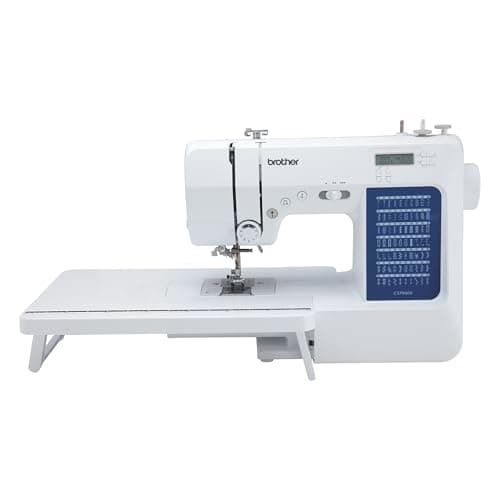 Brother CS7000XStretch stitches, a speed slider for satin, and a wide table for capes. Brother CS7000XStretch stitches, a speed slider for satin, and a wide table for capes. | Best for cosplay overall | 8.2 | |
| 2 | 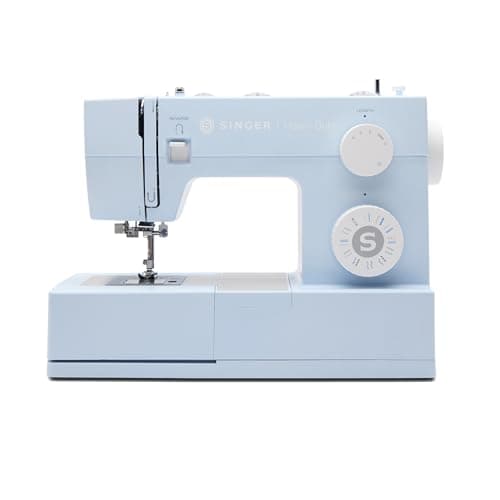 Singer Heavy Duty 4423Metal frame and a high foot lift for the layers a costume hides. Singer Heavy Duty 4423Metal frame and a high foot lift for the layers a costume hides. | Best for straps, webbing and armor | 7.8 | |
| 3 | 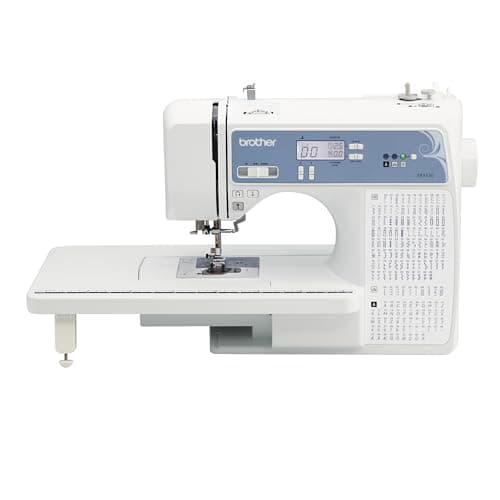 Brother XR9550165 stitches and an LCD that names the setting you need. Brother XR9550165 stitches and an LCD that names the setting you need. | Best if you want the stitch library | 7.7 | |
| 4 | 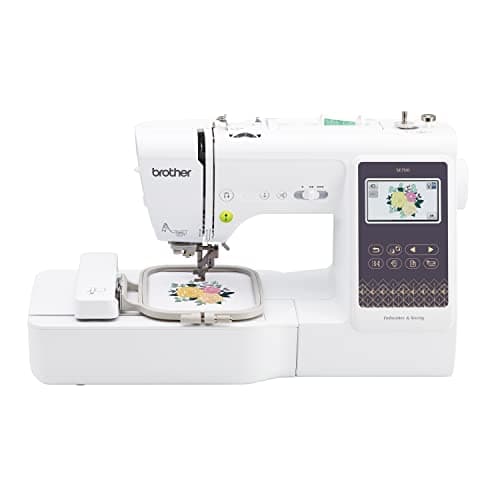 Brother SE700Sews and embroiders, so crests and names come off the same machine. Brother SE700Sews and embroiders, so crests and names come off the same machine. | Best if insignia matter | 7.4 |
Prices shown are Amazon prices as of October 10, 2026 and can change.Scores are our editorial judgment on six axes, explained on the methodology page. We do not run a test lab and never claim to.
The best sewing machine for cosplay is the Brother CS7000X, and the reason has nothing to do with costumes specifically. A costume is six sewing jobs stacked into one deadline - stretch bodysuit fabric, slippery satin lining, a long cape hem, webbing straps, interfaced collars and something attached to armor - and the CS7000X is the machine on this site that does the widest spread of those jobs without being terrible at any of them. It has stretch stitches, a speed slider for the fabrics that slide, and the wide extension table is already in the box for the night you are hemming four yards of cloak.
If your builds are armor-first - straps, belts, harnesses, webbing through buckles - the Singer Heavy Duty 4423 is the better machine and the honest answer. If crests, names and insignia are the part you care about, the Brother SE700 does both jobs in one box.
What a costume actually asks of a machine
Cosplay buying advice usually starts from the character. Start from the fabric pile instead, because that is what the machine has to survive.
Four-way stretch. Spandex, swim knit, scuba. These need a stitch that stretches with the seam - a narrow zigzag, a lightning stitch or a stretch triple straight - or the thread snaps the first time the wearer sits down. Our settings guide for stretchy fabric has the numbers.
Satin, charmeuse and lining. Beautiful on camera, horrible under a needle. They slide, they pucker and they show every stitch. The fix is a slow pass and a fine needle, which is why a speed limiter earns its place here.
Long straight seams. Capes, skirts, coat linings. Nothing clever, just yards of it, and a wide flat bed to the left of the needle so the weight of the fabric is not dragging your seam crooked.
Webbing, canvas and strapping. The part nobody photographs. Two layers of nylon webbing folded over a D-ring is thicker than anything else in the build, and it is where light machines skip stitches.
The four, side by side
Specifications as published by each manufacturer.
Read the webbing column first if you build armor and the speed column first if you sew satin. Almost every cosplay machine regret traces back to buying for the wrong one of those two.
The feature that matters most is the deadline
Cosplay sewing is not paced like garment sewing. It happens in a rush, late, on fabric you have never used before, and often on a machine you set up on a dining table. Three things follow from that.
You want the bobbin where you can see it. Running out of bobbin thread mid-seam, at midnight, on satin, is how a build gets abandoned. A top drop-in bobbin under a clear cover tells you how much is left at a glance - the CS7000X, the XR9550 and the 4423 all have one.
You want settings you can find again. The stitch you used for the bodysuit needs to be the same stitch next week when you repair it at the con. A computerized machine remembers the number; a dial machine makes you remember where the dial was.
You want a machine with a lot of video tutorials. When something jams late at night you are going to search the model number, and the answer needs to exist. That favors the Brother models here heavily.
If your builds are armor and straps
Foam, thermoplastic and 3D-printed pieces are not sewn - they are strapped. That means webbing, elastic, buckles, D-rings and the occasional strip of leather, and it is a different machine requirement from the fabric half of the hobby.
The Singer Heavy Duty 4423 has the metal interior frame and the extra-high presser foot lift this needs. What it will not do is slow down - there is no speed limiter, and the lowest pedal setting is still quick - so satin and chiffon are a fight. Our heavy-duty guide is the honest version of what that phrase buys you, and the leather roundup marks the line past which no household machine will help.
The practical answer for a serious armor builder is a leather or denim needle in a heavy-duty machine, not a second machine. Our needle guide has the sizes.
If the insignia is the point
Crests, sigils, name tags, unit patches. You can appliqué these with a satin stitch on any machine here - see our appliqué roundup - or you can embroider them properly on the Brother SE700.
Be clear-eyed about the limit. The SE700’s embroidery field is 4 x 4 inches, which covers a chest crest, a shoulder patch or a name, and does not cover a back design. Embroidery also has running costs - stabilizer, thread, digitized designs - that the box price does not mention. Our sewing vs embroidery machine guide sets out where the money goes.
Who should skip these four
Anyone whose first cosplay is next month and who has never sewn. Buy the cheapest real machine on this site, not the best one - the Brother XM2701 - and read how to use a sewing machine for the first time. The machine is not what stands between you and a finished costume.
Anyone sewing mostly knit bodysuits. A serger finishes stretch seams better than any of these, and it is a second machine rather than a replacement. Our serger guide explains when that stops being a luxury.
Anyone sewing real structural leather. Harnesses in thick hide need an industrial machine. Nothing here will do it, and the attempt wrecks the machine.
The picks in full
01 - Best for cosplay overall
Brother CS7000X
Does the fiddly parts for you so you can spend your energy learning to sew.
- 70 built-in stitches, 7 one-step buttonholes
- Automatic needle threader, drop-in top bobbin
- Speed-control slider
- Wide table and 10 presser feet included
- Get it if
- You want threading, buttonholes and stitch settings handled by the machine, and you might try quilting later - the wide table is already in the box.
- Skip it if
- You want physical dials instead of a menu, or you will be sewing canvas, upholstery or leather regularly.
The trade-off
A metal internal frame inside a light plastic shell. That makes it easy to carry and quiet on cottons and mid-weights; it is not built for heavy layers every day the way a Heavy Duty is.
$279.99 · 11% off · price as of October 10, 2026
#ad - opens Amazon in a new tab. How we earn
How the Brother CS7000X scores
Our judgment on the six axes described on the methodology page. Not measurements - we do not run a test lab.
- Setup and threading
- 9/10
- Everyday stitch quality
- 8/10
- Thick fabric
- 6/10
- Beginner features
- 9/10
- Durability reputation
- 7/10
- Help for this exact model
- 10/10
Overall 8.2/10
02 - Best for straps, webbing and armor
Singer Heavy Duty 4423
Fast, sturdy and simple - the machine for denim hems and tote bags.
- Metal interior frame, stainless steel bedplate
- 1,100 stitches per minute
- 23 stitches (97 stitch applications), one-step buttonhole, automatic threader
- Top drop-in bobbin with a clear cover
- Extra-high presser foot lift for thick layers
- Get it if
- You want physical dials, you plan to sew jeans, canvas or several layers, and you do not mind a machine that is loud and quick.
- Skip it if
- You mostly want gentle control on light fabrics, or a quiet machine for an apartment.
The trade-off
Heavy duty means a metal frame and a fast motor, not an industrial machine. It handles denim well; real leather is still a struggle.
How the Singer Heavy Duty 4423 scores
Our judgment on the six axes described on the methodology page. Not measurements - we do not run a test lab.
- Setup and threading
- 7/10
- Everyday stitch quality
- 8/10
- Thick fabric
- 9/10
- Beginner features
- 6/10
- Durability reputation
- 8/10
- Help for this exact model
- 9/10
Overall 7.8/10
03 - Best if you want the stitch library
Brother XR9550
More stitches and a bigger screen than the CS7000X, for the same job.
- 165 built-in stitches - 110 utility and decorative plus 55 alphanumeric
- 8 one-step buttonhole styles
- LCD display and stitch selection
- Wide table included
- Automatic threader, drop-in bobbin
- Get it if
- You want the CS7000X's convenience with a larger display and more decorative stitches.
- Skip it if
- You would rather put the difference toward fabric - you will use a fraction of the stitch library.
The trade-off
The extra stitches are decorative. The real difference from the CS7000X is the display, and the CS7000X's speed slider is arguably worth more to a beginner.
How the Brother XR9550 scores
Our judgment on the six axes described on the methodology page. Not measurements - we do not run a test lab.
- Setup and threading
- 9/10
- Everyday stitch quality
- 8/10
- Thick fabric
- 6/10
- Beginner features
- 8/10
- Durability reputation
- 7/10
- Help for this exact model
- 8/10
Overall 7.7/10
04 - Best if insignia matter
Brother SE700
A sewing machine and a 4x4 embroidery machine in one box.
- 103 sewing stitches plus 135 built-in embroidery designs
- 4 x 4 inch embroidery field
- Color touchscreen, wireless design transfer
- Automatic threader, drop-in bobbin
- Get it if
- You want to personalize things - names, monograms, patches, small designs - as well as sew.
- Skip it if
- You mainly want to make clothes or quilts. The same money buys a better dedicated sewing machine.
The trade-off
The 4 x 4 inch embroidery field is small, and embroidery has ongoing costs - stabilizer, thread, designs. Great at what it does; not a shortcut to a better sewing machine.
How the Brother SE700 scores
Our judgment on the six axes described on the methodology page. Not measurements - we do not run a test lab.
- Setup and threading
- 8/10
- Everyday stitch quality
- 8/10
- Thick fabric
- 5/10
- Beginner features
- 8/10
- Durability reputation
- 7/10
- Help for this exact model
- 8/10
Overall 7.4/10
Questions beginners actually ask
What is the best sewing machine for cosplay?
The Brother CS7000X. A costume mixes stretch fabric, slippery satin, long cape hems and thick straps, and the CS7000X covers the widest spread of those without being bad at any - stretch stitches, a speed slider for the fabrics that slide, and a wide extension table included.
Do I need a heavy duty machine for cosplay?
Only if your builds are armor-led. Webbing straps, harnesses and buckled belts need the metal frame and high presser foot lift of a machine like the Singer Heavy Duty 4423. If your costumes are fabric-led, a heavy-duty machine is actively worse, because it cannot slow down for satin.
Can a beginner sewing machine handle spandex and stretch fabric?
Yes, with the right stitch. A straight stitch snaps on a stretch seam; a narrow zigzag, a lightning stitch or a stretch triple straight moves with it. Use a ballpoint or stretch needle and sew slowly. A serger finishes these seams better but is a second machine, not a substitute.
Do I need an embroidery machine for cosplay insignia?
No. You can appliqué a crest with a satin stitch on any machine here. An embroidery machine like the Brother SE700 does it more neatly and faster, but its 4 x 4 inch field covers a chest crest or a patch, not a back design, and thread and stabilizer are ongoing costs.
What sewing machine do I need for foam armor?
None of them - armor is strapped, not sewn. What you need is a machine that sews the webbing, elastic and buckle tabs that hold it on, which means a metal-framed machine with a high foot lift such as the Singer Heavy Duty 4423, and a denim or leather needle.
Is a cheap sewing machine good enough for a first cosplay?
For one costume, yes. The Brother XM2701 sews everything a first build needs, including stretch stitches and a one-step buttonhole. Buy a better machine when you know you will keep doing this, not before your first con.
Sources
Specifications are taken from manufacturer listings. We do not run a test lab and never claim to - how each machine is assessed is set out on our methodology page.
Read next
- Best sewing machines for making clothes
The garment half of a costume, in more depth.
- Best sewing machines for knits and stretchy fabric
- Best sewing machines for appliqué
- Do you need a serger?