Best For · Best computerized
The best computerized sewing machines for beginners
Computerized machines do the fiddly parts for you. Here is which of those parts are worth paying for.
By Michael W. · Published
Disclosure: this page contains affiliate links. As an Amazon Associate, StitchStarter earns from qualifying purchases at no extra cost to you. We do not display prices - they change daily, so every button opens the live listing. It never changes which machines we recommend. Full disclosure.
Quick picks
The short answer. Every pick is explained in full below, including who should skip it.
| # | Product | Best for | Score | Price |
|---|---|---|---|---|
| 1 |  Brother CS7000XThe speed slider and the wide table, in one box. Brother CS7000XThe speed slider and the wide table, in one box. | Best computerized overall | 8.2 | |
| 2 | Brother XR9550More stitches, larger screen, no speed slider. | Best for a bigger display | 7.7 | |
| 3 | 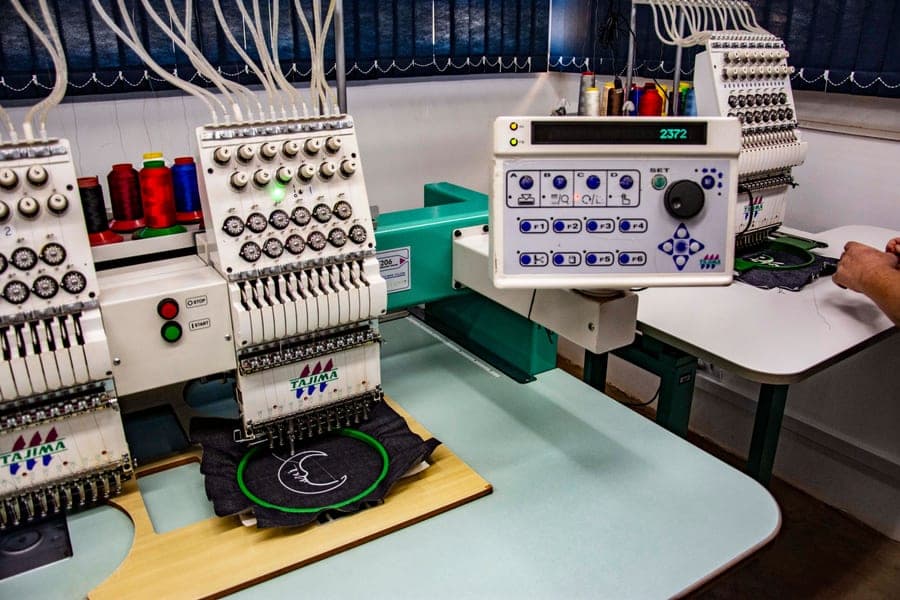 Brother SE700Adds real 4 x 4 inch embroidery. Brother SE700Adds real 4 x 4 inch embroidery. | Best computerized with embroidery | 7.4 |
Scores are our editorial judgment on six axes, explained on the methodology page. We do not run a test lab and never claim to.
A computerized machine sets stitch width and length for you when you select a stitch, sizes buttonholes in a single pass, and often lets you cap the top speed. Those three things remove a great deal of early frustration, which is exactly why we recommend one to most first-time buyers.
The features worth paying for
A speed-limiting slider. The most useful and least advertised feature on any beginner machine. Set it slow and the pedal cannot run away from you. Only the CS7000X here has one.
A one-step buttonhole. Drop the button into the foot, press the pedal, and the machine sizes and sews the buttonhole in one pass. If you sew clothes, this is the difference between buttonholes being routine and being an event.
A needle up/down setting. Choosing whether the needle stops in the fabric or out of it sounds trivial and changes pivoting at corners entirely.
The features that are mostly marketing
Stitch count. Beyond about twenty stitches you are buying decorative patterns. Every beginner settles on five or six. Our stitches guide lists the ones that earn their place.
Large displays. Nice, not decisive. A bigger screen does not change how a seam sews.
Font libraries for lettering. On a sewing machine - as opposed to an embroidery machine - these sew crude block letters slowly. They are not a substitute for embroidery.
The picks in full
01 - Best computerized overall
Brother CS7000X
Does the fiddly parts for you so you can spend your energy learning to sew.
- 70 built-in stitches, 7 one-step buttonholes
- Automatic needle threader, drop-in top bobbin
- Speed-control slider
- Wide table and 10 presser feet included
- Get it if
- You want threading, buttonholes and stitch settings handled by the machine, and you might try quilting later - the wide table is already in the box.
- Skip it if
- You want physical dials instead of a menu, or you will be sewing canvas, upholstery or leather regularly.
The trade-off
Light and mostly plastic. That makes it easy to carry and quiet on cottons and mid-weights; it is not built for heavy layers every day.
#ad - opens Amazon in a new tab. How we earn
How the Brother CS7000X scores
Our judgment on the six axes described on the methodology page. Not measurements - we do not run a test lab.
- Setup and threading
- 9/10
- Everyday stitch quality
- 8/10
- Thick fabric
- 6/10
- Beginner features
- 9/10
- Durability reputation
- 7/10
- Help for this exact model
- 10/10
Overall 8.2/10
02 - Best for a bigger display
Brother XR9550
More stitches and a bigger screen than the CS7000X, for the same job.
- 110 built-in stitches, 8 one-step buttonhole styles
- LCD display and stitch selection
- Wide table included
- Automatic threader, drop-in bobbin
- Get it if
- You want the CS7000X's convenience with a larger display and more decorative stitches.
- Skip it if
- You would rather put the difference toward fabric - you will use a fraction of the stitch library.
The trade-off
The extra stitches are decorative. The real difference from the CS7000X is the display, and the CS7000X's speed slider is arguably worth more to a beginner.
#ad - opens Amazon in a new tab. How we earn
How the Brother XR9550 scores
Our judgment on the six axes described on the methodology page. Not measurements - we do not run a test lab.
- Setup and threading
- 9/10
- Everyday stitch quality
- 8/10
- Thick fabric
- 6/10
- Beginner features
- 8/10
- Durability reputation
- 7/10
- Help for this exact model
- 8/10
Overall 7.7/10
03 - Best computerized with embroidery
Brother SE700
A sewing machine and a 4x4 embroidery machine in one box.
- 103 sewing stitches plus 135 built-in embroidery designs
- 4 x 4 inch embroidery field
- Color touchscreen, wireless design transfer
- Automatic threader, drop-in bobbin
- Get it if
- You want to personalize things - names, monograms, patches, small designs - as well as sew.
- Skip it if
- You mainly want to make clothes or quilts. The same money buys a better dedicated sewing machine.
The trade-off
The 4 x 4 inch embroidery field is small, and embroidery has ongoing costs - stabilizer, thread, designs. Great at what it does; not a shortcut to a better sewing machine.
#ad - opens Amazon in a new tab. How we earn
How the Brother SE700 scores
Our judgment on the six axes described on the methodology page. Not measurements - we do not run a test lab.
- Setup and threading
- 8/10
- Everyday stitch quality
- 8/10
- Thick fabric
- 5/10
- Beginner features
- 8/10
- Durability reputation
- 7/10
- Help for this exact model
- 8/10
Overall 7.4/10
Questions beginners actually ask
What is the best budget computerized sewing machine for beginners?
The Brother CS7000X. It has the speed-limiting slider, seven one-step buttonhole styles, a drop-in bobbin and the wide table included - the combination that removes the most early frustration.
Are computerized sewing machines harder to use than mechanical ones?
No, they are generally easier for a beginner: the machine sets stitch width and length for you and sizes buttonholes in a single pass. What they are not is transparent - you navigate a menu to see a setting rather than reading a dial.
How many stitches do I actually need?
About six. Straight, zigzag, a stretch stitch, a blind hem, an overcast and a buttonhole cover nearly everything a beginner sews. Stitch counts beyond twenty are decorative patterns.
Do computerized sewing machines break more easily?
Not in the ways people expect. Beginner machines of both kinds fail for the same reasons - lint in the bobbin race, a bent needle, storage without a cover. Maintenance matters more than whether there is a circuit board inside.
Sources
Specifications are taken from manufacturer listings. We do not run a test lab and never claim to - how each machine is assessed is set out on our methodology page.