Guides
Sewing machine settings for denim
Most denim problems are a universal needle and a 2mm stitch. Change those two numbers before you blame the machine.
By Michael W. · Published
Disclosure: this page contains affiliate links. As an Amazon Associate, StitchStarter earns from qualifying purchases at no extra cost to you. We do not display prices - they change daily, so every button opens the live listing. It never changes which machines we recommend. Full disclosure.
Quick picks
The short answer. Every pick is explained in full below, including who should skip it.
| # | Product | Best for | Score | Price |
|---|---|---|---|---|
| 1 | 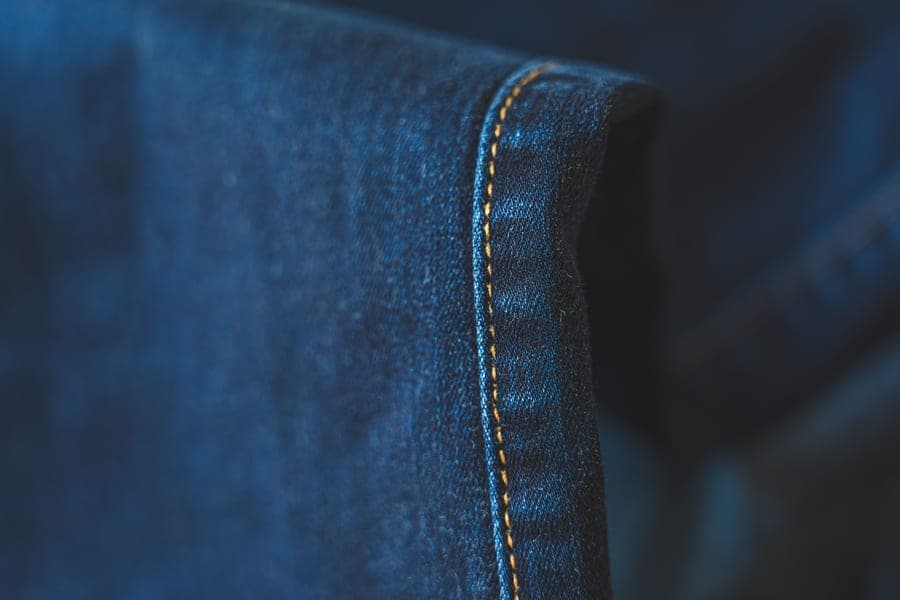 Singer Heavy Duty 4423Metal frame, extra-high foot lift, and the torque to use both. Singer Heavy Duty 4423Metal frame, extra-high foot lift, and the torque to use both. | Best machine for denim | 7.8 | |
| 2 |  Singer Heavy Duty 4452The same machine with the walking foot already included. Singer Heavy Duty 4452The same machine with the walking foot already included. | Best if you topstitch a lot | 7.7 | |
| 3 | 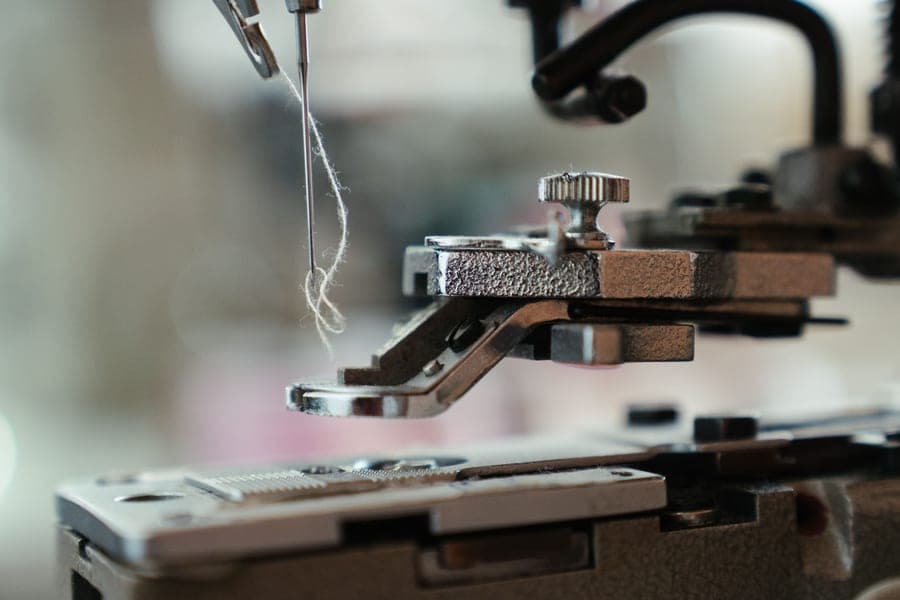 Brother CS7000XHems light denim slowly, and is better at everything else. Brother CS7000XHems light denim slowly, and is better at everything else. | Best for occasional denim | 8.2 |
Scores are our editorial judgment on six axes, explained on the methodology page. We do not run a test lab and never claim to.
For denim, fit a size 16 (100/16) denim needle, set the stitch length to about 3 to 3.5mm, raise the top tension slightly from its default, and use ordinary polyester thread in the bobbin with topstitch thread in the needle only if the stitching will show. Then sew slowly. Those four settings get most machines through a single-layer denim hem, and the needle alone fixes the majority of complaints.
What they will not fix is the crossing seam - the point where two folded hems meet and you are asking for five or six layers. That is a machine problem rather than a settings problem, and the second half of this page is about getting through it anyway.
The needle, first and always
A denim or jeans needle has a stronger shaft and a sharper, more acute point than the universal needle that came with your machine. On heavy twill that matters twice: the point penetrates rather than deflecting, and the shaft does not flex sideways under load.
A deflecting needle is what skipped stitches are. The needle arrives a fraction out of position, the bobbin hook misses the loop, and you get a gap. People change tension, rethread and give up, when the two-minute fix was a needle. Size 16 for most denim, size 18 for the heaviest work and the thickest crossing seams. Our needle size guide has the chart and skipped stitches has the full diagnosis.
Change it before every denim project. Needles blunt, and a blunt needle on denim is where broken thread comes from.
Stitch length and tension
Starting settings for denim weights. Test on a folded scrap and adjust.
Length. A longer stitch puts fewer needle holes in heavy cloth, asks less of the feed system, and looks right - the topstitching on a pair of jeans is long, not fine. A 2mm stitch on denim is doing extra work for a worse result.
Tension. Thicker fabric usually needs a little more top tension, because there is more material between the two threads. Go up one number at a time and sew a test strip each time, and read the result rather than guessing - our tension guide explains what loops on the top and loops underneath each mean.
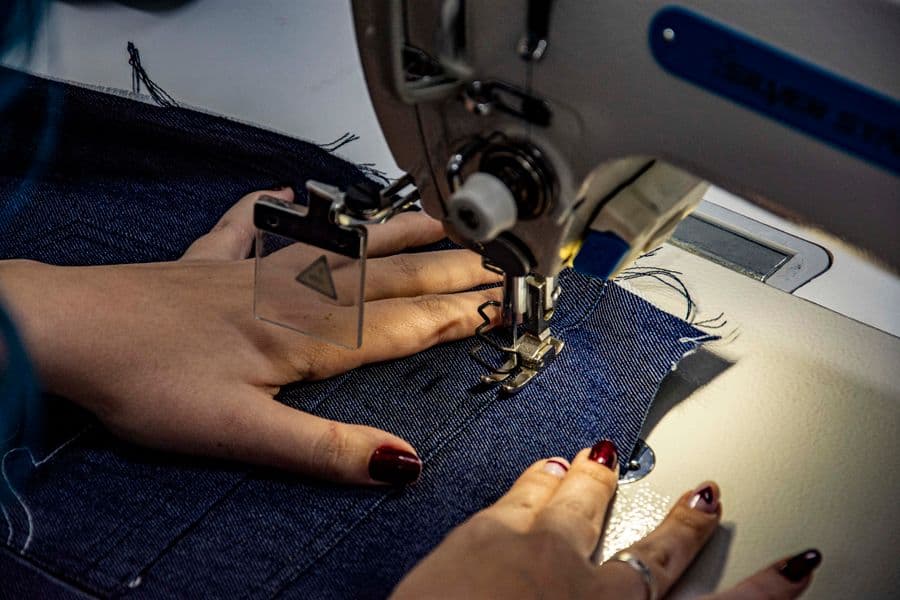
The crossing seam, and two tricks that work
When you hem a pair of jeans you eventually reach the original side seam, where the thickness jumps from two layers to six in a centimetre. The machine hits it, the foot tilts up, the feed dogs lose grip, and you get a clump of stitches or a jam.
Flatten it first. Put the folded seam on a hard surface and tap it with a hammer. It sounds absurd and it works, because the problem is thickness rather than toughness, and compressing the fibres gives you a layer the foot can hold.
Level the foot. The foot tilting as it climbs is half the failure. A folded scrap of denim placed behind the needle, under the back of the foot, keeps it level until the fabric itself takes over. A small plastic wedge sold for this does the same thing.
And at the thickest point, stop pressing the pedal and turn the hand wheel by hand for three or four stitches. You have far more control and far more torque than the motor does at low speed.
When it is the machine, not the settings
There is a real limit, and it is worth naming so you stop fighting it. A light plastic-bodied machine flexes under load - the body twists slightly, the needle moves out of alignment with the bobbin hook, and no setting recovers that. Signs you have reached it: the machine shifts across the table, the motor bogs down audibly, or stitches skip on thick seams no matter which needle you fit.
What fixes it is a metal interior frame and a higher presser foot lift, which is exactly what the Heavy Duty line is. Our heavy-duty guide is the honest test for whether you need one, and the denim roundup is the shortlist if you do.
Machines that cope with denim
Chosen on frame, presser foot lift and torque - the three things settings cannot substitute for.
Singer Heavy Duty 4423
Metal interior frame, extra-high foot lift and 1,100 stitches per minute of momentum.
Skip it if You mostly want gentle control on light fabrics, or a quiet machine for an apartment.
Singer Heavy Duty 4452
The same machine with an even-feed walking foot in the box for topstitching.
Skip it if You are only guessing that you might sew heavy fabric - start with the 4423.
Brother CS7000X
Hems light denim slowly with a size 16 needle, and is the better all-round machine.
Skip it if You want physical dials instead of a menu, or you will be sewing canvas, upholstery or leather regularly.
#ad - buy links go to Amazon and earn us a commission at no extra cost to you. Full disclosure.
The picks in full
01 - Best machine for denim
Singer Heavy Duty 4423
Fast, sturdy and simple - the machine for denim hems and tote bags.
- Metal interior frame, stainless steel bedplate
- 1,100 stitches per minute
- 23 stitches, one-step buttonhole, automatic threader
- Extra-high presser foot lift for thick layers
- Get it if
- You want physical dials, you plan to sew jeans, canvas or several layers, and you do not mind a machine that is loud and quick.
- Skip it if
- You mostly want gentle control on light fabrics, or a quiet machine for an apartment.
The trade-off
Heavy duty means a metal frame and a fast motor, not an industrial machine. It handles denim well; real leather is still a struggle.
#ad - opens Amazon in a new tab. How we earn
How the Singer Heavy Duty 4423 scores
Our judgment on the six axes described on the methodology page. Not measurements - we do not run a test lab.
- Setup and threading
- 7/10
- Everyday stitch quality
- 8/10
- Thick fabric
- 9/10
- Beginner features
- 6/10
- Durability reputation
- 8/10
- Help for this exact model
- 9/10
Overall 7.8/10
02 - Best if you topstitch a lot
Singer Heavy Duty 4452
The 4423 with a bigger accessory kit, including a walking foot.
- 32 built-in stitches, one-step buttonhole
- 1,100 stitches per minute
- Metal interior frame
- Larger accessory set, including an even-feed walking foot
- Get it if
- You already know you want the Heavy Duty platform and you would otherwise buy a walking foot separately.
- Skip it if
- You are only guessing that you might sew heavy fabric - start with the 4423.
The trade-off
Mechanically it is the same machine as the 4423. You are buying accessories, so the only question is whether you will use them.
#ad - opens Amazon in a new tab. How we earn
How the Singer Heavy Duty 4452 scores
Our judgment on the six axes described on the methodology page. Not measurements - we do not run a test lab.
- Setup and threading
- 7/10
- Everyday stitch quality
- 8/10
- Thick fabric
- 9/10
- Beginner features
- 6/10
- Durability reputation
- 8/10
- Help for this exact model
- 8/10
Overall 7.7/10
03 - Best for occasional denim
Brother CS7000X
Does the fiddly parts for you so you can spend your energy learning to sew.
- 70 built-in stitches, 7 one-step buttonholes
- Automatic needle threader, drop-in top bobbin
- Speed-control slider
- Wide table and 10 presser feet included
- Get it if
- You want threading, buttonholes and stitch settings handled by the machine, and you might try quilting later - the wide table is already in the box.
- Skip it if
- You want physical dials instead of a menu, or you will be sewing canvas, upholstery or leather regularly.
The trade-off
Light and mostly plastic. That makes it easy to carry and quiet on cottons and mid-weights; it is not built for heavy layers every day.
#ad - opens Amazon in a new tab. How we earn
How the Brother CS7000X scores
Our judgment on the six axes described on the methodology page. Not measurements - we do not run a test lab.
- Setup and threading
- 9/10
- Everyday stitch quality
- 8/10
- Thick fabric
- 6/10
- Beginner features
- 9/10
- Durability reputation
- 7/10
- Help for this exact model
- 10/10
Overall 8.2/10
Questions beginners actually ask
What sewing machine settings do I use for denim?
A size 16 denim needle, a stitch length of about 3 to 3.5mm, top tension one step above your default, and a slow pass. The needle is the change that fixes most denim problems, and a longer stitch puts fewer holes in heavy twill.
What needle size for denim?
Size 100/16 for most denim, and 110/18 for the heaviest work and the thickest crossing seams. A denim needle has a stronger shaft and a sharper point than a universal needle, which stops it deflecting - and a deflecting needle is what skipped stitches are.
What stitch length should I use on denim?
About 3 to 3.5mm. A longer stitch puts fewer needle holes in heavy cloth, asks less of the feed system and looks correct, since the topstitching on real jeans is long rather than fine. A 2mm stitch is extra work for a worse result.
How do I sew over a thick jeans seam?
Flatten the folded seam with a hammer first, place a folded scrap of denim under the back of the presser foot so the foot stays level as it climbs, and turn the hand wheel by hand for the thickest three or four stitches instead of using the pedal.
Do I need a heavy-duty machine to sew denim?
Not for single-layer hems, which most machines manage with a size 16 needle. You want one once crossing seams are routine - if your machine shifts on the table, the motor bogs down, or stitches skip no matter the needle, the body is flexing and no setting fixes that.
What tension do I use for denim?
Slightly higher than your default, because there is more fabric between the two threads. Raise it one number at a time and sew a test strip on a folded scrap after each change - loops on the underside usually mean the top tension is still too loose.
Sources
Specifications are taken from manufacturer listings. We do not run a test lab and never claim to - how each machine is assessed is set out on our methodology page.