Help
Why the thread keeps breaking
Where the thread snaps tells you what is wrong. Check that before you change anything.
By Michael W. · Published
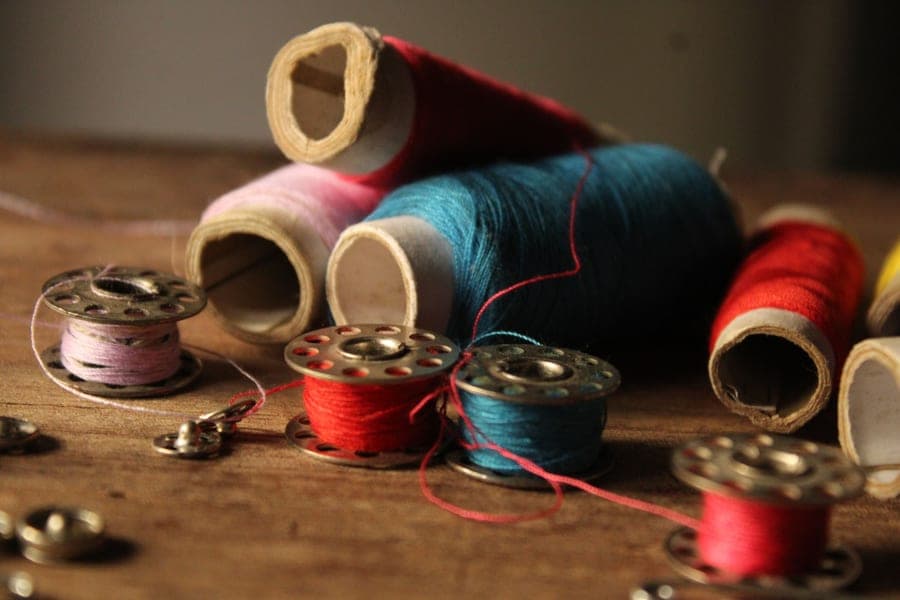
Thread breaking is frustrating because it stops you mid-seam and rarely announces why. The useful first move is not to change anything - it is to look at where the break happens.
Diagnose from the break
The thread itself
Cheap thread is the most under-recognized cause of sewing problems. It varies in thickness, sheds lint into the machine and has low breaking strength. Old thread is worse - cotton thread in particular becomes brittle after years in a drawer, and inherited thread boxes are full of it.
Test it: pull a length between your hands. Good all-purpose polyester thread resists and then stretches. Thread that snaps cleanly with little effort will snap in the machine too.
The thread path
Rethread completely with the presser foot raised. The first move for almost every thread problem, because it also resets tension seating - full threading guide.
Check the spool is feeding freely. A thread caught in the notch at the end of a spool, or a spool cap that is too small and lets thread slip under it, both create sudden snags that snap the thread.
Check for burrs. Run a finger around the needle plate hole and the bobbin case. A rough spot from a previous needle strike cuts thread every pass. A workshop can polish it out.
The needle
A blunt needle generates friction and heat, and thread breaks at the eye. A needle too fine for the thread pinches it in the eye. A bent needle can rub against the plate.
Match the needle to both fabric and thread: heavier thread needs a larger eye. Our needle guide has the chart.
If it is the bobbin thread breaking
Check the bobbin was wound through the bobbin-winding tension guide, not the needle path. Check it is the class your manual specifies. Check for lint in the race, and for a nick in the bobbin itself - plastic bobbins can chip and the sharp edge cuts thread on every rotation.
Bobbins explained covers all of this in more detail.
Questions beginners actually ask
Why does my sewing machine thread keep breaking?
Most often top tension set too tight, a blunt needle, or cheap or old thread. Look at where the break happens first: near the take-up lever suggests tension or a snag, at the needle eye suggests the needle, and under the fabric points at the bobbin.
Can cheap thread cause problems?
Yes, more than most people expect. Cheap thread varies in thickness, sheds lint into the bobbin race and has low breaking strength. Old cotton thread becomes brittle after years in a drawer, which is why inherited thread boxes cause so many problems.
Why does the thread break only on thick seams?
The needle is too fine for the fabric. It flexes under the load and the thread catches or the needle strikes the plate. Move up a needle size - a 100/16 denim needle for heavy seams - and slow down over the thickest sections.
What if the bobbin thread is the one breaking?
Check the bobbin was wound through the bobbin-winding tension guide, that it is the class your manual specifies, and that there is no lint in the race. Also inspect the bobbin itself - a chipped plastic bobbin has a sharp edge that cuts thread every rotation.
Sources
Specifications are taken from manufacturer listings. We do not run a test lab and never claim to - how each machine is assessed is set out on our methodology page.