Compare · Slider vs muscle
Brother CS7000X vs Singer Heavy Duty 4452
Both of these come with a table, which removes the usual tiebreaker. What is left is one real question: do you want a machine you can slow down, or a machine that does not notice thick fabric?
By Michael W. · Published
Disclosure: this page contains affiliate links. As an Amazon Associate, StitchStarter earns from qualifying purchases at no extra cost to you. Prices are read from Amazon daily and dated; the price you pay is the one Amazon shows at checkout. It never changes which machines we recommend. Full disclosure.
Quick picks
The short answer. Every pick is explained in full below, including who should skip it.
| # | Product | Best for | Score | Price |
|---|---|---|---|---|
| 1 | 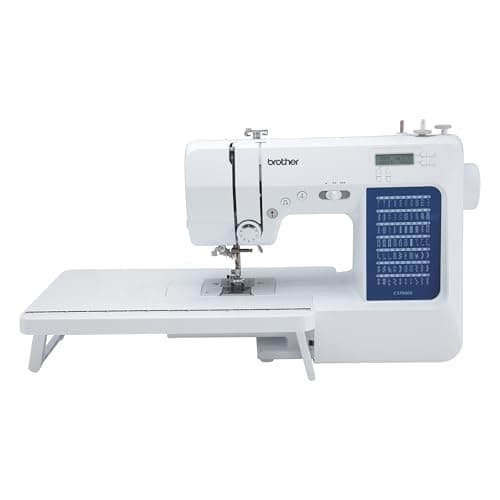 Brother CS7000XSpeed slider, 7 buttonhole styles and a wide table. Easier to learn on. | Best for most first-time buyers | 8.2 | |
| 2 | 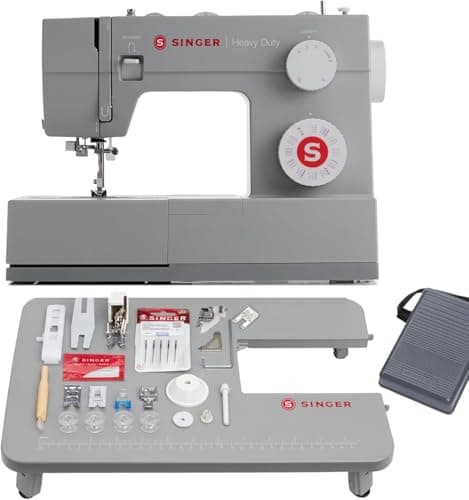 Singer Heavy Duty 4452Metal frame, 1,100 stitches a minute, walking foot and table included. | Best if thick fabric is the actual job | 7.7 | |
| 3 | 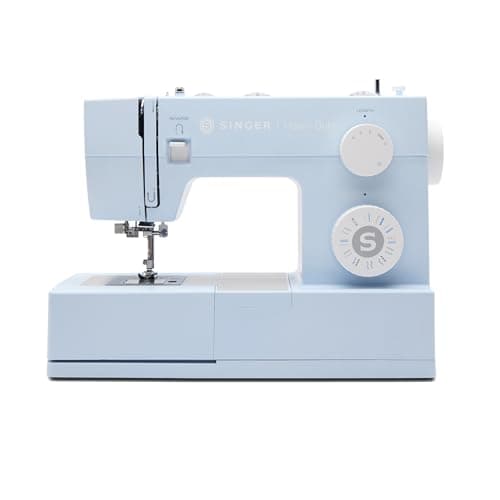 Singer Heavy Duty 4423The same machine as the 4452 with a smaller accessory kit, for less. | Best value if you want the Heavy Duty platform | 7.8 |
Prices shown are Amazon prices as of November 1, 2026 and can change.Scores are our editorial judgment on six axes, explained on the methodology page. We do not run a test lab and never claim to.
Buy the Brother CS7000X if you are learning to sew and most of what you will make is clothes, quilts, repairs and household things in cotton and mid-weight fabric. Buy the Singer Heavy Duty 4452 if you already know the fabric on your table is denim, canvas, upholstery weight or four layers of anything, and you want the even-feed walking foot in the box rather than on a separate order.
This pairing is usually argued badly, because the standard case for the Brother against a Heavy Duty is “and it comes with a wide table, so you can quilt.” That is true against the Singer 4423, and it is not true here. The 4452 is the accessory-bundle model of the Heavy Duty line: it ships with a slide-on extension table and a walking foot, both of which are things you would otherwise buy. So the tiebreaker is gone and the decision has to rest on the two machines themselves.
At a glance
Specifications as published by each manufacturer. The judgments in the lower rows are ours.
Nothing in that table makes either machine bad. They are built to different briefs, and the specification that decides it for most people is the one in the fifth row.
The speed slider is the real difference
The CS7000X has a physical slider that caps the machine’s top speed. Set it low and the machine cannot run away from you however hard you press the pedal. There is no equivalent anywhere in the Singer Heavy Duty line.
That sounds like a small convenience and it is the single most useful feature a nervous beginner can have. The reason is simple: in the first few weeks, the thing that goes wrong is not your stitching, it is that the machine moves faster than your hands have decided where the fabric is going. Capping the speed converts the machine from something you release into something you steer. It also makes tight curves, armholes, tiny hems and anything knit markedly easier, because feeding slowly is what stops a knit seam coming out wavy.
The 4452 runs at 1,100 stitches per minute with no limiter at all, so the foot pedal is your only control and the slowest speed you can hold reliably is still brisk. For an experienced sewer that is power. For week one it is the reason a lot of people decide they cannot sew.
Thick fabric is not close
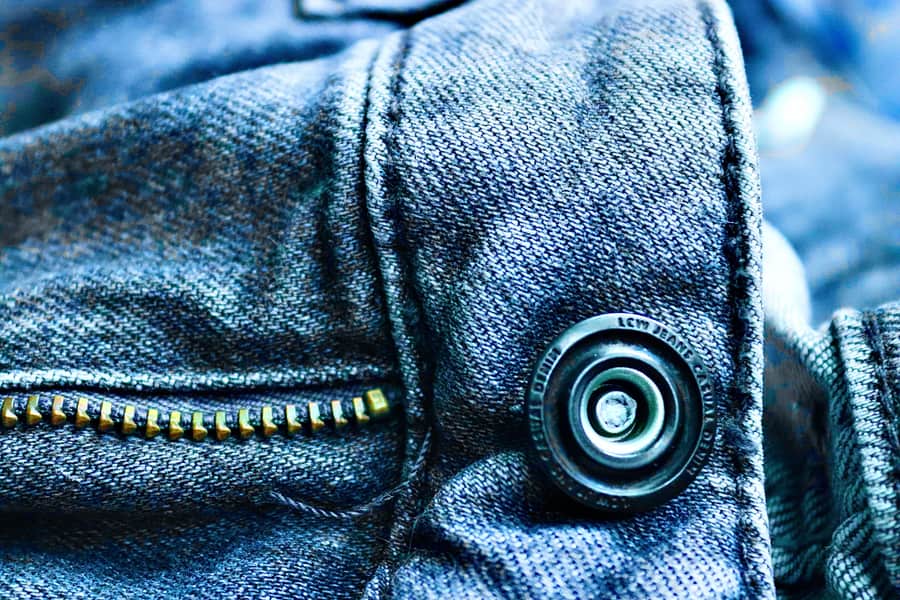
If the honest answer to “what will I sew?” includes denim hems with the folded side seam in them, canvas tote handles, upholstery weight, webbing, dog beds or four layers of anything, the 4452 wins and it is not an argument. Three specifications do the work:
The full metal interior frame and steel bedplate. The machine does not flex or walk across the table when the needle meets resistance, and the fabric slides over steel rather than plastic.
The motor. Singer rates the Heavy Duty line at 1,100 stitches per minute, and the relevant part of that is not the speed, it is the torque behind the needle when it hits a seam intersection.
The extra-high presser foot lifter. This is the least glamorous specification on either machine and it is the one that actually decides things: it is the reason four layers of denim can get under the needle at all. The CS7000X has no equivalent.
The CS7000X is not helpless on heavy fabric — it will hem a pair of jeans with the right needle and some patience — but its light shell shifts on a thick seam and it is not built to do that every week. Our do you need a heavy duty machine guide is the page to read if you are not sure which side of that line you are on, and our denim roundup ranks the whole registry on it.
What the walking foot in the box is worth
The 4452’s headline extra over the rest of the Heavy Duty line is an even-feed walking foot. It is a presser foot with its own set of feed teeth that grip the top layer of fabric while the machine’s feed dogs grip the bottom one, so both layers travel at the same rate.
That matters in three situations, and they are worth knowing before you value it: quilting through a sandwich of fabric, batting and backing without the layers shifting; sewing anything that sticks or slips, including vinyl, faux leather, minky and laminated cotton; and matching plaid or stripes across a seam. If none of those is in your plans, the walking foot is a part in a drawer. If one of them is, buying it separately costs real money and the bundle is good value. Our presser feet guide covers which feet are actually worth owning.
The uncomfortable follow-up: because the 4452 is mechanically identical to the Singer 4423, you are paying the difference between them purely for accessories. If you will not use the walking foot or the table, buy the 4423 and spend the difference on fabric. Our Heavy Duty line comparison lays out all four models and 4452 vs 4432 is the within-line version of this same argument.
Quilting, now that both have a table
With the table question neutralized, quilting splits along different lines. The 4452 brings the walking foot, which is the correct foot for straight-line and stitch-in-the-ditch quilting and a genuine advantage. The CS7000X brings the speed slider, 70 stitches, seven buttonhole styles and a far gentler learning curve, and its table is designed as part of the machine rather than a slide-on accessory.
For a first quilt, we would still take the CS7000X, for one reason: a first quilt is mostly long straight seams at a speed you are comfortable with, and comfort is the thing that gets it finished. For the second and third quilt, the walking foot starts to matter more. Our quilting roundup and do you need a special machine for quilting both go deeper, and throat space explained covers the measurement that decides how big a quilt you can wrestle.
Dials against a screen
This is a genuine preference split rather than a better-or-worse, and it is worth taking seriously because you will interact with it every time you sit down.
The 4452 has physical dials. You can see every setting at a glance without turning the machine on, nothing is nested in a menu, and there is no circuit board to fail in ten years. People who grew up around sewing machines, or who simply prefer things with knobs, often find computerized machines genuinely annoying.
The CS7000X has buttons and a small screen. It remembers the correct stitch length and width for the stitch you chose, which removes a whole category of beginner mistake, and it gives you seven buttonhole styles and a speed cap that a mechanical machine cannot. The cost is menu navigation and, eventually, electronics that are not repairable at a kitchen table. Our mechanical vs computerized guide is the full version of this argument, and it is the page to read if this is the part you are undecided on.
Noise, which nobody checks and some people regret
The Heavy Duty line is loud. A fast mechanical machine with a metal frame at full pedal is genuinely noisy, and with no speed limiter you cannot turn it down. If you sew in a shared room, in an apartment with thin floors, in the evening, or anywhere near a sleeping child, the CS7000X’s slider is also a volume control — and that turns out to matter more to people than they expect. Our quiet machines roundup exists because this question comes up constantly.
What the stitch counts do and do not mean
70 against 32 looks decisive and is almost meaningless. You will use a straight stitch, a zigzag, a stretch stitch, a blind hem, an overcast and a buttonhole, and both machines have all six. What the CS7000X genuinely adds is seven one-step buttonhole styles against the 4452’s one, which matters if you make clothes with different weights of fabric and different button types. The rest of the library is decorative. Our stitches guide explains why the number on the box is the least useful figure in any specification.
Who should skip both
Two cases. If your sewing is a handful of repairs a year, both of these are more machine than you need and the Brother XM2701 does the job for considerably less — see is a sewing machine worth it. And if what you want is a plain mechanical machine that will outlive you but you do not need heavy-fabric muscle, the Janome 2212 sews a cleaner stitch on everyday fabric than either machine here; Janome 2212 vs Singer 4452 takes that pairing apart.
The picks in full
01 - Best for most first-time buyers
Brother CS7000X
Does the fiddly parts for you so you can spend your energy learning to sew.
- 70 built-in stitches, 7 one-step buttonholes
- Automatic needle threader, drop-in top bobbin
- Speed-control slider
- Wide table and 10 presser feet included
- Get it if
- You want threading, buttonholes and stitch settings handled by the machine, and you might try quilting later - the wide table is already in the box.
- Skip it if
- You want physical dials instead of a menu, or you will be sewing canvas, upholstery or leather regularly.
The trade-off
A metal internal frame inside a light plastic shell. That makes it easy to carry and quiet on cottons and mid-weights; it is not built for heavy layers every day the way a Heavy Duty is.
How the Brother CS7000X scores
Our judgment on the six axes described on the methodology page. Not measurements - we do not run a test lab.
- Setup and threading
- 9/10
- Everyday stitch quality
- 8/10
- Thick fabric
- 6/10
- Beginner features
- 9/10
- Durability reputation
- 7/10
- Help for this exact model
- 10/10
Overall 8.2/10
02 - Best if thick fabric is the actual job
Singer Heavy Duty 4452
The 4423 with a bigger accessory kit, including a walking foot.
- 32 built-in stitches (110 stitch applications), one-step buttonhole
- 1,100 stitches per minute
- Full metal interior frame, top drop-in bobbin
- Larger accessory set, including an even-feed walking foot
- Slide-on extension table for larger projects
- Get it if
- You already know you want the Heavy Duty platform and you would otherwise buy a walking foot and an extension table separately.
- Skip it if
- You are only guessing that you might sew heavy fabric - start with the 4423.
The trade-off
Mechanically it is the same machine as the 4423. You are buying accessories, so the only question is whether you will use them.
How the Singer Heavy Duty 4452 scores
Our judgment on the six axes described on the methodology page. Not measurements - we do not run a test lab.
- Setup and threading
- 7/10
- Everyday stitch quality
- 8/10
- Thick fabric
- 9/10
- Beginner features
- 6/10
- Durability reputation
- 8/10
- Help for this exact model
- 8/10
Overall 7.7/10
03 - Best value if you want the Heavy Duty platform
Singer Heavy Duty 4423
Fast, sturdy and simple - the machine for denim hems and tote bags.
- Metal interior frame, stainless steel bedplate
- 1,100 stitches per minute
- 23 stitches (97 stitch applications), one-step buttonhole, automatic threader
- Top drop-in bobbin with a clear cover
- Extra-high presser foot lift for thick layers
- Get it if
- You want physical dials, you plan to sew jeans, canvas or several layers, and you do not mind a machine that is loud and quick.
- Skip it if
- You mostly want gentle control on light fabrics, or a quiet machine for an apartment.
The trade-off
Heavy duty means a metal frame and a fast motor, not an industrial machine. It handles denim well; real leather is still a struggle.
How the Singer Heavy Duty 4423 scores
Our judgment on the six axes described on the methodology page. Not measurements - we do not run a test lab.
- Setup and threading
- 7/10
- Everyday stitch quality
- 8/10
- Thick fabric
- 9/10
- Beginner features
- 6/10
- Durability reputation
- 8/10
- Help for this exact model
- 9/10
Overall 7.8/10
Questions beginners actually ask
Is the Brother CS7000X or the Singer 4452 better for a beginner?
The Brother CS7000X, for one specific reason: it has a speed-control slider that caps the top speed, and the Singer Heavy Duty line has no limiter at all. In the first few weeks the problem is not your stitching, it is that the machine moves faster than your hands have decided where the fabric is going. The CS7000X also gives you seven one-step buttonhole styles against the 4452's one.
Does the Singer 4452 sew thicker fabric than the Brother CS7000X?
Yes, decisively. The 4452 has a full metal interior frame, a stainless steel bedplate, a motor rated at 1,100 stitches per minute and an extra-high presser foot lifter - that last one being why four layers of denim can get under the needle at all. The CS7000X will hem jeans with the right needle and some patience, but its light shell shifts on thick seams and it is not built to do that weekly.
Do both the CS7000X and the 4452 come with an extension table?
Yes, and that is what makes this comparison different from CS7000X vs 4423. The 4452 is the accessory-bundle model of the Heavy Duty line and ships with a slide-on extension table and an even-feed walking foot. So the usual argument for the Brother - that quilting is included - does not apply here, and the decision rests on speed control against heavy-fabric capability instead.
Is the Singer 4452 worth the extra over the Singer 4423?
Only if you will use the accessories. Mechanically the 4452 and the 4423 are the same machine; the difference is a larger accessory set including the walking foot and the extension table, plus more stitches. If you will quilt, sew vinyl or faux leather, or match plaids, the bundle is good value. If not, buy the 4423 and spend the difference on fabric.
Which is quieter, the Brother CS7000X or the Singer 4452?
The CS7000X, and the gap is large. The Heavy Duty line is a fast mechanical machine with a metal frame and no speed limiter, so you cannot turn it down. The CS7000X's speed slider is effectively a volume control. If you sew in a shared room, an apartment, or near a sleeping child, this matters more than most specifications on either machine.
What is a walking foot for, and do I need one?
It is a presser foot with its own feed teeth that grip the top layer of fabric while the machine's feed dogs grip the bottom one, so both travel at the same rate. It matters for quilting through batting, for fabrics that stick or slip such as vinyl, faux leather and minky, and for matching plaids across a seam. If none of those is in your plans, it is a part in a drawer.
Can the Brother CS7000X sew denim?
It can sew denim - a hem, a repair, a pair of jeans taken up - with a denim needle, a longer stitch and a slow, deliberate pace. What it is not built for is denim as a regular diet, especially crossing a folded side seam where four layers meet. If that is a weekly job, the Singer Heavy Duty platform is the right purchase and the CS7000X will frustrate you.
Sources
Specifications are taken from manufacturer listings. We do not run a test lab and never claim to - how each machine is assessed is set out on our methodology page.
Read next
- Brother CS7000X vs Singer Heavy Duty 4423
The same argument against the cheaper Heavy Duty, where the table is the tiebreaker.
- Which Singer Heavy Duty machine is best?
All four models, and why the 4423 is usually the answer.
- Do you need a heavy duty sewing machine?
- Mechanical vs computerized sewing machines
Dials against a screen, argued properly.