Compare · Simplicity vs muscle
Janome 2212 vs Singer Heavy Duty 4452
Buy the Janome 2212 if you want a machine with almost nothing on it to break. Buy the Singer 4452 if the fabric on your table is thick and you want the walking foot included.
By Michael W. · Published
Disclosure: this page contains affiliate links. As an Amazon Associate, StitchStarter earns from qualifying purchases at no extra cost to you. Prices are read from Amazon daily and dated; the price you pay is the one Amazon shows at checkout. It never changes which machines we recommend. Full disclosure.
Quick picks
The short answer. Every pick is explained in full below, including who should skip it.
| # | Product | Best for | Score | Price |
|---|---|---|---|---|
| 1 | 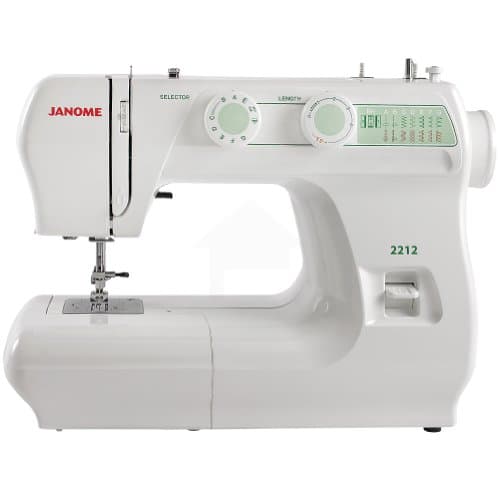 Janome 2212Twelve stitches, dial controls, drop feed, and a reputation for decades. | Best for learning properly and keeping forever | 7.6 | |
| 2 | 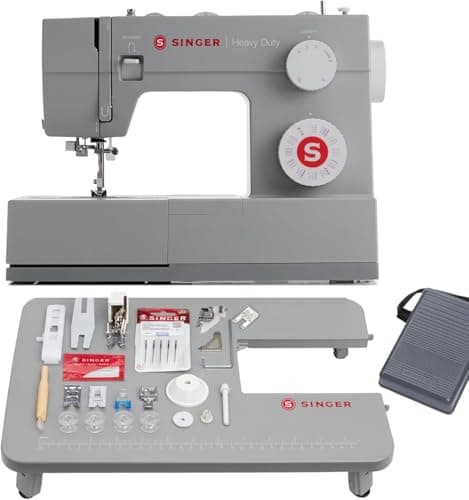 Singer Heavy Duty 4452Metal frame, 1,100 stitches a minute, walking foot and table included. | Best if thick fabric is the point | 7.7 | |
| 3 | 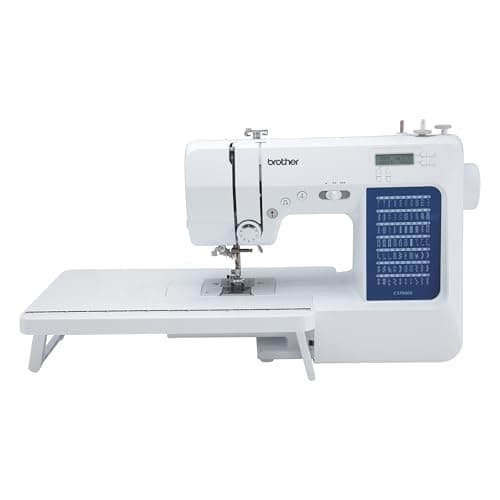 Brother CS7000XThe computerized middle ground: speed slider, threader, wide table. | Best if neither is quite it | 8.2 |
Prices shown are Amazon prices as of November 1, 2026 and can change.Scores are our editorial judgment on six axes, explained on the methodology page. We do not run a test lab and never claim to.
Buy the Janome 2212 if what you want is a machine that teaches you to sew and then keeps working for twenty years — cotton, quilts, clothes, repairs. Buy the Singer Heavy Duty 4452 if the fabric you actually have is denim, canvas, upholstery weight or several layers of anything, and you want the even-feed walking foot in the box rather than on a separate order.
Both are mechanical machines with dials and no screen, so neither has a circuit board to fail. That is where the similarity ends. The 2212 is a deliberately plain machine with twelve stitches, a front-loading bobbin, a four-step buttonhole and no needle threader. The 4452 is a fast, loud machine with a metal interior frame, 32 stitches, a one-step buttonhole, an automatic threader and a drop-in bobbin. Neither is a better machine in the abstract; they are answers to different questions.
At a glance
Specifications as published by each manufacturer.
Read that table and the 4452 looks like it wins on everything. It does win on features — that is not in dispute. What the table cannot show is the reason sewing classes keep buying the 2212: there is almost nothing on it that can go wrong, and the seam it produces on everyday fabric is excellent.
Where the Janome is better
Stitch quality on normal fabric. On cotton, linen, quilting weights and mid-weight fabric, the 2212 lays down a cleaner, more even stitch than the Heavy Duty does. This is the thing owners of both machines say first, and it is the whole reason the 2212 has the reputation it has.
Longevity. Fewer mechanisms, fewer plastic parts in the drive, and a dealer network that can service it. Our lifespan guide makes the general case; the 2212 is the machine in our registry that case was written around.
Control. It is slower — around 860 stitches per minute against 1,100 — and that is an advantage for a learner. Neither machine has a speed limiter, so the top speed is the ceiling you are feathering the pedal against.
Teaching you how a machine works. Twelve stitches, two dials, a four-step buttonhole and a front-loading bobbin. Nothing is hidden, which means you learn what stitch length and width actually do rather than scrolling a menu. Our Janome 2212 review is the longer version.
Where the Singer is better
Thick fabric, decisively. Metal interior frame, steel bedplate, 1,100 stitches per minute and an extra-high presser foot lift. That last one is the unglamorous feature that decides the job: you have to get four layers of denim under the foot before anything else matters, and the 2212 has a standard lift.
The accessories. The walking foot included with the 4452 is the single most useful accessory for thick fabric, quilting and material that refuses to slide. The slide-on extension table supports bulk that would otherwise drag your seam crooked. Buy them separately for the Janome and the price gap narrows considerably.
The conveniences a beginner misses. One-step buttonhole, automatic needle threader, drop-in bobbin. Each of those is a small thing; together they are the difference between a machine that feels welcoming and one that feels like an exam. This is the strongest practical argument for the Singer, and it is worth taking seriously if you have never threaded a machine before.
Stitch choice. 32 against 12. You will use five of them, but among those five is a stretch stitch, which the 2212 does not have in a dedicated form.
The two features most likely to annoy you
On the Janome: the four-step buttonhole and the missing threader. A four-step buttonhole means turning a dial through four positions and pivoting the fabric for each side and bar tack. It is learnable and it is consistent once learned, but the first set of six matching buttonholes down a shirt front is a genuine exercise in patience. No automatic threader also means every color change is a squint. Our buttonhole guide covers both methods.
On the Singer: the noise and the pace. It is loud, the slowest pedal speed is still fairly brisk, and the front-loading-versus-drop-in argument does not help you here because the Singer already has the easier bobbin. If you sew in an apartment in the evening, read our quiet machines roundup before committing.
What about the money?
The live price for each machine sits in its buy button below, read from Amazon and dated, because a number written into a paragraph is stale within the week. What is structurally true regardless of the day: the 4452 is sold as an accessory bundle, so it carries a premium over the plain Singer 4423, which is mechanically the same machine. If you want the Heavy Duty platform and will not use a walking foot, the 4423 is the cheaper route and our Heavy Duty line comparison lays out the whole family. Equally, if you like what the 2212 stands for but want a one-step buttonhole and a threader, that machine exists — it is the 2212’s stablemate, the Janome 1522, compared directly at Janome 1522 vs Singer 4452.
If neither is quite right
A lot of people land on this comparison because they want the Janome’s simplicity and the Singer’s convenience in one machine. That machine is computerized, and it is the Brother CS7000X: automatic threader, drop-in bobbin, seven one-step buttonholes, a speed-control slider the other two lack entirely, and a wide table in the box. The trade is honest — it has a circuit board, so it will not see twenty years the way the Janome will, and it is not a heavy-fabric machine the way the Singer is. Our mechanical vs computerized guide is the page that settles which side of that line you belong on.
The picks in full
01 - Best for learning properly and keeping forever
Janome 2212
Twelve stitches, nothing to break - the classroom favorite.
- 12 stitches, dial controls, four-step buttonhole
- Drop feed for free-motion quilting
- Free arm for cuffs and sleeves
- A reputation for lasting decades
- Get it if
- You value reliability over conveniences and want a machine still working long after the computerized ones are gone.
- Skip it if
- You want an automatic threader, a one-step buttonhole or a drop-in bobbin - it has none of them.
The trade-off
Fewer conveniences, more longevity. The four-step buttonhole and front-loading bobbin are a little more work to learn.
How the Janome 2212 scores
Our judgment on the six axes described on the methodology page. Not measurements - we do not run a test lab.
- Setup and threading
- 6/10
- Everyday stitch quality
- 9/10
- Thick fabric
- 7/10
- Beginner features
- 4/10
- Durability reputation
- 10/10
- Help for this exact model
- 7/10
Overall 7.6/10
02 - Best if thick fabric is the point
Singer Heavy Duty 4452
The 4423 with a bigger accessory kit, including a walking foot.
- 32 built-in stitches (110 stitch applications), one-step buttonhole
- 1,100 stitches per minute
- Full metal interior frame, top drop-in bobbin
- Larger accessory set, including an even-feed walking foot
- Slide-on extension table for larger projects
- Get it if
- You already know you want the Heavy Duty platform and you would otherwise buy a walking foot and an extension table separately.
- Skip it if
- You are only guessing that you might sew heavy fabric - start with the 4423.
The trade-off
Mechanically it is the same machine as the 4423. You are buying accessories, so the only question is whether you will use them.
How the Singer Heavy Duty 4452 scores
Our judgment on the six axes described on the methodology page. Not measurements - we do not run a test lab.
- Setup and threading
- 7/10
- Everyday stitch quality
- 8/10
- Thick fabric
- 9/10
- Beginner features
- 6/10
- Durability reputation
- 8/10
- Help for this exact model
- 8/10
Overall 7.7/10
03 - Best if neither is quite it
Brother CS7000X
Does the fiddly parts for you so you can spend your energy learning to sew.
- 70 built-in stitches, 7 one-step buttonholes
- Automatic needle threader, drop-in top bobbin
- Speed-control slider
- Wide table and 10 presser feet included
- Get it if
- You want threading, buttonholes and stitch settings handled by the machine, and you might try quilting later - the wide table is already in the box.
- Skip it if
- You want physical dials instead of a menu, or you will be sewing canvas, upholstery or leather regularly.
The trade-off
A metal internal frame inside a light plastic shell. That makes it easy to carry and quiet on cottons and mid-weights; it is not built for heavy layers every day the way a Heavy Duty is.
How the Brother CS7000X scores
Our judgment on the six axes described on the methodology page. Not measurements - we do not run a test lab.
- Setup and threading
- 9/10
- Everyday stitch quality
- 8/10
- Thick fabric
- 6/10
- Beginner features
- 9/10
- Durability reputation
- 7/10
- Help for this exact model
- 10/10
Overall 8.2/10
Questions beginners actually ask
Janome 2212 or Singer Heavy Duty 4452 - which should I buy?
The Janome 2212 if your sewing is cotton, clothes, quilts and repairs and you want a machine that lasts decades with almost nothing on it to break. The Singer Heavy Duty 4452 if you sew denim, canvas or several layers regularly and want the even-feed walking foot and extension table included.
Which has the better stitch quality?
The Janome 2212, on everyday fabric. It is the thing owners of both machines mention first and the reason sewing classes keep buying it. The Singer's advantage is not stitch quality, it is the ability to push through material the Janome cannot get under the foot.
Does the Janome 2212 have a needle threader or a one-step buttonhole?
Neither. It has a four-step buttonhole, a front-loading bobbin and no automatic needle threader. That is deliberate simplicity rather than a defect, but it is the single most common reason beginners choose something else. The Janome 1522 adds both for a clear premium.
Is the Singer 4452 too fast for a beginner?
It can be. It runs at 1,100 stitches per minute with no speed limiter, so the foot pedal is your only control and the slowest speed is still brisk. The Janome is slower at around 860 stitches per minute. If sewing slowly while you learn matters, a computerized machine with a speed slider - the Brother CS7000X - solves it properly.
Can the Janome 2212 sew denim?
A hem or a seam, yes, with a heavy needle and a longer stitch. Thick multi-layer denim work - seam intersections on jeans, several layers of canvas - is where it struggles, mostly because it has a standard presser foot lift rather than the extra-high lift on the Singer.
Which lasts longer?
The Janome, on reputation and on mechanism count: fewer parts, a dealer network behind it and no circuit board. Both are mechanical so both outlast a typical beginner computerized machine, and in practice annual servicing decides more about lifespan than brand does.
Sources
Specifications are taken from manufacturer listings. We do not run a test lab and never claim to - how each machine is assessed is set out on our methodology page.
Read next
- Janome 2212 vs Singer 4423
The same question against the cheaper Heavy Duty.
- Janome 1522 vs Singer 4452
- Which Singer Heavy Duty machine is best?
- Mechanical vs computerized sewing machines