Best For · Best for appliqué
The best sewing machines for appliqué
Appliqué is one stitch done well. The machines that do it cleanly all share three settings, and two of them are not printed on the box.
By Michael W. · Published
Disclosure: this page contains affiliate links. As an Amazon Associate, StitchStarter earns from qualifying purchases at no extra cost to you. Prices are read from Amazon daily and dated; the price you pay is the one Amazon shows at checkout. It never changes which machines we recommend. Full disclosure.
Quick picks
The short answer. Every pick is explained in full below, including who should skip it.
| # | Product | Best for | Score | Price |
|---|---|---|---|---|
| 1 | 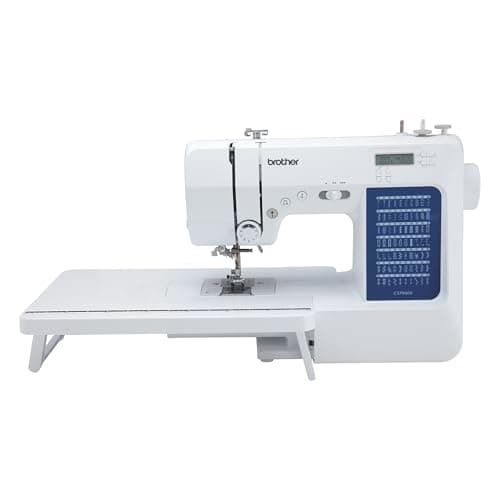 Brother CS7000XFine width and length control, plus a speed slider for steering curves. Brother CS7000XFine width and length control, plus a speed slider for steering curves. | Best for appliqué overall | 8.2 | |
| 2 | 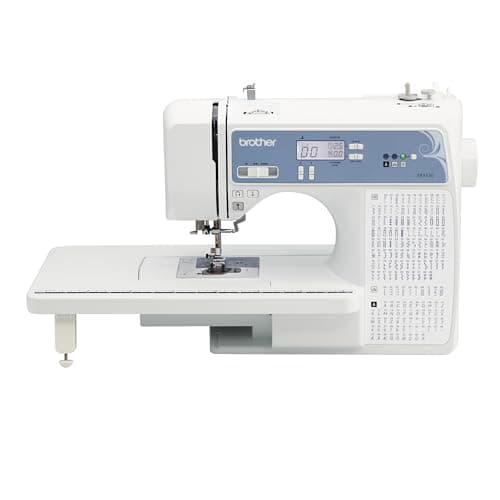 Brother XR9550165 stitches and an LCD that shows the width you are setting. Brother XR9550165 stitches and an LCD that shows the width you are setting. | Best if you want more stitch options | 7.7 | |
| 3 | 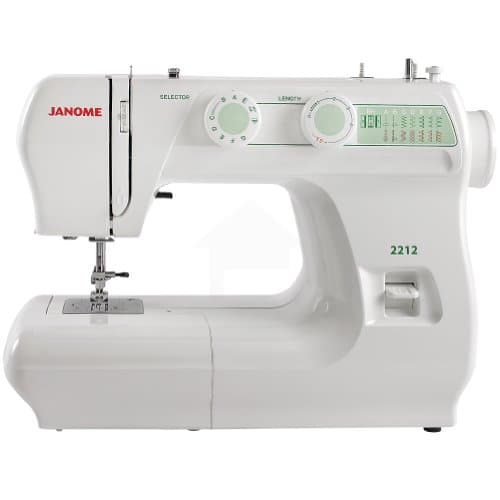 Janome 2212A drop feed, so you steer the shape instead of the machine. Janome 2212A drop feed, so you steer the shape instead of the machine. | Best for free-motion appliqué | 7.6 | |
| 4 | 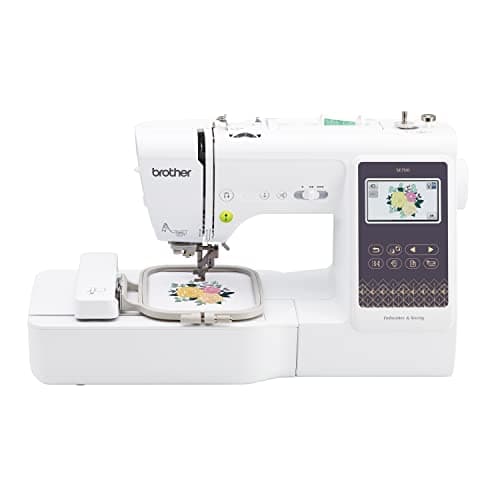 Brother SE700Appliqué stitched automatically inside the embroidery hoop. Brother SE700Appliqué stitched automatically inside the embroidery hoop. | Best if you want it done for you | 7.4 |
Prices shown are Amazon prices as of October 10, 2026 and can change.Scores are our editorial judgment on six axes, explained on the methodology page. We do not run a test lab and never claim to.
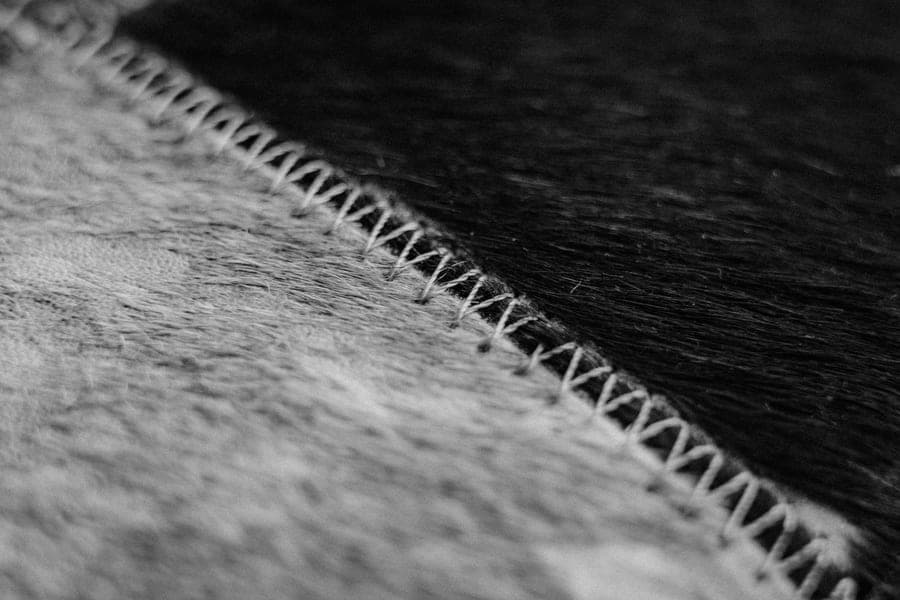
The best beginner machine for appliqué is the Brother CS7000X, because appliqué comes down to one stitch - a dense, narrow zigzag called a satin stitch - and three things make that stitch look finished rather than homemade: fine control over stitch width, fine control over stitch length, and the ability to sew slowly enough to steer a curve. The CS7000X is the machine on this site that gives you all three, and it is the only one with a speed slider.
If you want to appliqué free-form shapes without turning the fabric, the Janome 2212 is the surprising pick: it has a drop feed, which lets you lower the feed dogs and move the fabric yourself. And if you would rather the machine did the whole thing, the Brother SE700 stitches appliqué designs inside an embroidery hoop with no steering at all.
The three settings that decide a satin stitch
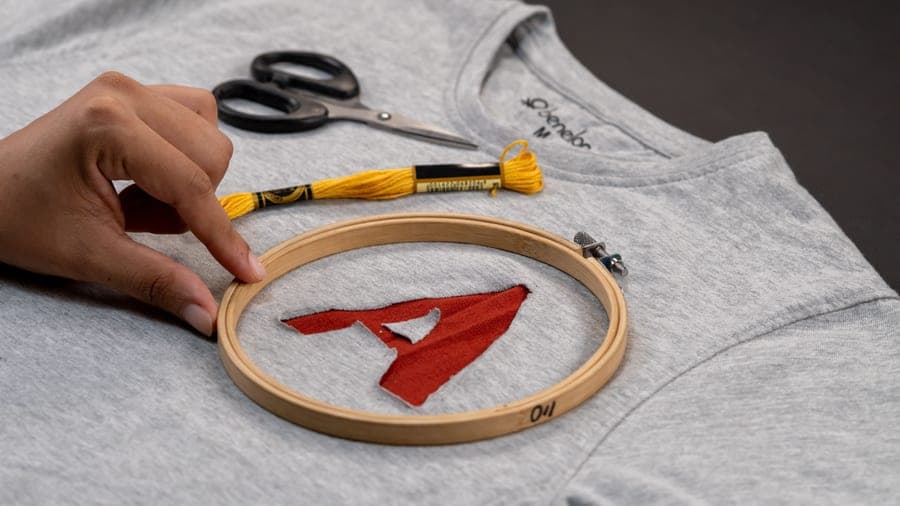
Appliqué is cutting a shape out of one fabric and stitching it onto another so the raw edge is covered. The covering is the whole job, and it is done with a zigzag turned into a solid bar of thread.
Adjustable stitch width. A satin stitch for appliqué is usually 2 to 3.5mm wide - wide enough to cover the raw edge and catch the base fabric, narrow enough to turn a curve. A machine with preset stitch width, like the Singer Start 1304 or the Singer M1500, cannot do this, and that is the clearest reason to leave them off this list.
Adjustable stitch length. Shorten the zigzag to about 0.3 to 0.5mm and the individual stitches disappear into a smooth band. Leave it at the default and you get a zigzag with gaps. This is the setting most beginners never touch, and it is the difference between the two results.
A way to go slowly. Appliqué is steering, not sewing. You stop every few stitches at a curve and pivot. A speed limiter turns that from a nervous job into a calm one, and only the CS7000X here has one.
The four, side by side
Specifications as published by each manufacturer.
The drop feed column is the one most buyers do not know to read. On the Janome you can lower the feed dogs and move the fabric by hand, which is how free-motion appliqué and thread painting are done. It is rare at this level.
The accessory matters more than the machine
An open toe appliqué foot has the front cut away so you can see exactly where the needle is about to land, and a channel underneath so the built-up satin stitch can pass without being flattened. It costs very little and it improves the result more than moving up a machine tier would.
The second accessory is not a foot at all. Fusible web - a paper-backed adhesive you iron onto the back of the appliqué shape - holds the piece flat and still while you stitch. Beginners who skip it fight a shifting shape and blame the machine. Our presser feet guide covers which foot does what, and the thread guide explains why a 40-weight rayon or polyester looks better here than ordinary all-purpose thread.
The two kinds of appliqué, and which machine each wants
Guided appliqué is what most people mean: iron the shape down, set a satin stitch, and steer the fabric around the outline with the feed dogs pulling. Any machine with adjustable width and length does this, and the CS7000X does it best because you can slow it down.
Free-motion appliqué drops the feed dogs entirely. You move the fabric in any direction, which lets you outline a shape in loose sketchy lines or thread-paint over it. This needs a drop feed and a darning foot, and on this site that means the Janome 2212 or the Heavy Duty Singers. Our quilting machine guide explains the same mechanism, because free-motion quilting is the same skill.
When to stop fighting it and buy embroidery
An embroidery machine does appliqué differently: you hoop the base fabric, the machine stitches a placement outline, you lay the appliqué fabric on, and it stitches the satin edge perfectly without you steering anything.
That is genuinely better for repeated, identical shapes - name patches, logos, children’s clothes with the same motif. It is worse for one large one-off shape, because the SE700 works in a 4 x 4 inch field and anything bigger has to be rehooped and aligned. Our sewing vs embroidery comparison and combo machine roundup both go further.
Who should skip all four
Anyone buying a machine only to attach a few patches. A straight stitch around the edge of an iron-on patch works, on the machine you already have. Our is a sewing machine worth it guide is the honest arithmetic.
Anyone whose real plan is thick decorative work on denim jackets. A satin stitch through denim and patch together needs a machine that does not flex - start at our denim roundup.
Anyone buying for a child. Appliqué wants the settings a children’s machine deliberately removes. See the roundup for kids instead.
The picks in full
01 - Best for appliqué overall
Brother CS7000X
Does the fiddly parts for you so you can spend your energy learning to sew.
- 70 built-in stitches, 7 one-step buttonholes
- Automatic needle threader, drop-in top bobbin
- Speed-control slider
- Wide table and 10 presser feet included
- Get it if
- You want threading, buttonholes and stitch settings handled by the machine, and you might try quilting later - the wide table is already in the box.
- Skip it if
- You want physical dials instead of a menu, or you will be sewing canvas, upholstery or leather regularly.
The trade-off
A metal internal frame inside a light plastic shell. That makes it easy to carry and quiet on cottons and mid-weights; it is not built for heavy layers every day the way a Heavy Duty is.
$279.99 · 11% off · price as of October 10, 2026
#ad - opens Amazon in a new tab. How we earn
How the Brother CS7000X scores
Our judgment on the six axes described on the methodology page. Not measurements - we do not run a test lab.
- Setup and threading
- 9/10
- Everyday stitch quality
- 8/10
- Thick fabric
- 6/10
- Beginner features
- 9/10
- Durability reputation
- 7/10
- Help for this exact model
- 10/10
Overall 8.2/10
02 - Best if you want more stitch options
Brother XR9550
More stitches and a bigger screen than the CS7000X, for the same job.
- 165 built-in stitches - 110 utility and decorative plus 55 alphanumeric
- 8 one-step buttonhole styles
- LCD display and stitch selection
- Wide table included
- Automatic threader, drop-in bobbin
- Get it if
- You want the CS7000X's convenience with a larger display and more decorative stitches.
- Skip it if
- You would rather put the difference toward fabric - you will use a fraction of the stitch library.
The trade-off
The extra stitches are decorative. The real difference from the CS7000X is the display, and the CS7000X's speed slider is arguably worth more to a beginner.
How the Brother XR9550 scores
Our judgment on the six axes described on the methodology page. Not measurements - we do not run a test lab.
- Setup and threading
- 9/10
- Everyday stitch quality
- 8/10
- Thick fabric
- 6/10
- Beginner features
- 8/10
- Durability reputation
- 7/10
- Help for this exact model
- 8/10
Overall 7.7/10
03 - Best for free-motion appliqué
Janome 2212
Twelve stitches, nothing to break - the classroom favorite.
- 12 stitches, dial controls, four-step buttonhole
- Drop feed for free-motion quilting
- Free arm for cuffs and sleeves
- A reputation for lasting decades
- Get it if
- You value reliability over conveniences and want a machine still working long after the computerized ones are gone.
- Skip it if
- You want an automatic threader, a one-step buttonhole or a drop-in bobbin - it has none of them.
The trade-off
Fewer conveniences, more longevity. The four-step buttonhole and front-loading bobbin are a little more work to learn.
How the Janome 2212 scores
Our judgment on the six axes described on the methodology page. Not measurements - we do not run a test lab.
- Setup and threading
- 6/10
- Everyday stitch quality
- 9/10
- Thick fabric
- 7/10
- Beginner features
- 4/10
- Durability reputation
- 10/10
- Help for this exact model
- 7/10
Overall 7.6/10
04 - Best if you want it done for you
Brother SE700
A sewing machine and a 4x4 embroidery machine in one box.
- 103 sewing stitches plus 135 built-in embroidery designs
- 4 x 4 inch embroidery field
- Color touchscreen, wireless design transfer
- Automatic threader, drop-in bobbin
- Get it if
- You want to personalize things - names, monograms, patches, small designs - as well as sew.
- Skip it if
- You mainly want to make clothes or quilts. The same money buys a better dedicated sewing machine.
The trade-off
The 4 x 4 inch embroidery field is small, and embroidery has ongoing costs - stabilizer, thread, designs. Great at what it does; not a shortcut to a better sewing machine.
How the Brother SE700 scores
Our judgment on the six axes described on the methodology page. Not measurements - we do not run a test lab.
- Setup and threading
- 8/10
- Everyday stitch quality
- 8/10
- Thick fabric
- 5/10
- Beginner features
- 8/10
- Durability reputation
- 7/10
- Help for this exact model
- 8/10
Overall 7.4/10
Questions beginners actually ask
What is the best sewing machine for appliqué?
The Brother CS7000X. Appliqué is one stitch - a dense satin stitch - and it needs adjustable stitch width, adjustable stitch length and the ability to sew slowly enough to steer curves. The CS7000X has all three, and it is the only machine here with a speed slider.
Can any sewing machine do appliqué?
Any machine with an adjustable zigzag can. Machines with preset stitch width, such as the Singer Start 1304 or M1500, cannot set the width and length a satin stitch needs, so the edge comes out gappy rather than solid.
What stitch settings do I use for appliqué?
A zigzag about 2 to 3.5mm wide with the length shortened to roughly 0.3 to 0.5mm, which turns the zigzag into a solid band of thread. Reduce top tension slightly, because dense stitching pulls more thread than a straight seam.
Do I need a special foot for appliqué?
An open toe appliqué foot helps a lot and costs very little. The cut-away front lets you see where the needle will land, and the channel underneath stops the built-up satin stitch being flattened as it passes.
Is an embroidery machine better for appliqué?
For repeated identical shapes, yes - it stitches the placement line and the satin edge for you with no steering. For a single large shape it is worse, because a 4 x 4 inch embroidery field means rehooping and realigning anything bigger.
What is free-motion appliqué and which machines can do it?
It is appliqué with the feed dogs lowered, so you move the fabric freely in any direction and can outline or thread-paint a shape. It needs a machine with a drop feed - on this site the Janome 2212 and the Singer Heavy Duty line - plus a darning foot.
Sources
Specifications are taken from manufacturer listings. We do not run a test lab and never claim to - how each machine is assessed is set out on our methodology page.
Read next
- Sewing machine stitches explained
What a satin stitch is, and the five others you will use.
- Best sewing and embroidery machines for beginners
- Sewing machine presser feet explained
- Best sewing machines for quilting beginners