Guides
How to sew a straight line
Stop watching the needle. A straight seam comes from watching the fabric edge against a fixed guide - and from letting the machine pull the fabric instead of you.
By Michael W. · Published
Disclosure: this page contains affiliate links. As an Amazon Associate, StitchStarter earns from qualifying purchases at no extra cost to you. Prices are read from Amazon daily and dated; the price you pay is the one Amazon shows at checkout. It never changes which machines we recommend. Full disclosure.
Quick picks
The short answer. Every pick is explained in full below, including who should skip it.
| # | Product | Best for | Score | Price |
|---|---|---|---|---|
| 1 | 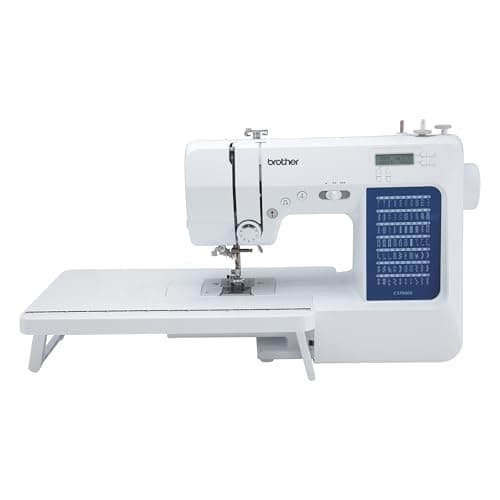 Brother CS7000XThe speed slider lets you sew at a pace you can actually steer. | Best for learning straight seams | 8.2 | |
| 2 | 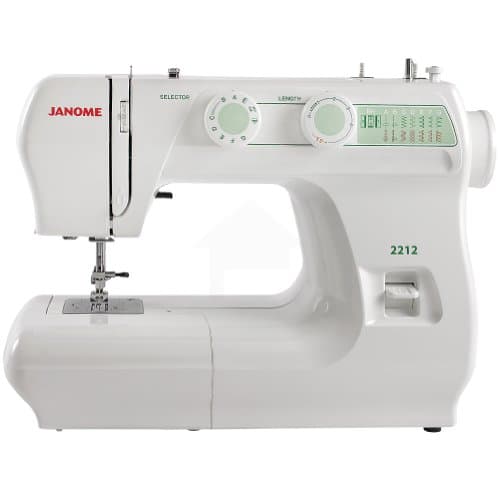 Janome 2212The stitch quality this machine is known for shows up most on a straight line. | Best for an even, accurate seam | 7.6 | |
| 3 | 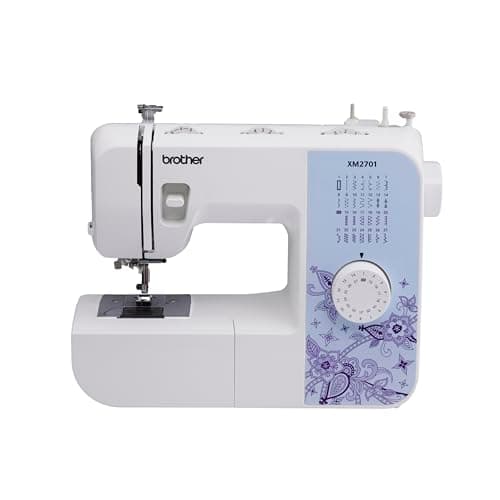 Brother XM2701Stable feed and clear seam allowance markings on the plate. | Best cheap machine for the job | 7.3 |
Prices shown are Amazon prices as of November 1, 2026 and can change.Scores are our editorial judgment on six axes, explained on the methodology page. We do not run a test lab and never claim to.
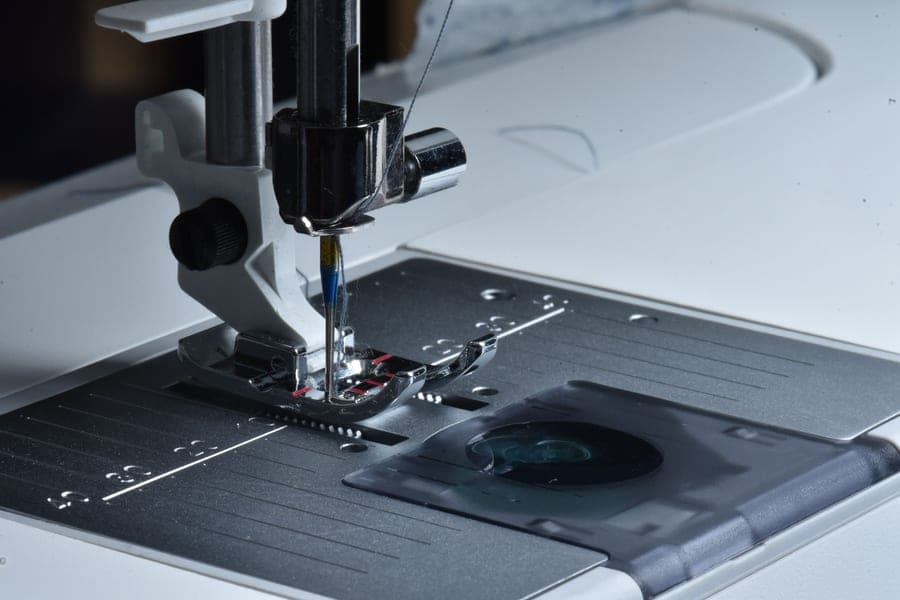
A straight machine seam comes from one habit: watch the edge of your fabric against a fixed guide, not the needle. If you stare at the needle, your hands correct constantly and the line wanders in small curves. If you keep the fabric edge running along the 1.5cm line on the needle plate, or along the edge of the presser foot, the seam comes out straight whether you are looking at the needle or not.
The second habit matters nearly as much: do not pull the fabric. The feed dogs move the fabric. Your hands guide direction, keep the edge against the guide, and support the weight — that is all. Pulling fights the feed, stretches the fabric and is the main reason a seam that started straight goes wrong halfway.
What to watch instead of the needle
Every machine gives you at least two guides, and most give you three.
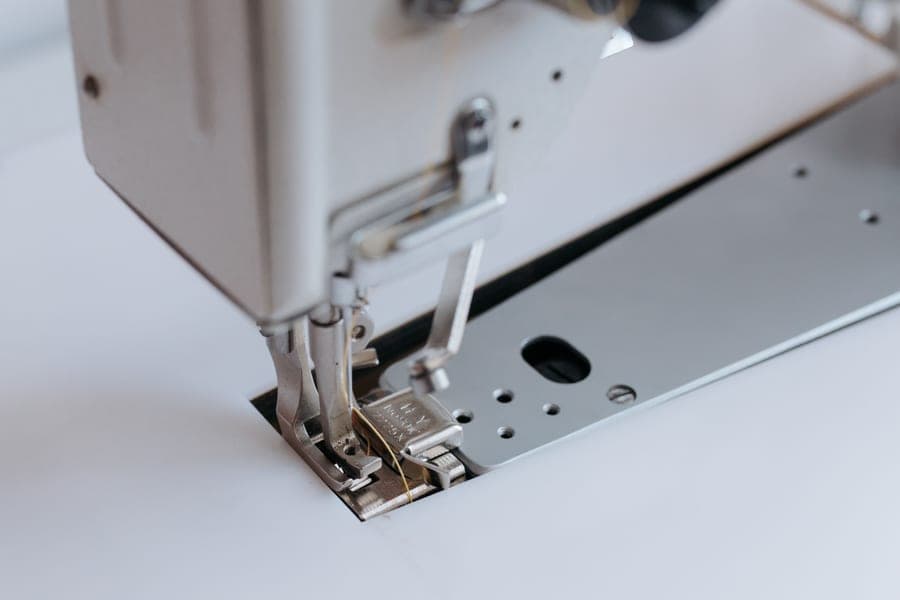
The seam allowance lines on the needle plate. The engraved or printed lines to the right of the needle, usually marked in inches and sometimes in millimeters. Line the raw edge of the fabric up with the one you want and keep it there. This is the primary guide.
The edge of the presser foot. On most machines, the right edge of a standard foot sits conveniently close to a common seam allowance. It is the easiest guide to see because it is right next to the stitching.
A magnetic or screw-on seam guide, or a strip of tape. A physical ridge the fabric butts against. Masking tape on the bed, three or four layers thick, costs nothing and works immediately — and it is the single most effective fix for a beginner who cannot hold a line.
Set the machine up to help you
Settings and setup that make a straight seam easier before you touch the pedal.
Our needle guide covers matching the needle, and stitches explained covers stitch length properly if you want the reasoning rather than the numbers.
The method, step by step
1. Mark or decide your seam allowance. 1.5cm (5/8 inch) is the standard on most garment patterns. Know which line you are using before you start.
2. Place the fabric with its raw edge on that line, needle about 1cm in from the top. Not right at the edge — starting a centimeter in and backstitching back is more reliable.
3. Lower the foot, then backstitch three or four stitches. See how to backstitch.
4. Sew forward at a slow, constant speed, eyes on the guide. Left hand supporting the bulk, right hand lightly keeping the edge against the line. No pulling.
5. Stop a centimeter from the end, backstitch, and lift the needle to its highest position before raising the foot. Raising the foot with the needle down drags the last stitch sideways.
6. For a corner, stop with the needle down, raise the foot, pivot the fabric ninety degrees, lower the foot, carry on. The needle down is what keeps the corner sharp.
Six fixes for a seam that still wanders
You are watching the needle. The most likely cause by a wide margin. Move your eyes to the guide and the problem usually disappears within a seam or two.
You are going too fast. Slow down to a speed where you are steering rather than reacting. On a machine with a speed slider, set it low and leave it there for a week.
You are pulling the fabric. Rest your hands, do not grip. If you can see the fabric stretching in front of the foot, you are pulling.
The fabric is unsupported. Anything hanging off the table pulls the seam. Support it level with the bed — see do you need a sewing table.
The needle is blunt or wrong. Change it. A bent needle cannot sew a straight line and no technique fixes that.
The fabric is fighting you. Slippery or stretchy fabric wanders in ways cotton does not. That is a fabric problem, not a skill problem — see settings for stretchy fabric and easiest fabrics to sew. Learn straight lines on quilting cotton.
Machines that make a straight seam easier
Three honest routes to a straighter line: controllable speed, mechanical accuracy, or clear plate markings for the least money.
Brother CS7000X
The speed-control slider is the most useful straight-seam feature there is - you can set a crawl and hold a line while your hands learn the guide.
Skip it if You want physical dials instead of a menu, or you will be sewing canvas, upholstery or leather regularly.
Janome 2212
The stitch quality this machine is known for shows up most clearly on a long straight seam, and the dials mean you can set a precise stitch length and see it.
Skip it if You want an automatic threader, a one-step buttonhole or a drop-in bobbin - it has none of them.
Brother XM2701
Clear seam allowance markings, a stable feed and a light body that is easy to position square to your body. The cheapest honest answer.
Skip it if You already know you will sew every week, or you want speed control and a quilting table.
#ad - buy links go to Amazon and earn us a commission at no extra cost to you. Prices shown are Amazon prices as of November 1, 2026 and can change. Full disclosure.
The picks in full
01 - Best for learning straight seams
Brother CS7000X
Does the fiddly parts for you so you can spend your energy learning to sew.
- 70 built-in stitches, 7 one-step buttonholes
- Automatic needle threader, drop-in top bobbin
- Speed-control slider
- Wide table and 10 presser feet included
- Get it if
- You want threading, buttonholes and stitch settings handled by the machine, and you might try quilting later - the wide table is already in the box.
- Skip it if
- You want physical dials instead of a menu, or you will be sewing canvas, upholstery or leather regularly.
The trade-off
A metal internal frame inside a light plastic shell. That makes it easy to carry and quiet on cottons and mid-weights; it is not built for heavy layers every day the way a Heavy Duty is.
How the Brother CS7000X scores
Our judgment on the six axes described on the methodology page. Not measurements - we do not run a test lab.
- Setup and threading
- 9/10
- Everyday stitch quality
- 8/10
- Thick fabric
- 6/10
- Beginner features
- 9/10
- Durability reputation
- 7/10
- Help for this exact model
- 10/10
Overall 8.2/10
02 - Best for an even, accurate seam
Janome 2212
Twelve stitches, nothing to break - the classroom favorite.
- 12 stitches, dial controls, four-step buttonhole
- Drop feed for free-motion quilting
- Free arm for cuffs and sleeves
- A reputation for lasting decades
- Get it if
- You value reliability over conveniences and want a machine still working long after the computerized ones are gone.
- Skip it if
- You want an automatic threader, a one-step buttonhole or a drop-in bobbin - it has none of them.
The trade-off
Fewer conveniences, more longevity. The four-step buttonhole and front-loading bobbin are a little more work to learn.
How the Janome 2212 scores
Our judgment on the six axes described on the methodology page. Not measurements - we do not run a test lab.
- Setup and threading
- 6/10
- Everyday stitch quality
- 9/10
- Thick fabric
- 7/10
- Beginner features
- 4/10
- Durability reputation
- 10/10
- Help for this exact model
- 7/10
Overall 7.6/10
03 - Best cheap machine for the job
Brother XM2701
The find-out-if-I-actually-like-this machine.
- 27 stitches, one-step buttonhole
- Automatic needle threader, drop-in bobbin
- 6 presser feet included
- Light enough to carry to a class
- Get it if
- You are not sure sewing will stick and you want a real, capable machine without spending what a better one costs.
- Skip it if
- You already know you will sew every week, or you want speed control and a quilting table.
The trade-off
Lightweight and basic. It does everything a beginner needs - buttonholes, zippers, hems - but you will outgrow it sooner than the CS7000X.
How the Brother XM2701 scores
Our judgment on the six axes described on the methodology page. Not measurements - we do not run a test lab.
- Setup and threading
- 9/10
- Everyday stitch quality
- 7/10
- Thick fabric
- 5/10
- Beginner features
- 7/10
- Durability reputation
- 6/10
- Help for this exact model
- 9/10
Overall 7.3/10
Questions beginners actually ask
How do you sew a straight line on a sewing machine?
Watch the edge of the fabric against a fixed guide rather than watching the needle. Line the raw edge up with the seam allowance marking on the needle plate or with the edge of the presser foot, sew at a slow constant speed, and let the feed dogs move the fabric - your hands only guide and support it.
Why is my sewing machine not sewing in a straight line?
Six usual causes: you are watching the needle instead of a guide, you are sewing too fast, you are pulling the fabric against the feed dogs, the fabric is unsupported and dragging off the table, the needle is blunt or bent, or the fabric is slippery or stretchy. The first is by far the most common.
Should I use the presser foot or the plate markings as a guide?
Either, and most sewers use both. The seam allowance lines on the needle plate are more precise for a specific allowance like 1.5cm; the edge of the presser foot is easier to see because it sits right next to the stitching. A strip of masking tape or a magnetic seam guide gives you a physical ridge, which is the easiest of all to follow.
What stitch length should I use for a straight seam?
About 2.5mm on normal cotton and 3 to 3.5mm on thick fabric. Too short and the fabric creeps and puckers; too long and the seam is weaker and shows gaps when stretched.
How do I sew a straight corner?
Stop with the needle down in the fabric, raise the presser foot, pivot the fabric ninety degrees around the needle, lower the foot and carry on. Leaving the needle down is what makes the corner sharp rather than rounded.
Does a more expensive machine sew straighter?
Not directly, but two features help a beginner hold a line: a speed slider, so you can sew at a pace you can steer, and a well-marked needle plate. Beyond that it is technique, a new needle and supporting the fabric - not price.
Read next
- How to use a sewing machine for the first time
- How to backstitch on a sewing machine
The two seconds that stop a seam unraveling.
- Sewing machine will not feed fabric
- How to learn to sew