Help
When the machine will not move the fabric
The fabric sits still and the needle stitches in one place. There are four causes and they are all quick.
By Michael W. · Published
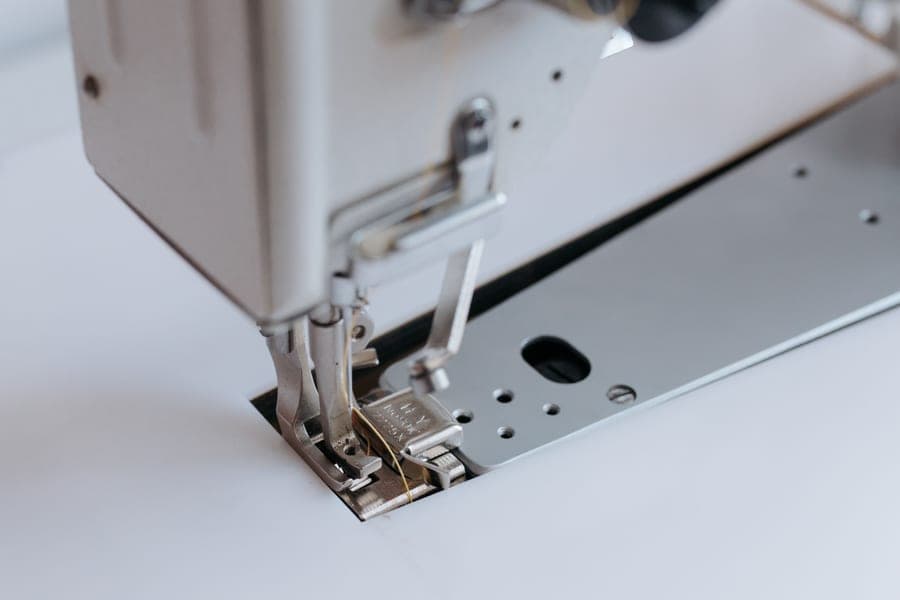
The needle goes up and down, stitches pile up in one spot, and the fabric does not move. This is one of the easier problems to solve, because there are only four realistic causes.
1. The feed dogs are lowered
Feed dogs are the small toothed bars under the needle plate that grip the fabric and move it. Most machines have a control to lower them for free-motion quilting and darning - a switch on the back or the base, or sometimes a lever inside the bobbin compartment.
If that control is set to drop the feed dogs, nothing moves. Look at the needle plate: you should see the teeth rise above it as you turn the hand wheel. If they stay flush, they are dropped.
On some machines the setting only re-engages once you take a stitch after switching it back, so turn the hand wheel a full turn before deciding it did not work.
2. The presser foot is up
The feed dogs can only move fabric if the presser foot is pressing it down onto them. With the foot raised, the teeth run underneath and the fabric sits still.
This sounds too obvious to be common. It is extremely common, because raising the foot to position the fabric and forgetting to lower it again is a habit everyone develops.
3. Stitch length is set to zero
Stitch length is literally how far the feed dogs move the fabric between punctures. At zero, they do not move it at all - which is intentional, because it is how bar tacks and button-sewing work.
Set it back to about 2.5mm for normal sewing. On a computerized machine, selecting a decorative stitch can also set a length you did not choose.
4. You are holding the fabric
Guiding is gentle steering. Holding is resistance, and it beats the feed dogs. Beginners often grip the fabric firmly out of nervousness, which stops it moving and produces short, bunched stitches.
Rest your hands lightly on either side of the foot and let the machine pull.
When only some fabrics will not feed
Questions beginners actually ask
Why is my sewing machine not moving the fabric?
Four likely causes: the feed dogs are lowered, the presser foot is raised, the stitch length is set to zero, or you are holding the fabric rather than guiding it. All four take less than a minute to check.
How do I know if my feed dogs are down?
Turn the hand wheel toward you and watch the needle plate. The small toothed bars should rise above the plate and move backwards. If they stay flush with the plate, they are dropped - find the drop-feed control on the back, base or inside the bobbin compartment.
Why is my fabric bunching instead of feeding?
Usually because you are holding it. Guiding is gentle steering; gripping is resistance that beats the feed dogs. Rest your hands lightly on either side of the presser foot and let the machine pull the fabric through.
How do I sew slippery fabric that will not feed?
Sew over tissue paper and tear it away afterwards - it gives the feed dogs something to grip. For vinyl, leatherette and coated cottons that stick to the foot instead, use a walking foot or a non-stick foot.
Sources
Specifications are taken from manufacturer listings. We do not run a test lab and never claim to - how each machine is assessed is set out on our methodology page.