Guides
Where are sewing machines made?
Almost no household sewing machine is built where its badge comes from. Here is what the label really tells you - and what it does not.
By Michael W. · Published
Disclosure: this page contains affiliate links. As an Amazon Associate, StitchStarter earns from qualifying purchases at no extra cost to you. Prices are read from Amazon daily and dated; the price you pay is the one Amazon shows at checkout. It never changes which machines we recommend. Full disclosure.
Quick picks
The short answer. Every pick is explained in full below, including who should skip it.
| # | Product | Best for | Score | Price |
|---|---|---|---|---|
| 1 | 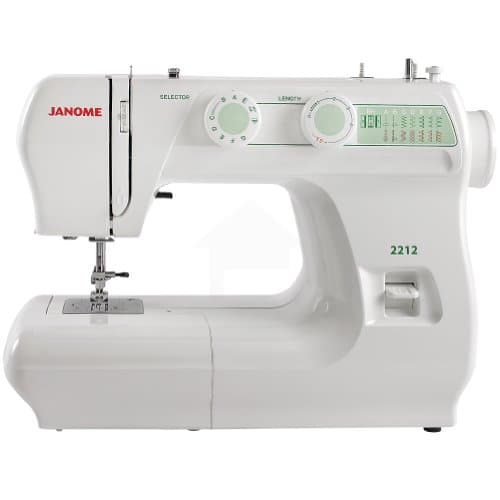 Janome 2212The brand that still builds most of its own machines. Janome 2212The brand that still builds most of its own machines. | Japanese brand, own factories | 7.6 | |
| 2 | 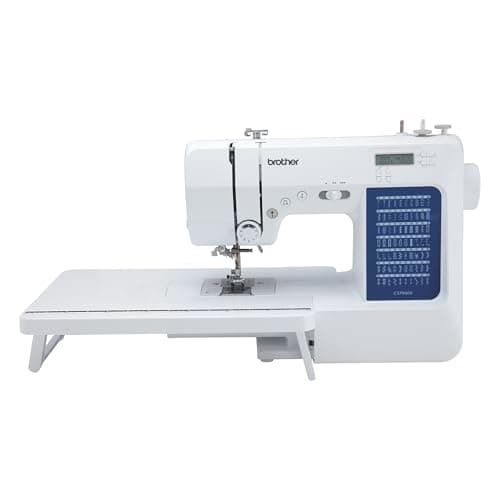 Brother CS7000XDesigned in Japan, assembled in Asia, supported everywhere. Brother CS7000XDesigned in Japan, assembled in Asia, supported everywhere. | Japanese brand, contract built | 8.2 | |
| 3 | 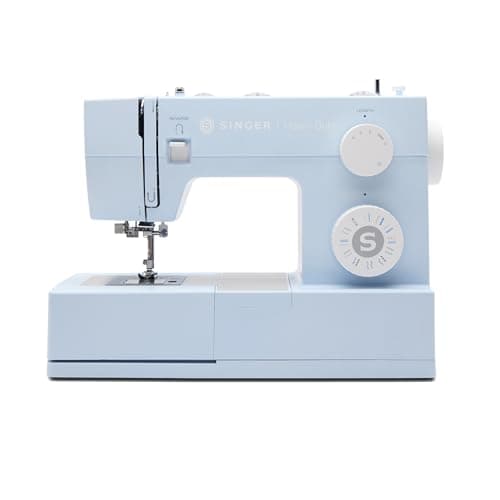 Singer Heavy Duty 4423A name with a US history and a modern Asian supply chain. Singer Heavy Duty 4423A name with a US history and a modern Asian supply chain. | American brand, built in Asia | 7.8 |
Prices shown are Amazon prices as of October 10, 2026 and can change.Scores are our editorial judgment on six axes, explained on the methodology page. We do not run a test lab and never claim to.
Almost no household sewing machine sold today is built in the country its brand name comes from. Brother and Janome are Japanese companies and Singer is an American one, and the machines all three sell in the beginner bracket are manufactured in Asia - commonly China, Taiwan and neighboring countries - with the specific factory varying by model and by production run.
The short answer to the question behind the question: country of manufacture is a much weaker quality signal than buyers expect, and the model is a much stronger one. A well-specified machine built in a Chinese factory to Janome’s tolerances will out- sew a badly specified machine built anywhere.
Brand country is not factory country
A sewing machine brand controls three separate things, and they can each sit in a different place.
Where it is designed. The engineering, the stitch geometry, the tolerances. This is usually at the brand’s home R&D center, and it is the part that decides how the machine sews.
Where it is built. The factory that assembles it. For household machines this is overwhelmingly in Asia across all the major brands, including the ones with European and American names.
Who supports it. The distributor, the warranty, the dealer network, the parts supply in your country. For a beginner this is the one that actually affects your experience of owning the machine - see our warranty guide.
The three brands this site covers
Janome is headquartered in Tokyo and is unusual in still operating its own factories, in Japan and in Taiwan, with the higher-end computerized machines made at the Japanese plants and mid-range machines at the Taiwanese one. That vertical integration is part of why the brand’s build reputation is what it is - and our Janome guide goes into what that means for a beginner.
Brother is a Japanese company whose household sewing machines are manufactured in Asia under its own supply chain, with mechanical models and computerized models commonly coming out of different plants. Brother’s strength for a beginner is not the factory - it is the sheer volume of support material for each model. Our Brother roundup covers the range.
Singer is the oldest name here and the most changed. The brand is owned by SVP Worldwide, which also owns Husqvarna Viking and Pfaff, and its household machines are manufactured in Asia. A Singer bought today shares a name with the cast-iron machines in your family and very little else - which is worth knowing before nostalgia does your buying for you, and is part of why our vintage machine guide exists.
Where the brands sit. Specific factories vary by model and production run - check the label on the machine you are buying.
What Made In actually tells you
Less than you would hope, and not nothing.
It does not tell you about build quality in any direct way. Factory output is set by the specification and the quality control the brand imposes, not by the country on the sticker. Plenty of excellent machines are built in China and plenty of mediocre ones were built in Europe.
It does tell you something about parts and service, indirectly. A model made in volume for a global market has a parts supply; a model made in a short run for one market does not. That is why a widely sold machine is easier to live with than an obscure one, and why we weight help availability so heavily on our methodology page.
And it does matter if sourcing matters to you for its own reasons. That is a legitimate basis for a purchase, and the only honest way to act on it is to check the label and the manufacturer’s own country-of-origin statement for the specific model, because it changes.
Machines whose origin is at least knowable
Three models with wide distribution, documented support and parts you can still buy - which is what the origin question is usually really about.
Janome 2212
Janome still builds in its own plants, and this is the model its dealer network knows best.
Skip it if You want an automatic threader, a one-step buttonhole or a drop-in bobbin - it has none of them.
Brother CS7000X
Sold in enormous numbers, which is why parts, feet and tutorials for it are everywhere.
Skip it if You want physical dials instead of a menu, or you will be sewing canvas, upholstery or leather regularly.
Singer Heavy Duty 4423
One of the most widely stocked machines anywhere, so servicing it is never a hunt.
Skip it if You mostly want gentle control on light fabrics, or a quiet machine for an apartment.
#ad - buy links go to Amazon and earn us a commission at no extra cost to you. Prices shown are Amazon prices as of October 10, 2026 and can change. Full disclosure.
How to check for your own machine
Three places, in order of reliability. The machine itself - a country of origin is usually printed on a plate on the back or underside. The box and the manual, which carry the same information. And the retail listing, which is the least reliable of the three because listings are often written once and the production source changes.
If it genuinely matters to your purchase, buy from a retailer who will accept a return, check the plate when it arrives, and treat the listing as a claim rather than a fact. Our where to buy guide covers the differences between the channels.
What to judge instead
If what you are really asking is “will this machine last and will I be able to get it fixed”, four things predict that better than the country does.
Frame material. A metal interior frame flexes less and skips fewer stitches on thick fabric than a plastic one - see do you need a heavy-duty machine.
How simple it is. Fewer electronics means fewer failure points, which is the whole argument of our mechanical vs computerized guide.
How widely it is sold. Volume means parts, feet, bobbins, manuals and video walkthroughs for your exact model.
Whether a local technician will touch it. Ask one before you buy. It is the most useful ten minutes in this entire process, and our lifespan guide explains why service access decides a machine’s real life.
The picks in full
01 - Japanese brand, own factories
Janome 2212
Twelve stitches, nothing to break - the classroom favorite.
- 12 stitches, dial controls, four-step buttonhole
- Drop feed for free-motion quilting
- Free arm for cuffs and sleeves
- A reputation for lasting decades
- Get it if
- You value reliability over conveniences and want a machine still working long after the computerized ones are gone.
- Skip it if
- You want an automatic threader, a one-step buttonhole or a drop-in bobbin - it has none of them.
The trade-off
Fewer conveniences, more longevity. The four-step buttonhole and front-loading bobbin are a little more work to learn.
How the Janome 2212 scores
Our judgment on the six axes described on the methodology page. Not measurements - we do not run a test lab.
- Setup and threading
- 6/10
- Everyday stitch quality
- 9/10
- Thick fabric
- 7/10
- Beginner features
- 4/10
- Durability reputation
- 10/10
- Help for this exact model
- 7/10
Overall 7.6/10
02 - Japanese brand, contract built
Brother CS7000X
Does the fiddly parts for you so you can spend your energy learning to sew.
- 70 built-in stitches, 7 one-step buttonholes
- Automatic needle threader, drop-in top bobbin
- Speed-control slider
- Wide table and 10 presser feet included
- Get it if
- You want threading, buttonholes and stitch settings handled by the machine, and you might try quilting later - the wide table is already in the box.
- Skip it if
- You want physical dials instead of a menu, or you will be sewing canvas, upholstery or leather regularly.
The trade-off
A metal internal frame inside a light plastic shell. That makes it easy to carry and quiet on cottons and mid-weights; it is not built for heavy layers every day the way a Heavy Duty is.
$279.99 · 11% off · price as of October 10, 2026
#ad - opens Amazon in a new tab. How we earn
How the Brother CS7000X scores
Our judgment on the six axes described on the methodology page. Not measurements - we do not run a test lab.
- Setup and threading
- 9/10
- Everyday stitch quality
- 8/10
- Thick fabric
- 6/10
- Beginner features
- 9/10
- Durability reputation
- 7/10
- Help for this exact model
- 10/10
Overall 8.2/10
03 - American brand, built in Asia
Singer Heavy Duty 4423
Fast, sturdy and simple - the machine for denim hems and tote bags.
- Metal interior frame, stainless steel bedplate
- 1,100 stitches per minute
- 23 stitches (97 stitch applications), one-step buttonhole, automatic threader
- Top drop-in bobbin with a clear cover
- Extra-high presser foot lift for thick layers
- Get it if
- You want physical dials, you plan to sew jeans, canvas or several layers, and you do not mind a machine that is loud and quick.
- Skip it if
- You mostly want gentle control on light fabrics, or a quiet machine for an apartment.
The trade-off
Heavy duty means a metal frame and a fast motor, not an industrial machine. It handles denim well; real leather is still a struggle.
How the Singer Heavy Duty 4423 scores
Our judgment on the six axes described on the methodology page. Not measurements - we do not run a test lab.
- Setup and threading
- 7/10
- Everyday stitch quality
- 8/10
- Thick fabric
- 9/10
- Beginner features
- 6/10
- Durability reputation
- 8/10
- Help for this exact model
- 9/10
Overall 7.8/10
Questions beginners actually ask
Where are sewing machines made?
Household sewing machines from the major brands are overwhelmingly manufactured in Asia, commonly in China and Taiwan, regardless of whether the brand is Japanese, American or European. The specific factory varies by model and production run and is printed on a plate on the machine.
Where are Janome sewing machines made?
Janome is headquartered in Tokyo and is unusual among major brands in still running its own factories - in Japan and in Taiwan - with higher-end computerized machines made at its Japanese plants and mid-range models at the Taiwanese one.
Where are Singer sewing machines made?
Singer is an American brand now owned by SVP Worldwide, which also owns Husqvarna Viking and Pfaff, and its household machines are manufactured in Asia. A Singer bought today shares its name, but not its factory or design lineage, with the cast-iron machines of the last century.
Does the country a sewing machine is made in affect quality?
Far less than buyers expect. Build quality is set by the specification and the quality control the brand imposes, not by the country on the sticker. The model matters much more than the origin, and parts availability matters more than either.
How do I find out where my sewing machine was made?
Look for a plate on the back or underside of the machine, which usually carries the country of origin. The box and the manual repeat it. Treat the retail listing as the least reliable source, because listings are often written once while the production source changes.
Are Japanese-made sewing machines better?
Japanese-designed machines have a strong reputation, and Janome's Japanese plants build its higher-end models. But most beginner machines from every brand, Japanese ones included, are built elsewhere in Asia, and they are judged on frame, features and support rather than on the plate.
Sources
- Janome (manufacturer)
- Brother (manufacturer)
- Singer (manufacturer)
- SVP Worldwide (Singer, Husqvarna Viking, Pfaff)
Specifications are taken from manufacturer listings. We do not run a test lab and never claim to - how each machine is assessed is set out on our methodology page.
Read next
- Sewing machine brands explained
What each brand is actually good at.
- Are Janome sewing machines good for beginners?
- How long does a sewing machine last?
- Where to buy a sewing machine